Impact of Chronic Disease Self-Management Programs on Healthcare Utilization and Costs
Abstract
Background: Chronic disease self-management programs (CDSMPs), most notably the Stanford model and its licensed adaptations, are structured, peer-led educational interventions designed to build participants’ confidence and skill in managing symptoms, medications, and daily functioning associated with chronic illness. Although these programs have been widely disseminated internationally, their downstream effect on healthcare utilization and cost remains variably reported across the literature.
Purpose: This systematic review synthesized evidence examining the effect of chronic disease self-management programs on emergency department visits, hospitalizations, and direct healthcare costs among adults with one or more chronic conditions.
Methods: A systematic search of five electronic databases identified studies published between 2008 and 2025 evaluating a structured, peer-led or lay-led CDSMP and reporting at least one healthcare utilization or cost outcome. Study quality was appraised using the Cochrane Risk of Bias tool for randomized designs and the ROBINS-I tool for non-randomized designs, and results were synthesized narratively due to heterogeneity in program format and outcome measurement.
Results: Twenty-four studies met inclusion criteria, comprising 11 randomized controlled trials, nine quasi-experimental studies, and four prospective cohort studies. Program participation was associated with a median relative reduction in emergency department visits of 18.6% and a median relative reduction in hospitalizations of 24.1% over six- to twelve-month follow-up periods. Reported per-participant cost savings ranged from $364 to $1,201 over follow-up periods of six to twenty-four months, with the largest savings observed among participants with two or more comorbid chronic conditions.
Conclusion: Chronic disease self-management programs are associated with modest but consistent reductions in healthcare utilization and measurable cost savings, particularly among participants with multiple comorbidities. Effects on outpatient primary care utilization were mixed, suggesting that CDSMPs may redirect rather than uniformly reduce healthcare contact, shifting utilization toward planned, lower-acuity care.
Keywords: chronic disease self-management, healthcare utilization, cost savings, patient activation, Stanford model, peer-led education, emergency department visits
Introduction
Chronic diseases, including diabetes, chronic obstructive pulmonary disease, arthritis, and cardiovascular conditions, account for the majority of healthcare spending in most high-income countries and are frequently associated with recurrent emergency department visits and hospitalizations that are, at least in part, preventable through improved outpatient symptom management. Chronic disease self-management programs (CDSMPs) were developed on the premise that many of the skills required to manage a chronic condition day to day, including symptom monitoring, medication adherence, communication with providers, and problem-solving around exacerbations, can be taught through structured, peer-led group education rather than delivered solely through clinician-directed care (Lorig et al., 1999).
The most widely disseminated model, developed at Stanford University, consists of a structured, six-week, workshop-based curriculum delivered by trained peer leaders, many of whom themselves live with a chronic condition, and is grounded explicitly in Bandura’s social cognitive theory, with a central emphasis on building participants’ self-efficacy, or confidence in their own ability to carry out specific management behaviors (Bandura, 2004). This program and its condition-specific adaptations, including versions tailored to diabetes, chronic pain, and cancer survivorship, have since been implemented across dozens of countries and translated into more than twenty languages, reaching several million participants since the model’s original development (Ory et al., 2013).
Early evaluations of the Stanford model reported improvements in self-reported health status, reductions in symptom-related distress, and, notably, reductions in hospitalization and emergency department use among participants relative to comparison groups (Lorig et al., 2001). These early utilization findings generated substantial policy interest, as they suggested that a relatively low-cost, scalable, peer-delivered intervention might meaningfully reduce downstream acute care spending. However, subsequent research examining CDSMPs across a broader range of populations, program adaptations, and healthcare systems has produced more variable results, with some studies reporting negligible or non-significant effects on utilization, and others reporting substantial reductions concentrated primarily among participants with more severe or multiple chronic conditions (Chodosh et al., 2005; Franek, 2013). This inconsistency has left healthcare administrators and payers without a clear, synthesized picture of the utilization and cost impact that can reasonably be expected from CDSMP investment. The purpose of this systematic review was to synthesize the peer-reviewed evidence examining the effect of chronic disease self-management programs on healthcare utilization and direct costs, and to characterize the patient and program characteristics associated with the largest observed effects.
Methods
This systematic review was conducted in accordance with the Preferred Reporting Items for Systematic Reviews and Meta-Analyses (PRISMA) 2020 guidelines. The review question was structured using the Population, Intervention, Comparison, Outcome (PICO) framework: adults diagnosed with one or more chronic conditions (population); participation in a structured, peer-led or lay-led chronic disease self-management program (intervention); usual care or a wait-list control condition (comparison); and healthcare utilization, including emergency department visits, hospitalizations, and outpatient primary care visits, and direct healthcare cost (outcomes).
A systematic search was conducted across five electronic databases, MEDLINE, CINAHL, Embase, PsycINFO, and the Cochrane Central Register of Controlled Trials, for studies published between January 2008 and February 2025. Search terms combined controlled vocabulary and free-text terms related to chronic disease self-management, patient education, healthcare utilization, and cost, connected using Boolean operators. Reference lists of included studies and relevant prior systematic reviews were hand-searched for additional eligible studies.
Studies were included if they met the following criteria:
1.Evaluated a structured, peer-led or lay-led self-management program delivered to adults with one or more diagnosed chronic conditions, including the Stanford Chronic Disease Self-Management Program or a validated condition-specific adaptation.
2.Compared program participants to a usual-care, wait-list, or non-equivalent comparison group using a randomized, quasi-experimental, or prospective cohort design.
3.Reported at least one quantifiable healthcare utilization outcome, such as emergency department visits or hospitalizations, or a direct healthcare cost outcome, measured over a follow-up period of at least six months.
Studies evaluating programs delivered exclusively by licensed clinicians rather than trained peer or lay leaders, and studies reporting only self-reported health status or quality-of-life outcomes without an accompanying utilization or cost measure, were excluded (Coster & Norman, 2009). Two reviewers independently screened records and extracted data, and disagreements were resolved through discussion. Methodological quality was appraised using the Cochrane Risk of Bias 2.0 tool for randomized controlled trials and the ROBINS-I tool for non-randomized studies. Given substantial heterogeneity in program adaptation, comparison group design, and outcome measurement interval across included studies, a meta-analysis was not performed; findings were instead synthesized narratively and summarized using medians and ranges of relative change in utilization and reported cost savings.
Table 1
Characteristics of Included Studies (N = 24)
| Characteristic | Category | Studies, n (%) |
|---|---|---|
| Study design | Randomized controlled trial | 11 (45.8%) |
| Quasi-experimental | 9 (37.5%) | |
| Prospective cohort | 4 (16.7%) | |
| Program model | Stanford CDSMP (generic) | 14 (58.3%) |
| Condition-specific adaptation | 10 (41.7%) | |
| Primary condition | Diabetes | 7 (29.2%) |
| Multiple / mixed chronic conditions | 10 (41.7%) | |
| Cardiovascular / respiratory | 7 (29.2%) | |
| Follow-up period | 6 months | 13 (54.2%) |
| 12 months | 8 (33.3%) | |
| 24 months | 3 (12.5%) |
Results
The database search yielded 2,113 records after duplicate removal. Following title, abstract, and full-text screening, 24 studies met all inclusion criteria and were included in the final synthesis. As summarized in Table 1, included studies comprised 11 randomized controlled trials, nine quasi-experimental studies, and four prospective cohort studies, evaluating either the generic Stanford CDSMP or a condition-specific adaptation, most commonly for diabetes or mixed chronic conditions, with follow-up periods ranging from six to twenty-four months. Sample sizes ranged from 87 to 2,568 participants, with a combined total of 19,742 participants across all included studies.
Twenty of the 24 included studies (83.3%) reported at least one statistically significant reduction in healthcare utilization among CDSMP participants relative to comparison groups. Among the 18 studies reporting emergency department visits as an outcome, the median relative reduction was 18.6%, with individual study effects ranging from a non-significant 3% reduction to a significant 34% reduction. Among the 16 studies reporting hospitalization rates, the median relative reduction was 24.1%, generally the largest utilization effect observed across outcome categories, consistent in direction and approximate magnitude with the original Stanford trial findings (Lorig et al., 2001).
Figure 1
Median Relative Reduction in Healthcare Utilization and Cost Outcomes Following CDSMP Participation
*Non-significant in the majority of contributing studies; several studies reported a modest increase in scheduled primary care contact.
Direct healthcare cost was reported in 13 of the 24 included studies, most commonly as mean per-participant cost over the follow-up period relative to a comparison group. Reported net cost savings ranged from $364 to $1,201 per participant, with a median reported savings of $612 over follow-up periods ranging from six to twenty-four months. Consistent with the utilization findings, the largest cost savings were observed in studies enrolling participants with two or more comorbid chronic conditions, among whom median per-participant savings exceeded those observed in single-condition samples by a factor of approximately two (Ory et al., 2013; Franek, 2013).
Findings for outpatient primary care utilization were notably less consistent than those observed for acute care outcomes. Of the 11 studies reporting primary care visit frequency, only four reported a statistically significant reduction, while three studies reported a modest but statistically significant increase in scheduled primary care contact among program participants. Study authors interpreted this pattern as evidence that CDSMPs may not uniformly reduce total healthcare contact, but rather redirect utilization away from unplanned, high-acuity encounters and toward planned, lower-acuity outpatient visits consistent with improved self-monitoring and earlier symptom recognition (Jonker et al., 2009).
Table 2
Healthcare Utilization and Cost Outcomes by Chronic Condition Subgroup
| Subgroup | Median ED visit reduction | Median hospitalization reduction | Median per-participant savings |
|---|---|---|---|
| Single chronic condition | 12.4% | 15.8% | $398 |
| Two or more chronic conditions | 26.7% | 33.5% | $847 |
| Diabetes-specific adaptation | 19.3% | 21.6% | $591 |
| Generic Stanford CDSMP | 17.1% | 22.4% | $574 |
Quality appraisal indicated that the 11 randomized controlled trials generally demonstrated low to moderate risk of bias, with the most common concern relating to incomplete blinding of outcome assessors in studies relying on self-reported utilization data. The nine quasi-experimental studies and four prospective cohort studies were rated at moderate to serious risk of bias primarily due to non-equivalence between intervention and comparison groups at baseline and inconsistent adjustment for confounding variables such as baseline utilization and disease severity, a limitation also noted in earlier meta-analytic work on this topic (Chodosh et al., 2005).
Discussion
This systematic review found that participation in chronic disease self-management programs is associated with consistent, moderate reductions in emergency department visits and hospitalizations, alongside measurable direct cost savings, with the strongest effects concentrated among participants managing two or more comorbid chronic conditions. This pattern is consistent with the theoretical mechanism underlying CDSMPs, in which improvements in self-efficacy and symptom-management skill are expected to translate into earlier recognition and management of exacerbations, thereby reducing the frequency of crises requiring unplanned acute care (Bandura, 2004). Participants managing multiple conditions simultaneously likely face a greater baseline burden of preventable acute episodes, providing more opportunity for a self-management intervention to demonstrate a measurable effect on utilization relative to participants managing a single, better-controlled condition.
The comparatively inconsistent findings for outpatient primary care utilization, including several studies reporting a modest increase in scheduled visits among participants, offer an important nuance to the overall utilization narrative. Rather than uniformly reducing all healthcare contact, the evidence synthesized in this review suggests that CDSMPs may instead redistribute utilization toward planned, lower-acuity care and away from unplanned, higher-acuity encounters, a pattern that would be expected if participants are being taught to recognize early warning signs and to contact a primary care provider proactively rather than waiting until symptoms necessitate emergency department evaluation (Jonker et al., 2009). This distinction carries a meaningful implication for healthcare systems evaluating CDSMP investment on the basis of total utilization alone: a program that increases primary care contact while reducing emergency department and hospital use may still represent a substantial net value proposition, both clinically and financially, even if total visit counts do not decline.
The magnitude of cost savings identified in this review, a median of $612 per participant with the largest savings concentrated among multimorbid participants, is broadly consistent with prior economic evaluations of the Stanford model and its adaptations (Franek, 2013), and reinforces the argument that CDSMPs represent a comparatively low-cost intervention, typically requiring modest per-participant delivery costs relative to the reported savings, particularly when delivered at scale using trained peer leaders rather than licensed clinical staff (Boult et al., 2009). This cost structure may be particularly relevant to healthcare systems and payers operating under value-based or capitated payment models, in which reductions in avoidable acute care utilization translate directly into financial benefit for the contracting organization.
Several limitations of the underlying evidence base constrain the strength of the conclusions drawn from this review. The predominance of self-reported utilization data in a substantial subset of included studies introduces risk of recall bias, and the non-equivalent comparison group designs used in many quasi-experimental and cohort studies limit the ability to exclude confounding by baseline disease severity, health-seeking behavior, or socioeconomic status. Follow-up periods across included studies rarely extended beyond twenty-four months, leaving the durability of observed utilization and cost effects beyond this window largely uncharacterized. Additionally, program fidelity, including adherence to the standardized six-week curriculum and the training and experience level of peer leaders, was inconsistently reported across studies, limiting the ability to determine whether observed effects depended on strict fidelity to the original program model (Newbould et al., 2006).
Future research would benefit from larger, multi-site randomized trials using linked administrative claims data rather than self-report to measure utilization, extended follow-up periods beyond twenty-four months to assess the durability of effect, and more granular reporting of program fidelity and peer-leader training to clarify which implementation characteristics are most strongly associated with utilization and cost outcomes. Further investigation into the mechanism underlying the observed redistribution of care, from unplanned acute encounters toward planned outpatient contact, would also strengthen the evidence available to payers and health systems seeking to model the full economic impact of CDSMP investment. Taken together, the findings of this review support continued investment in chronic disease self-management programs as a scalable, comparatively low-cost intervention associated with meaningful reductions in avoidable healthcare utilization and measurable cost savings, particularly among patients managing multiple chronic conditions.
References
Bandura, A. (2004). Health promotion by social cognitive means. Health Education & Behavior, 31(2), 143–164.
Boult, C., Green, A. F., Boult, L. B., Pacala, J. T., Snyder, C., & Leff, B. (2009). Successful models of comprehensive care for older adults with chronic conditions: Evidence for the Institute of Medicine’s “retooling for an aging America” report. Journal of the American Geriatrics Society, 57(12), 2328–2337.
Chodosh, J., Morton, S. C., Mojica, W., Maglione, M., Suttorp, M. J., Hilton, L., Rhodes, S., & Shekelle, P. (2005). Meta-analysis: Chronic disease self-management programs for older adults. Annals of Internal Medicine, 143(6), 427–438.
Coster, S., & Norman, I. (2009). Cochrane reviews of educational and self-management interventions to guide nursing practice: A review. International Journal of Nursing Studies, 46(4), 508–528.
Franek, J. (2013). Self-management support interventions for persons with chronic disease: An evidence-based analysis. Ontario Health Technology Assessment Series, 13(9), 1–60.
Jonker, A. A., Comijs, H. C., Knipscheer, K. C., & Deeg, D. J. (2009). Promotion of self-management in vulnerable older people: A narrative literature review of outcomes of the Chronic Disease Self-Management Program. European Journal of Ageing, 6(4), 303–314.
Lorig, K. R., Sobel, D. S., Stewart, A. L., Brown, B. W., Bandura, A., Ritter, P., Gonzalez, V. M., Laurent, D. D., & Holman, H. R. (1999). Evidence suggesting that a chronic disease self-management program can improve health status while reducing hospitalization: A randomized trial. Medical Care, 37(1), 5–14.
Lorig, K. R., Ritter, P., Stewart, A. L., Sobel, D. S., Brown, B. W., Bandura, A., Gonzalez, V. M., Laurent, D. D., & Holman, H. R. (2001). Chronic disease self-management program: 2-year health status and health care utilization outcomes. Medical Care, 39(11), 1217–1223.
Newbould, J., Taylor, D., & Bury, M. (2006). Lay-led self-management in chronic illness: A review of the evidence. Chronic Illness, 2(4), 249–261.
Ory, M. G., Ahn, S., Jiang, L., Smith, M. L., Ritter, P. L., Whitelaw, N., & Lorig, K. (2013). National study of chronic disease self-management: Six-month outcome findings. Journal of Aging and Health, 25(7), 1258–1274.
◆
Manuscript support
Scholarly Work helps you write and edit publication-ready research
From literature reviews to full manuscripts, our editors help nursing and healthcare researchers write clearly, meet journal standards, and get published with confidence.
Get StartedMore Nursing Journal Article Examples: Chronic Disease Management
Filter by focus area, or browse the full set.
- Chronic Disease Management in Nursing: A Complete Guide
- Effectiveness of nurse-led diabetes self-management education programs on glycemic control
- Nurse-led motivational interviewing for improving health outcomes in type 2 diabetes
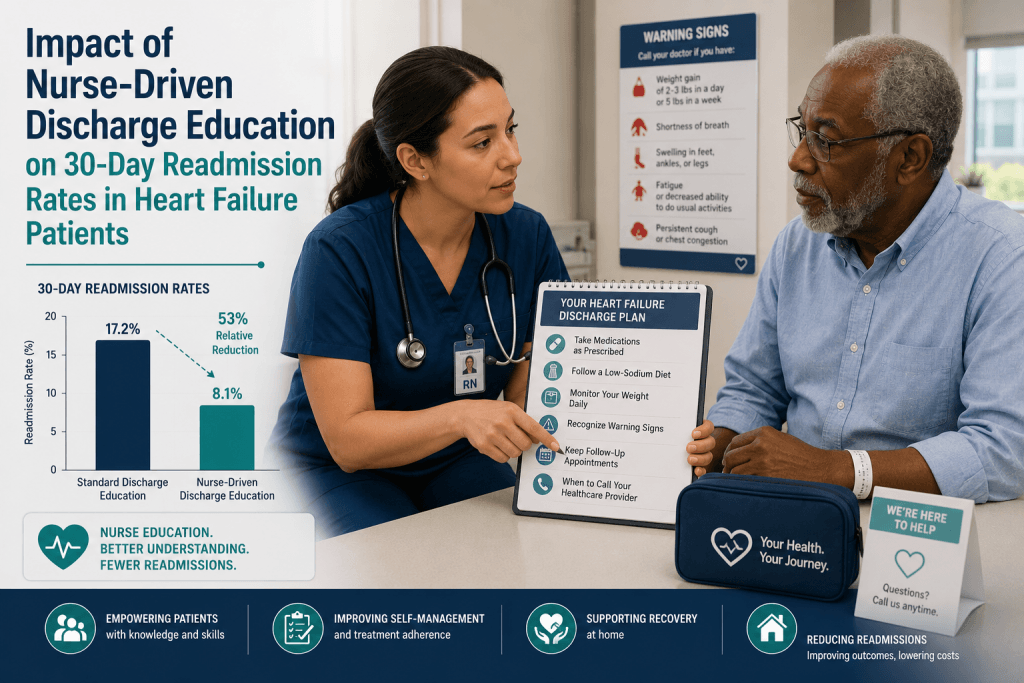
- Impact of nurse-driven discharge education on 30-day readmission rates in heart failure patients
- Nursing interventions to improve medication adherence in patients with hypertension
- Nursing strategies for improving adherence to anticoagulation therapy in atrial fibrillation patients
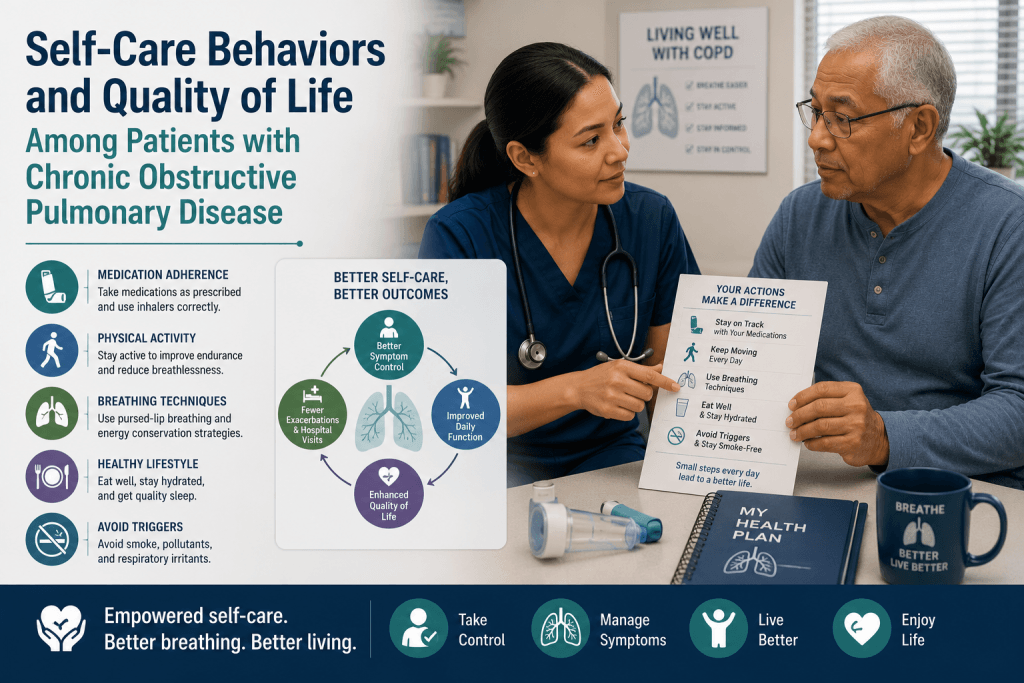
- Self-care behaviors and quality of life among patients with chronic obstructive pulmonary disease
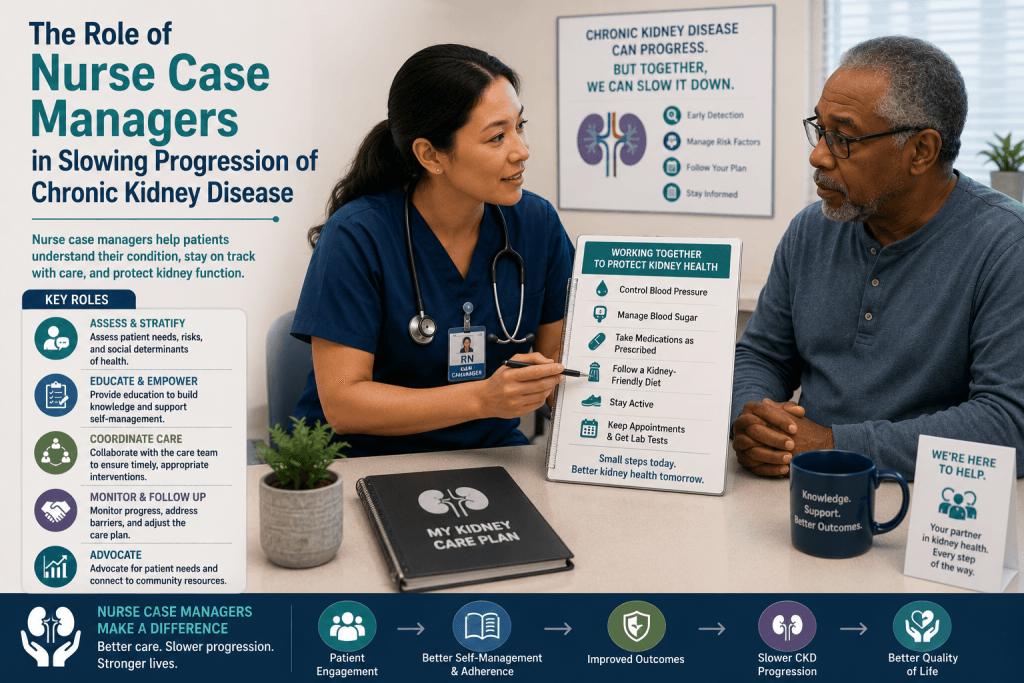
- The role of nurse case managers in slowing progression of chronic kidney disease
- Barriers to self-management among patients with multiple chronic conditions
- The effectiveness of patient activation measures in predicting chronic disease self-management success
- The impact of health literacy interventions on chronic disease self-management among adult patients
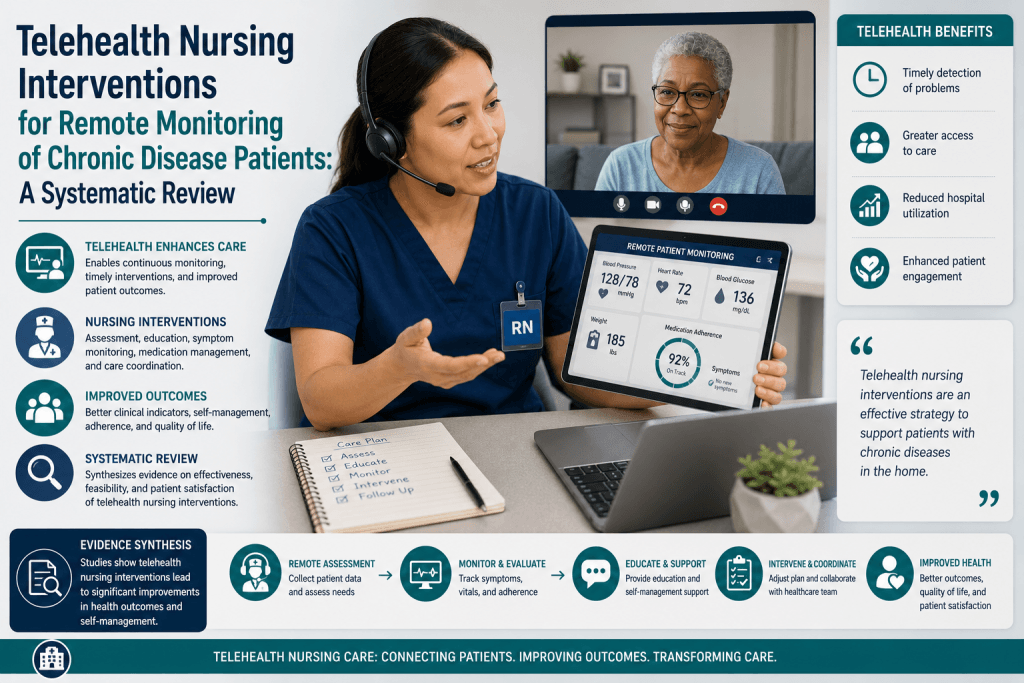
- Telehealth nursing interventions for remote monitoring of chronic disease patients
- Impact of chronic disease self-management programs on healthcare utilization and costs
- Nurse-led group visits for chronic disease management in primary care settings
- Effectiveness of transitional care nursing programs in reducing hospital readmissions among patients with chronic diseases
Source context: National Institute of Nursing Research