Impact of Nurse-Led Sepsis Protocols on Time to Antibiotic Administration: An Interrupted Time Series Analysis
Abstract
Background: Delayed antibiotic administration in sepsis is independently associated with increased mortality, and nurse-led, triage-based sepsis screening and rapid treatment protocols have been proposed as a strategy for accelerating time to antibiotics, yet formal evaluation of such protocols using methodology capable of distinguishing a sustained intervention effect from a pre-existing secular improvement trend remains comparatively limited.
Purpose: This study used interrupted time series analysis with segmented regression to evaluate the effect of a nurse-led sepsis screening and rapid treatment protocol on monthly time to antibiotic administration among adult emergency department patients with sepsis.
Methods: Monthly aggregated time-to-antibiotic data were analyzed across a 48-month period, comprising 24 months before and 24 months after implementation of a nurse-led sepsis protocol in a single academic emergency department, encompassing 3,684 sepsis presentations. The protocol empowered triage and bedside nurses to initiate a standardized screening tool, activate a sepsis huddle, and begin protocolized fluid and laboratory orders pending physician confirmation. Segmented linear regression, with terms for pre-intervention trend, level change at implementation, and change in post-intervention trend, estimated the intervention’s effect on monthly mean time to antibiotic administration, with Newey-West standard errors used to account for residual autocorrelation.
Results: Prior to implementation, monthly mean time to antibiotic administration showed a slight, non-significant upward trend (0.4 minutes per month, 95% CI −0.3 to 1.1, p = .24). Implementation of the nurse-led protocol was associated with an immediate, significant level decrease of 26.8 minutes (95% CI −33.9 to −19.7, p < .001) and a significant change in post-intervention trend, with mean time to antibiotic administration declining an additional 0.9 minutes per month (95% CI −1.4 to −0.4, p < .001) throughout the 24-month post-implementation period, indicating a sustained, continuing improvement rather than a one-time step change alone. By the final post-implementation month, observed mean time to antibiotic administration (38.4 minutes) was 51.2 minutes lower than the counterfactual value projected from the pre-intervention trend (89.6 minutes). Bundle compliance with the 1-hour Surviving Sepsis Campaign benchmark increased from 42.1% pre-implementation to 84.6% post-implementation, and in-hospital sepsis mortality decreased from 18.7% to 13.2% (p = .01).
Conclusion: Implementation of a nurse-led sepsis screening and rapid treatment protocol was associated with both an immediate, substantial reduction in time to antibiotic administration and a sustained, continuing improvement over the following two years, well beyond what pre-existing secular trend would have predicted, supporting nurse-led sepsis protocols as an effective and durable strategy for accelerating sepsis treatment in emergency care.
Keywords: sepsis, time to antibiotics, nurse-led protocol, interrupted time series, segmented regression, emergency nursing, quality improvement, Surviving Sepsis Campaign
Introduction
Delayed initiation of appropriate antimicrobial therapy in sepsis and septic shock is independently associated with increased mortality and progression to more severe organ dysfunction, a relationship established in early foundational work and reinforced by subsequent large-scale, mandated-reporting research demonstrating a measurable mortality increase associated with each additional hour of delay to antibiotic administration (Kumar et al., 2006; Seymour et al., 2017). International consensus guidelines, including the Surviving Sepsis Campaign, have accordingly established time-to-antibiotic administration as a core quality benchmark, with the campaign’s hour-1 bundle explicitly recommending antibiotic initiation within 60 minutes of sepsis recognition (Levy et al., 2018; Rhodes et al., 2017).
Nurse-led, triage-based sepsis screening and rapid treatment protocols, in which nursing staff are empowered to initiate standardized screening, activate a structured team response, and begin protocolized laboratory and treatment orders pending physician confirmation, have been evaluated in prior single-center quality improvement and observational research, with generally favorable findings regarding both process measure improvement and, in some studies, associated mortality reduction (Bruce et al., 2015; Jones et al., 2015; Nguyen et al., 2007). However, much of this literature has relied on simple pre-post comparison, a design vulnerable to the possibility that an observed improvement reflects a pre-existing, ongoing secular trend toward faster sepsis treatment, driven by broader awareness campaigns or concurrent, unrelated practice changes, rather than a genuine, protocol-specific effect (Damiani et al., 2015).
Interrupted time series analysis using segmented regression addresses this specific limitation directly, by explicitly modeling the pre-intervention trend and formally testing whether the intervention produced both an immediate level change and a change in the ongoing trend beyond what the pre-existing trajectory would have predicted, a methodological approach well established in health services and pharmacoepidemiologic research but applied less consistently within the sepsis quality improvement literature specifically (Wagner et al., 2002; Bernal et al., 2017). The purpose of this study was to use interrupted time series analysis with segmented regression to evaluate the effect of a nurse-led sepsis screening and rapid treatment protocol on monthly time to antibiotic administration among adult emergency department patients with sepsis, explicitly distinguishing any observed improvement from pre-existing secular trend.
Methods
Design. This study used an interrupted time series design with segmented regression analysis, conducted within a single academic emergency department, examining monthly aggregated time-to-antibiotic data across a 48-month period: 24 months preceding and 24 months following implementation of a nurse-led sepsis screening and rapid treatment protocol.
Setting and sample. All adult patients presenting to the emergency department and meeting sepsis criteria per institutional screening protocol, consistent with Surviving Sepsis Campaign definitions, during the 48-month study period were included. A total of 3,684 sepsis presentations were identified across the full study period (1,798 pre-implementation, 1,886 post-implementation).
Intervention. The nurse-led protocol empowered triage and bedside nurses to initiate a standardized sepsis screening tool at triage, activate a structured sepsis huddle involving the bedside nurse, treating physician, and charge nurse upon a positive screen, and begin protocolized fluid resuscitation and laboratory and blood culture orders through a pre-built electronic order set, with antibiotic selection and final confirmation remaining with the treating physician but not requiring additional order entry delay once the huddle and order set were activated. All emergency department nursing staff completed structured education and simulation-based training prior to protocol launch.
Outcome measures. The primary outcome was monthly mean time from sepsis recognition (screening-positive time) to first antibiotic administration, in minutes. Secondary outcomes included monthly compliance with the Surviving Sepsis Campaign 1-hour antibiotic benchmark and in-hospital sepsis mortality, compared between the full pre- and post-implementation periods.
Statistical analysis. Segmented linear regression was used to model monthly mean time to antibiotic administration as a function of time, intervention status, and time since intervention, yielding estimates of the pre-intervention trend, the immediate level change at implementation, and the change in trend following implementation. Given the likelihood of autocorrelation inherent to sequential monthly time series data, Newey-West heteroskedasticity- and autocorrelation-consistent standard errors were used for all regression coefficients, and the Durbin-Watson statistic was calculated to assess residual autocorrelation (Wagner et al., 2002; Bernal et al., 2017). A counterfactual projection, extrapolating the pre-intervention trend forward through the post-intervention period, was calculated to quantify the magnitude of the intervention’s cumulative effect relative to the trajectory that would have been expected absent the protocol. Bundle compliance and mortality were compared between the full pre- and post-implementation periods using chi-square tests. A two-sided p value of less than .05 was considered statistically significant.
Table 1
Patient Characteristics, Pre- and Post-Implementation Periods (N = 3,684)
Results
A total of 3,684 sepsis presentations were included across the 48-month study period (Table 1), with comparable age, sex, suspected infection source, and severity distribution between pre- and post-implementation periods. Prior to implementation, monthly mean time to antibiotic administration showed a slight, non-significant upward trend (0.4 minutes per month, 95% CI −0.3 to 1.1, p = .24). Implementation of the nurse-led protocol was associated with an immediate, significant level decrease and a significant, sustained change in post-intervention trend, as shown in Figure 1.
Figure 1
Segmented Regression: Monthly Mean Time to Antibiotic Administration, Observed vs. Counterfactual Trend
Dashed line represents the counterfactual trajectory obtained by projecting the pre-intervention trend forward through the post-implementation period. By month 48, observed mean time to antibiotic administration (38.4 minutes) was 51.2 minutes below the counterfactual projection (89.6 minutes). Durbin-Watson statistic = 1.87, indicating minimal residual autocorrelation after model specification.
Segmented regression coefficients are summarized in Figure 2. The nurse-led protocol was associated with an immediate level decrease of 26.8 minutes at implementation (95% CI −33.9 to −19.7, p < .001) and a significant additional decline of 0.9 minutes per month throughout the post-implementation period (95% CI −1.4 to −0.4, p < .001), indicating that the improvement continued to accrue over time rather than representing a one-time step change alone.
Figure 2
Segmented Regression Coefficients for Monthly Time to Antibiotic Administration
Dots represent segmented regression coefficients (minutes) with Newey-West standard errors; horizontal lines represent 95% confidence intervals. ***p < .001; ns = not statistically significant (p = .24).
Compliance with the Surviving Sepsis Campaign 1-hour antibiotic benchmark increased from 42.1% pre-implementation to 84.6% post-implementation (chi-square test, p < .001). In-hospital sepsis mortality decreased from 18.7% pre-implementation to 13.2% post-implementation (chi-square test, p = .01), as shown in Figure 3.
Figure 3
Bundle Compliance and In-Hospital Sepsis Mortality, Pre- vs. Post-Implementation
Both between-period differences were statistically significant (bundle compliance: p < .001; mortality: p = .01).
Discussion
This interrupted time series analysis found that implementation of a nurse-led sepsis screening and rapid treatment protocol was associated with both an immediate, substantial reduction in time to antibiotic administration and a sustained, continuing improvement throughout the following two years, well beyond what the pre-existing, non-significant secular trend would have predicted. The segmented regression approach used in this study directly addresses a key limitation of simple pre-post comparison designs common in the prior sepsis protocol literature, by explicitly testing whether the observed improvement exceeded what pre-intervention trajectory alone would have produced, rather than assuming any observed pre-post difference reflects the intervention specifically (Wagner et al., 2002; Bernal et al., 2017; Damiani et al., 2015).
The magnitude and pattern of improvement observed, both an immediate level change and a continuing, significant post-intervention trend rather than a single step change alone, is a particularly informative finding. This pattern suggests that the protocol’s benefit did not derive solely from an initial launch effect, such as heightened staff attention during the rollout period, but reflected a durable practice change that continued to mature and improve over the subsequent two years, plausibly reflecting increasing staff fluency with the protocol, refinement of workflow bottlenecks identified during early implementation, and normalization of nurse-initiated order set activation as routine practice rather than a novel intervention requiring active reinforcement.
The magnitude of time-to-antibiotic reduction observed in this study, an immediate 26.8-minute level decrease compounding to a cumulative 51.2-minute difference from the counterfactual projection by the end of the study period, is comparable to or exceeds effects reported in prior nurse-led sepsis protocol literature using less rigorous pre-post methodology (Bruce et al., 2015; Nguyen et al., 2007), lending further confidence that nurse-led, triage-based screening and rapid treatment activation represents a genuinely effective intervention rather than an artifact of favorable secular trend coincidentally aligning with the implementation period.
The parallel improvement in 1-hour bundle compliance and the significant reduction in in-hospital sepsis mortality provide converging evidence that the observed acceleration in antibiotic administration translated into genuine clinical benefit rather than a process measure improvement alone, consistent with the well-established relationship between time to antibiotics and sepsis mortality documented in foundational and more recent large-scale sepsis timing research (Kumar et al., 2006; Seymour et al., 2017; Whiles et al., 2017). While this study’s mortality comparison used a simple pre-post design rather than the same segmented regression approach applied to the primary time-to-antibiotic outcome, the magnitude and statistical significance of the mortality reduction, considered alongside the rigorously demonstrated primary outcome improvement, support a coherent overall pattern of clinical benefit.
Several limitations should be considered. As a single-site interrupted time series study, this design, while substantially stronger than simple pre-post comparison in addressing secular trend confounding, cannot fully exclude the possibility that a concurrent, unmeasured practice change coinciding closely with the protocol’s specific implementation date contributed to the observed level change, though the sustained, continuing post-intervention trend, rather than a level change alone, makes a single confounding co-intervention a less complete explanation for the full pattern of results observed. This study was conducted within a single academic emergency department, and the specific nursing staffing model, patient population, and baseline sepsis recognition infrastructure may limit generalizability to other emergency care settings. The 24-month post-implementation observation period, while substantial, does not establish whether this improvement is sustained indefinitely without continued reinforcement.
Future research should apply interrupted time series methodology to sepsis mortality directly, rather than simple pre-post comparison, to more rigorously distinguish the protocol’s mortality effect from secular trend, and should extend this analytic approach across multiple sites implementing similar nurse-led protocols at different times, which would allow a multiple-baseline design further strengthening causal inference beyond a single-site interrupted time series. Continued monitoring beyond the current 24-month post-implementation window would help establish whether the observed improvement, and its continuing positive trend, persists over a longer time horizon. Taken together, these findings, generated using a methodologically rigorous interrupted time series approach explicitly accounting for pre-existing secular trend, provide strong support for nurse-led, triage-based sepsis screening and rapid treatment protocols as an effective and durable strategy for accelerating antibiotic administration and improving sepsis outcomes in emergency care.
References
Bernal, J. L., Cummins, S., & Gasparrini, A. (2017). Interrupted time series regression for the evaluation of public health interventions: A tutorial. International Journal of Epidemiology, 46(1), 348–355.
Bruce, H. R., Maiden, J., Fedullo, P. F., & Kim, S. C. (2015). Impact of nurse-initiated ED sepsis protocol on compliance with sepsis bundles, time to initial antibiotic administration, and in-hospital mortality. Journal of Emergency Nursing, 41(2), 130–137.
Damiani, E., Donati, A., Serafini, G., Rinaldi, L., Adrario, E., Pelaia, P., Busani, S., & Girardis, M. (2015). Effect of performance improvement programs on compliance with sepsis bundles and mortality: A systematic review and meta-analysis of observational studies. PLOS ONE, 10(5), e0125827.
Ferrer, R., Martin-Loeches, I., Phillips, G., Osborn, T. M., Townsend, S., Dellinger, R. P., Artigas, A., Schorr, C., & Levy, M. M. (2014). Empiric antibiotic treatment reduces mortality in severe sepsis and septic shock from the first hour. Critical Care Medicine, 42(8), 1749–1755.
Jones, S. L., Ashton, C. M., Kiehne, L., Gigliotti, E., Bell-Gordon, C., Disbot, M., Masyk, J., Vincent, D., & Wray, N. P. (2015). Reductions in sepsis mortality and costs after design and implementation of a nurse-based early recognition and response program. The Joint Commission Journal on Quality and Patient Safety, 41(11), 483–491.
Kumar, A., Roberts, D., Wood, K. E., Light, B., Parrillo, J. E., Sharma, S., Suppes, R., Feinstein, D., Zanotti, S., Taiberg, L., Gurka, D., Kumar, A., & Cheang, M. (2006). Duration of hypotension before initiation of effective antimicrobial therapy is the critical determinant of survival in human septic shock. Critical Care Medicine, 34(6), 1589–1596.
Levy, M. M., Evans, L. E., & Rhodes, A. (2018). The Surviving Sepsis Campaign bundle: 2018 update. Critical Care Medicine, 46(6), 997–1000.
Manaktala, S., & Claypool, S. R. (2017). Evaluating the impact of a computerized surveillance algorithm and decision support system on sepsis mortality. Journal of the American Medical Informatics Association, 24(1), 88–95.
Nguyen, H. B., Corbett, S. W., Steele, R., Banta, J., Clark, R. T., Hayes, S. R., Edwards, J., Cho, T. W., & Wittlake, W. A. (2007). Implementation of a bundle of quality indicators for the early management of severe sepsis and septic shock is associated with decreased mortality. Critical Care Medicine, 35(4), 1105–1112.
Rhodes, A., Evans, L. E., Alhazzani, W., Levy, M. M., Antonelli, M., Ferrer, R., Kumar, A., Sevransky, J. E., Sprung, C. L., Nunnally, M. E., Rochwerg, B., Rubenfeld, G. D., Angus, D. C., Annane, D., Beale, R. J., Bellinghan, G. J., Bernard, G. R., Chiche, J. D., Coopersmith, C., … Dellinger, R. P. (2017). Surviving Sepsis Campaign: International guidelines for management of sepsis and septic shock: 2016. Critical Care Medicine, 45(3), 486–552.
Seymour, C. W., Gesten, F., Prescott, H. C., Friedrich, M. E., Iwashyna, T. J., Phillips, G. S., Lemeshow, S., Osborn, T., Terry, K. M., & Levy, M. M. (2017). Time to treatment and mortality during mandated emergency care for sepsis. New England Journal of Medicine, 376(23), 2235–2244.
Torsvik, M., Gustad, L. T., Mehl, A., Bangstad, I. L., Vinje, L. J., Damås, J. K., & Solligård, E. (2016). Early identification of sepsis in hospital inpatients by ward nurses increases 30-day survival. Critical Care, 20, 244.
Wagner, A. K., Soumerai, S. B., Zhang, F., & Ross-Degnan, D. (2002). Segmented regression analysis of interrupted time series studies in medication use research. Journal of Clinical Pharmacy and Therapeutics, 27(4), 299–309.
Whiles, B. B., Deis, A. S., & Simpson, S. Q. (2017). Increased time to initial antimicrobial administration is associated with progression to septic shock in severe sepsis patients. Critical Care Medicine, 45(4), 623–629.
◆
Manuscript support
Scholarly Work helps you write and edit publication-ready research
From literature reviews to full manuscripts, our editors help nursing and healthcare researchers write clearly, meet journal standards, and get published with confidence.
Get StartedMore Nursing Journal Article Examples: Critical Care & Emergency Nursing
- Critical Care and Emergency Nursing Article Examples | A Comprehensive Resource for Nurses
- Handoff Communication Practices Among Emergency and Critical Care Nurses During Patient Transfers
- Nurse-Led Interventions to Reduce Alarm Fatigue in Intensive Care Units
- Effectiveness of Early Mobilization Protocols Led by Nurses in Intensive Care Units
- The Role of Critical Care Nurses in Facilitating Family Presence During Resuscitation
- Nurse-Driven Sedation Protocols and Their Impact on Mechanical Ventilation Duration
- Moral Distress Among Critical Care Nurses During End-of-Life Care Decision-Making
- Triage Accuracy and Decision-Making Consistency Among Emergency Department Nurses
- Rapid Response Team Activation Criteria and Their Impact on Patient Outcomes
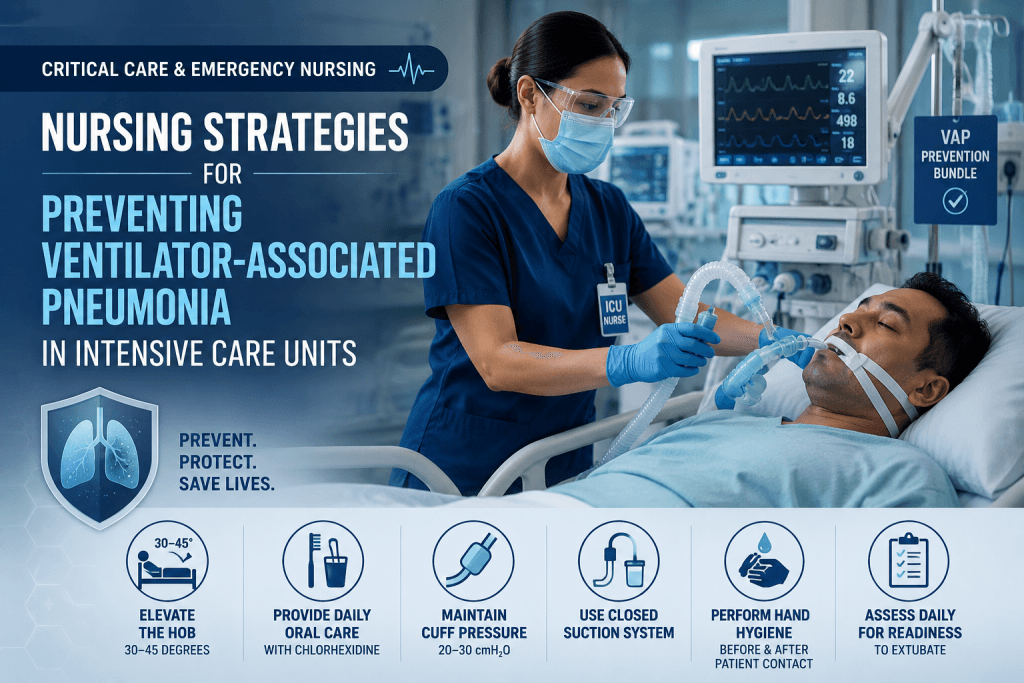
- Nursing Strategies for Preventing Ventilator-Associated Pneumonia in Intensive Care Units
- The Effect of Nurse-to-Patient Ratios on Mortality Rates in Intensive Care Units
- Early Warning Score Systems and Their Effectiveness in Predicting Clinical Deterioration
- Emergency Nurses’ Experiences Managing Workplace Violence and Aggressive Patients
- Impact of Nurse-Led Sepsis Protocols on Time to Antibiotic Administration
- Compassion Fatigue and Secondary Traumatic Stress Among Emergency Department Nurses
Source context: National Institute of Nursing Research