What Is Patient Safety and Quality Improvement in Nursing?
Patient safety and quality improvement (PSQI) refers to the combined body of principles, systems, and daily practices nurses use to prevent harm, reduce variation in care, and continuously raise the standard of clinical outcomes. It sits at the intersection of clinical skill, organizational culture, and data-driven process design.
Defining Patient Safety in Modern Healthcare
Patient safety is best understood as the active prevention of errors, injuries, and adverse events that occur as a result of the care process itself, rather than the underlying illness. Key elements include:
- Prevention over reaction: building systems that catch errors before they reach the patient, rather than responding only after harm occurs.
- Systems thinking: recognizing that most errors result from flawed processes, not careless individuals, a principle popularized by organizations like the Institute for Healthcare Improvement and detailed in resources on what quality improvement in healthcare actually involves.
- Transparency: encouraging open disclosure of errors and near-misses so that root causes can be identified and corrected.
- Standardization: reducing unnecessary variation in how care is delivered across shifts, units, and providers.
Modern patient safety science treats every adverse event as a signal about the system, not simply a reflection of individual performance. This shift in thinking underpins nearly every intervention discussed later in this guide.
The Importance of Quality Improvement in Nursing Practice
Quality improvement (QI) provides the structured methodology nurses and organizations use to translate safety principles into measurable results. Its importance shows up in several concrete ways:
- Closing the gap between best practice and actual practice: QI identifies where evidence-based guidelines are not being consistently followed at the bedside.
- Creating accountability without blame: structured QI cycles (such as Plan-Do-Study-Act) allow teams to test changes in a controlled, low-risk way.
- Improving efficiency alongside safety: well-designed QI initiatives often reduce wasted time and resources while simultaneously reducing harm.
- Supporting regulatory and accreditation requirements: hospitals are increasingly evaluated and reimbursed based on measurable quality and safety indicators.
How Nurses Influence Patient Safety Outcomes
Nurses occupy a unique position in the care team: they spend more direct time with patients than any other clinical discipline, which places them at the center of both risk detection and risk prevention. Their influence on safety outcomes includes:
- Surveillance: continuous bedside monitoring that allows nurses to detect subtle changes in condition before they escalate.
- Advocacy: speaking up when an order, medication, or plan of care appears unsafe, even under time pressure or hierarchy.
- Coordination: serving as the communication hub between physicians, specialists, families, and ancillary staff.
- Documentation and reporting: generating the data that quality teams rely on to identify patterns and prioritize interventions.
Because nurses are so deeply embedded in the moment-to-moment delivery of care, their working conditions, training, and organizational support directly shape how safely that care is delivered.
Common Causes of Preventable Patient Harm
While every clinical setting has its own risk profile, several categories of preventable harm appear consistently across the patient safety literature:
- Medication errors: incorrect dosing, administration timing, or drug interactions, often linked to workload and interruptions.
- Communication failures: incomplete or inconsistent information passed during handoffs, transfers, or shift changes.
- Hospital-acquired conditions: pressure injuries, falls, catheter-associated infections, and central line infections that develop during an inpatient stay.
- Diagnostic delays or errors: missed or delayed recognition of a deteriorating patient.
- Underreporting: a systemic failure to document near-misses and errors, which prevents organizations from learning and improving.
- Equipment and technology gaps: outdated infusion pumps, poorly designed alarms, or electronic health record workflows that increase the chance of an error slipping through unnoticed.
Each of these categories is rarely the result of a single failure. Most preventable harm events involve a chain of smaller breakdowns, any one of which, if caught, could have stopped the error before it reached the patient. This is precisely why the workforce and organizational factors explored in the next section carry so much weight in overall safety performance.
Nursing Workforce Factors That Affect Patient Safety
Patient safety cannot be separated from the conditions nurses work under. Staffing levels, fatigue, organizational culture, and reporting systems all interact to either support or undermine safe care.
Safe Staffing and Workload Management
Staffing adequacy is one of the most consistently studied predictors of patient safety outcomes in nursing. Key considerations include:
- Ratio thresholds: as patient assignments increase beyond a nurse’s safe capacity, the likelihood of missed care and medication errors rises.
- Skill mix: safety depends not only on the number of staff but on the appropriate distribution of experience and specialty training on a unit.
- Workload variability: unpredictable surges in acuity or census can create short-term safety gaps even on adequately staffed units.
- Flexible response systems: float pools, acuity-based staffing models, and charge nurse discretion help absorb workload spikes safely.
- Turnover and vacancy management: chronic short-staffing forces reliance on overtime and agency staff, both of which are associated with higher error rates when not carefully managed.
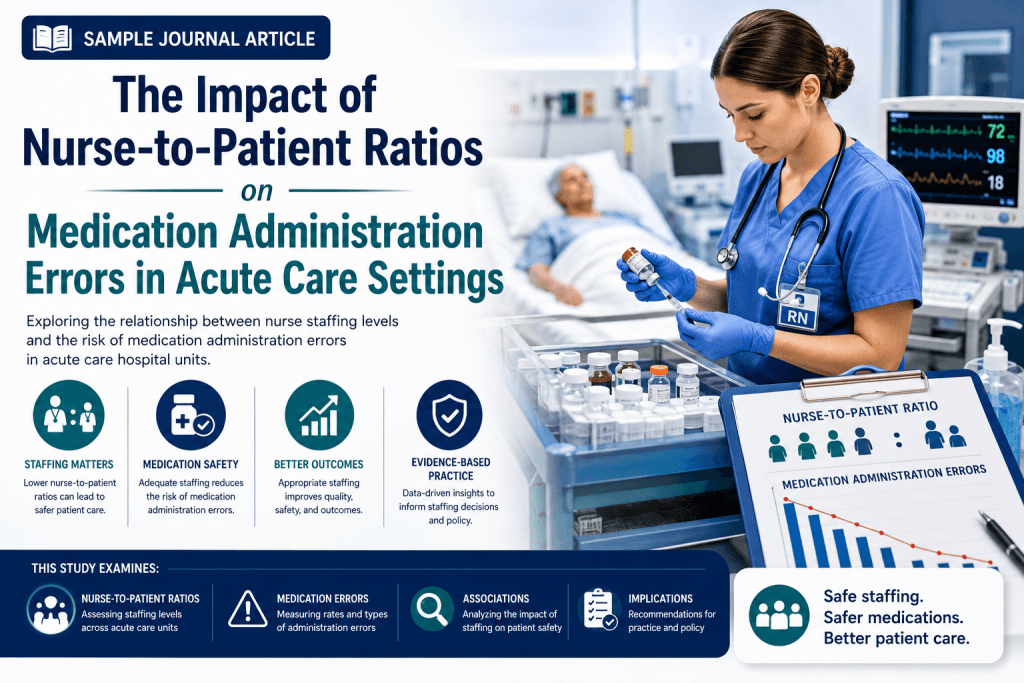
Staffing decisions should never be treated as a purely financial calculation. Every ratio adjustment carries a direct, measurable relationship to the amount of surveillance time available for each patient. Our detailed analysis of the impact of nurse-to-patient ratios on medication administration errors examines this relationship using acute care data and offers a closer look at where the safety margins begin to erode.
Nurse Fatigue and Clinical Performance
Fatigue is a physiological safety hazard, not simply a comfort issue. Its effects on clinical performance include:
- Slower reaction time and reduced vigilance during extended or consecutive shifts.
- Impaired clinical judgment, particularly in high-stakes decision-making under time pressure.
- Increased likelihood of documentation and calculation errors toward the end of long shifts.
- Cumulative risk from chronic sleep debt across multiple consecutive shifts, not just a single long day.
- Reduced ability to catch subtle deterioration, since fatigue narrows attention and makes it harder to notice small changes in a patient’s condition.
Addressing fatigue requires more than individual willpower; it requires scheduling practices, shift length policies, and adequate recovery time built into the organizational structure itself. Our study on the relationship between nurse fatigue and clinical decision-making errors explores how shift length and rest patterns intersect with patient safety outcomes in hospital settings.
Creating a Just Culture in Healthcare Organizations
A just culture distinguishes between human error, at-risk behavior, and reckless conduct, calibrating the organizational response accordingly rather than applying blanket punitive consequences. Building one requires:
- Consistent, visible leadership response to disclosed errors at the point of individual case handling.
- Clear behavioral definitions so staff understand what separates a system-driven error from reckless conduct.
- Psychological safety that allows nurses to disclose mistakes without fear of automatic disciplinary action.
- Ongoing reinforcement, since policy adoption alone does not guarantee a genuinely lived culture on the unit floor.
- Manager-level training, equipping frontline supervisors with a consistent framework for evaluating the circumstances behind an error before assigning any consequence.
A written just culture policy is only the starting point. What nurses actually experience after they disclose a mistake, whether it is met with curiosity and support or with defensiveness and blame, is what ultimately determines whether the policy translates into real behavior change. Our article on nurses’ perceptions of a just culture and its influence on error reporting behaviors examines how perception, rather than policy alone, drives actual reporting rates.
Encouraging Incident Reporting for Continuous Improvement
Incident reporting systems are only as useful as the willingness of staff to use them. Common barriers and solutions include:
- Fear-based barriers: concern about blame, discipline, or damage to professional reputation, especially in units with lower psychological safety.
- Process-based barriers: administrative burden, unclear reporting pathways, and lack of feedback after a report is submitted.
- Leadership visibility: when nurses see reports lead to real system changes, reporting rates tend to improve.
- Simplified reporting tools: reducing the time and complexity required to file a report increases the completeness of safety data.
- Peer normalization: when reporting becomes a routine, expected part of practice rather than an exception, participation rates rise across the entire unit.
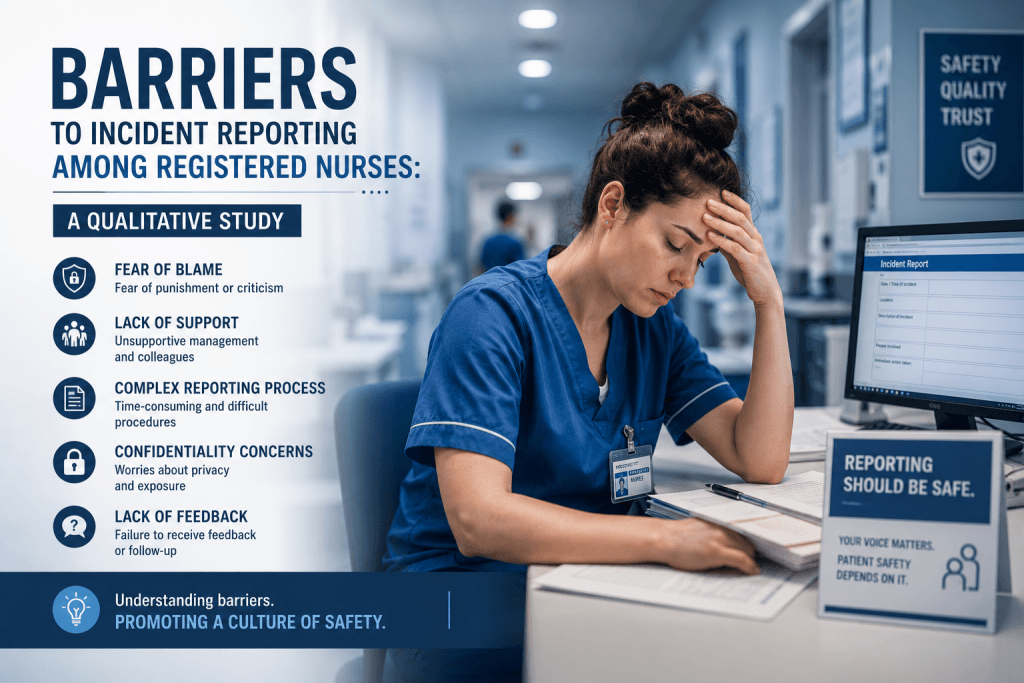
Our qualitative research on barriers to incident reporting among registered nurses unpacks these dynamics directly from frontline staff perspectives.
Evidence-Based Nursing Interventions That Improve Patient Safety
Improving Communication During Patient Handoffs
Handoffs are one of the highest-risk moments in the care continuum because information can be lost, misinterpreted, or omitted entirely. Effective approaches include:
- Standardized frameworks such as SBAR (Situation, Background, Assessment, Recommendation) to structure verbal handoffs.
- Bedside shift reporting, which allows the outgoing and incoming nurse to visually verify the patient’s status together.
- Structured written documentation that reduces reliance on memory alone during verbal exchanges.
- Protected, uninterrupted handoff time to minimize distractions during the exchange of critical information.
- Two-way verification, allowing the receiving nurse to ask clarifying questions and repeat back key details before assuming responsibility for the patient.
Our review of the effectiveness of bedside shift reporting on patient safety outcomes and our analysis of handoff communication failures and their contribution to patient safety incidents both examine this critical transition point in detail.
Simulation-Based Education for Safer Clinical Practice
Simulation training allows nurses to practice high-risk scenarios without any risk to real patients. Its safety benefits include:
- Skill rehearsal under realistic pressure, including rare but high-stakes emergencies.
- Immediate, structured feedback that reinforces correct technique and identifies gaps in real time.
- Team-based practice, improving coordination and communication among interdisciplinary teams before a real crisis occurs.
- Reduced medication administration errors when simulation is used to reinforce high-alert medication protocols.
- Confidence building for new graduates, giving early-career nurses a safe environment to build competence before facing similar scenarios independently.
Our study on the role of simulation training in reducing medication administration errors among nursing staff presents evidence supporting this approach.
Standardized Checklists for Error Prevention
Checklists reduce reliance on memory and help ensure critical steps are never skipped, even under time pressure. Their value in nursing practice includes:
- Reducing omission errors during complex, multi-step procedures.
- Standardizing practice across different providers, shifts, and units.
- Improving team communication by creating a shared, verbal checkpoint before high-risk procedures.
- Supporting postoperative safety when used consistently throughout the surgical and perioperative process.
- Building a habit of verification, so pausing to confirm critical steps becomes an automatic part of the workflow rather than an extra task.
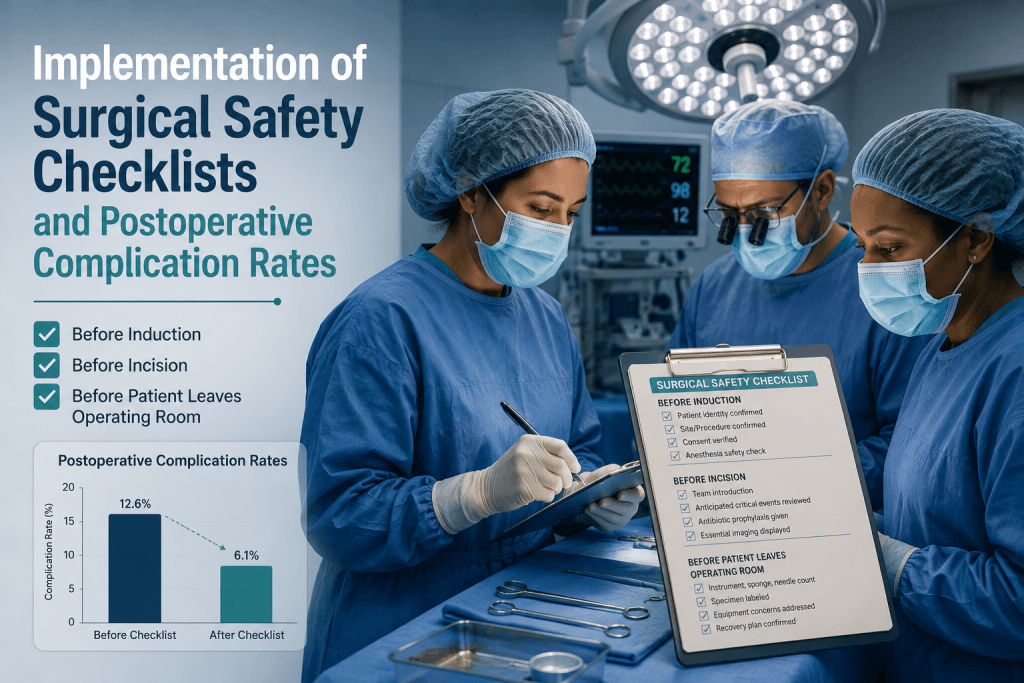
Our research on the implementation of surgical safety checklists and postoperative complication rates examines how this simple tool translates into measurable outcome improvements.
Patient Identification Strategies to Reduce Medical Errors
Wrong-patient errors, though rare, can have catastrophic consequences. Reliable identification protocols depend on:
- Two-identifier verification (such as name and date of birth) before every medication, procedure, or specimen collection.
- Barcode scanning technology integrated with the electronic health record to reduce manual verification errors.
- Consistent application across all care settings, including diagnostic imaging and laboratory services.
- Staff education and accountability to prevent workaround behaviors that bypass verification steps under time pressure.
- Redundant safeguards, layering technology and manual verification so that a single missed step does not lead directly to harm.
Our systematic review of the effectiveness of patient identification protocols in preventing wrong-patient errors outlines which strategies produce the most consistent results.
Preventing Hospital-Acquired Complications Through Nursing Care
Pressure Injury Prevention Best Practices
Pressure injuries are considered a nursing-sensitive quality indicator because they are largely preventable with consistent care. Best practices include:
- Routine, standardized skin assessments using validated risk-scoring tools on admission and throughout the stay.
- Scheduled repositioning for patients with limited mobility, documented and tracked consistently.
- Appropriate support surfaces matched to the patient’s individual risk level.
- Nutritional support, since inadequate intake significantly increases skin breakdown risk in critically ill patients.
- Moisture and friction management, including proper incontinence care and careful handling during repositioning and transfers.
Our review of evidence-based protocols for reducing hospital-acquired pressure injuries in critically ill patients outlines these strategies in greater clinical detail.
Reducing Patient Falls
Falls remain one of the most common hospital-acquired events, with prevention strategies including:
- Standardized fall risk assessments completed on admission and reassessed with any change in condition.
- Environmental modifications, such as bed alarms, non-slip footwear, and accessible call lights.
- Purposeful rounding, proactively addressing toileting, pain, and positioning needs before a patient attempts to move unassisted.
- Clear visual cues, such as color-coded identification, to alert all staff to a patient’s fall risk status.
- Family and patient engagement, ensuring patients and their support people understand their individual fall risk and how to call for assistance.
Our retrospective analysis of fall prevention strategies and their effectiveness in reducing inpatient falls reviews which interventions produce the strongest measurable results.
Preventing Central Line-Associated Bloodstream Infections (CLABSIs)
CLABSIs are serious, costly, and largely preventable through disciplined insertion and maintenance practices, including:
- Maximal sterile barrier precautions during line insertion.
- Daily necessity review, removing central lines as soon as they are no longer clinically required.
- Standardized dressing and maintenance protocols, reducing variation in how lines are cared for across shifts.
- Checklist-driven insertion bundles that ensure every safety step is completed and documented.
- Empowered staff authority, giving any team member the ability to stop an insertion procedure if a sterile technique breach is observed.
Our study on the impact of standardized checklists on reducing central line-associated bloodstream infections explores how bundled interventions reduce infection rates.
Hand Hygiene and Infection Prevention
Hand hygiene remains the single most effective, lowest-cost intervention for preventing healthcare-associated infections. Supporting compliance requires:
- Accessible hand hygiene stations positioned at the point of care, not just at unit entrances.
- Direct observation and feedback programs that track real-time compliance rather than relying on self-report alone.
- Unit-level accountability, reinforced by visible leadership modeling of the same behavior.
- Ongoing education tied to actual infection outcome data, rather than generic annual reminders.
- Removing physical barriers, such as ensuring dispensers are never out of stock and are placed exactly where hands are used.
Our research on hand hygiene compliance among nurses and its impact on healthcare-associated infection prevention examines what actually moves compliance rates in practice.
Quality Improvement Strategies That Enhance Nursing Practice
Sustained improvement in patient safety depends on structured quality improvement methods that translate frontline observations into measurable, lasting change.
Using Evidence-Based Practice to Improve Patient Outcomes
Evidence-based practice (EBP) integrates the best available research with clinical expertise and patient preferences. Its role in quality improvement includes:
- Replacing tradition-based habits with practices supported by current research.
- Standardizing care pathways based on the strongest available evidence rather than individual preference.
- Building nurse confidence in clinical decision-making through a clear evidentiary foundation.
- Creating a feedback loop where outcome data continuously refines which practices are adopted or retired.
- Supporting nurse-led research, encouraging bedside staff to ask clinical questions that can be tested and translated into practice change.
Continuous Quality Improvement in Healthcare
Continuous quality improvement (CQI) treats safety as an ongoing cycle rather than a one-time fix. Core components include:
- Plan-Do-Study-Act (PDSA) cycles that test small, incremental changes before scaling them organization-wide.
- Root cause analysis following adverse events, focused on systems rather than individual blame.
- Interdisciplinary QI teams that include frontline nurses alongside leadership and data analysts.
- Regular reassessment, since interventions that work initially can lose effectiveness without ongoing reinforcement.
- Shared learning across units, spreading successful pilot changes to other departments once they are validated.
Measuring Patient Safety Indicators
Meaningful improvement requires reliable measurement. Common patient safety indicators nursing teams track include:
- Fall rates and fall-related injury rates per patient day.
- Hospital-acquired pressure injury rates by unit and risk category.
- Infection rates, including CLABSI, CAUTI, and surgical site infections.
- Medication error and near-miss reporting rates, tracked over time to identify trends.
- Staff perception scores on validated tools such as the Hospital Survey on Patient Safety Culture.
- Reporting completeness, tracking not just the number of events reported but whether reporting rates reflect the true frequency of near-misses on a unit.
These indicators only create value when they are reviewed regularly, shared transparently with staff, and tied to specific, actionable improvement plans rather than filed away as static reports.
The Role of Leadership in Patient Safety
Leadership behavior, more than policy language alone, determines whether a culture of safety is genuinely lived on a unit. Effective leadership practices include:
- Visible presence on the unit, including regular safety rounds and open dialogue with staff.
- Consistent, fair response to disclosed errors, reinforcing trust in the reporting process.
- Resource allocation that supports safe staffing, adequate training, and functional equipment.
- Transparent communication of safety data and improvement progress back to frontline staff.
- Mentorship and coaching, developing charge nurses and unit leaders who can model safe practice in real time rather than relying on policy documents alone.
Future Trends in Nursing Quality Improvement
Patient safety and quality improvement continue to evolve alongside technology and workforce research. Emerging directions include:
- Predictive analytics that flag deteriorating patients or high-risk units before adverse events occur.
- Artificial intelligence-assisted documentation and alerts designed to reduce administrative burden and support real-time decision-making.
- Human factors engineering, redesigning workflows and equipment around how nurses actually work rather than idealized processes.
- Greater emphasis on nurse well-being as a direct patient safety variable, not a separate workforce concern.
- Interoperable data systems, allowing safety indicators to be tracked seamlessly across departments and shared in real time with the teams best positioned to act on them.
None of these emerging tools replace the fundamentals covered throughout this guide. Technology can flag a risk faster, but it still takes a well-staffed, well-rested, psychologically safe nursing workforce to act on that information at the bedside.
Patient safety and quality improvement are not separate initiatives layered on top of nursing practice — they are the practice itself. From staffing decisions made months in advance to the checklist completed seconds before a procedure, every layer of the system either protects a patient or quietly increases their risk.
Journal Article Examples
Explore our full library of in-depth journal article examples covering the workforce factors, evidence-based interventions, and complication-prevention strategies discussed throughout this guide.
- The impact of nurse-to-patient ratios on medication administration errors in acute care settings
- The relationship between nurse fatigue and clinical decision-making errors in hospital settings
- Nurse staffing levels and their association with adverse patient events: A cross-sectional study
- Nurses’ perceptions of a just culture and its influence on error reporting behaviors
- Barriers to incident reporting among registered nurses: A qualitative study
- Effectiveness of bedside shift reporting on patient safety outcomes: A systematic review
- The role of simulation training in reducing medication administration errors among nursing staff
- Handoff communication failures and their contribution to patient safety incidents
- Implementation of surgical safety checklists and postoperative complication rates
- The effectiveness of patient identification protocols in preventing wrong-patient errors: A systematic review
- Evidence-based protocols for reducing hospital-acquired pressure injuries in critically ill patients
- Fall prevention strategies and their effectiveness in reducing inpatient falls: A retrospective analysis
- Impact of standardized checklists on reducing central line-associated bloodstream infections
- Hand hygiene compliance among nurses and its impact on healthcare-associated infection prevention