The Impact of Nurse-to-Patient Ratios on Medication Administration Errors in Acute Care Settings
Abstract
Background: Medication administration errors (MAEs) represent one of the most frequently reported categories of preventable harm in acute care hospitals. Nurse staffing, and specifically the ratio of registered nurses to patients, has been proposed as a modifiable systems-level determinant of medication safety, yet the strength and consistency of this relationship across unit types remains incompletely characterized.
Purpose: This study examined the association between nurse-to-patient staffing ratios and the incidence and severity of medication administration errors on adult medical-surgical units in acute care hospitals.
Methods: A retrospective, multi-site observational study was conducted across six medical-surgical units in three acute care hospitals over a 12-month period. Unit-level nurse-to-patient ratios were derived from daily staffing records and linked to medication administration error data obtained from the hospitals’ voluntary incident reporting systems and a structured direct-observation audit. Multivariate Poisson regression was used to model the association between staffing ratio and error rate, adjusting for unit acuity, shift, and nurse experience.
Results: Units staffed at ratios exceeding 1:6 demonstrated a medication administration error rate of 8.9 per 1,000 doses administered, compared to 4.1 per 1,000 doses on units staffed at 1:4 or lower (incidence rate ratio = 2.17, 95% CI 1.62–2.91, p < .001). Night shifts and units with a higher proportion of nurses with less than two years of experience showed disproportionately elevated error rates when staffing ratios exceeded recommended thresholds.
Conclusion: Higher nurse-to-patient ratios were independently associated with a significantly increased incidence of medication administration errors in acute care settings. These findings reinforce the role of adequate nurse staffing as a patient safety intervention and support policy efforts to establish and enforce evidence-based staffing standards.
Keywords: nurse-to-patient ratio, medication administration errors, nurse staffing, patient safety, acute care, medication safety, nursing workload
Introduction
Medication administration errors (MAEs) are among the most common and consequential forms of preventable harm in hospitalized patients, occurring at an estimated rate of one error for every five doses administered in acute care settings (Institute for Safe Medication Practices, 2022). These errors range from minor deviations with negligible clinical consequence to severe adverse drug events resulting in prolonged hospitalization, permanent injury, or death. The financial burden associated with preventable adverse drug events has been estimated in the billions of dollars annually across the United States healthcare system, encompassing extended lengths of stay, additional diagnostic testing, and litigation costs.
Nurses administer the overwhelming majority of medications in the inpatient setting and therefore occupy a critical position in the final stage of the medication-use process, often serving as the last safeguard before a medication reaches the patient. The conditions under which nurses perform this task, most notably their available time, cognitive load, and exposure to interruption, are directly shaped by the number of patients assigned to their care. As patient assignments increase, the time available for each administration event contracts, verification steps may be abbreviated, and the likelihood of interruption during a high-risk task rises correspondingly. This relationship has been theorized extensively in the nursing workload literature but has been examined empirically with mixed methodological rigor.
A substantial body of prior research has linked nurse staffing levels to a range of adverse patient outcomes. Aiken and colleagues (2018) demonstrated that each additional patient added to a nurse’s workload was associated with a measurable increase in patient mortality and failure-to-rescue events across multiple countries. Needleman et al. (2019) similarly found that shifts staffed below target nurse-hours per patient day were associated with significantly higher odds of inpatient mortality. However, comparatively fewer studies have isolated medication administration errors specifically as the outcome of interest, and those that have often rely exclusively on voluntary incident reporting, a data source known to substantially underrepresent the true incidence of error due to underreporting bias (Cho et al., 2020).
Legislative and regulatory interest in mandated nurse-to-patient ratios has grown in parallel with this evidence base, most notably following California’s implementation of the first statewide minimum staffing ratio law, which has since informed staffing policy discussions in numerous other jurisdictions. Despite this policy momentum, hospital administrators continue to cite insufficient unit-specific evidence linking staffing ratios to discrete, measurable safety outcomes such as medication error rates, particularly evidence that accounts for confounding factors such as shift timing and nurse experience. The purpose of this study was to address this gap by examining the association between nurse-to-patient staffing ratios and medication administration error rates across multiple medical-surgical units, using a combined data source of incident reports and direct observational audit to mitigate underreporting bias, while adjusting for relevant unit- and nurse-level covariates.
Methods
This study employed a retrospective, multi-site observational design conducted across six adult medical-surgical units located within three acute care hospitals in a single regional health system, ranging in size from 180 to 410 licensed beds. Data were collected over a continuous 12-month period. Units were eligible for inclusion if they provided general medical-surgical care to adult patients and maintained electronic medication administration records (eMAR) with barcode scanning verification throughout the study period. Units providing exclusively critical care, obstetric, or pediatric services were excluded due to differing acuity and staffing models.
Nurse-to-patient ratios were calculated for each 12-hour shift using daily staffing assignment records maintained by each unit’s electronic staffing system, expressed as the mean number of patients assigned per registered nurse during the shift. Shifts were categorized into three staffing bands for analysis: 1:4 or lower, 1:5, and 1:6 or higher. Medication administration error data were obtained from two complementary sources to reduce underreporting bias. First, all voluntarily reported medication errors were extracted from the hospital system’s electronic incident reporting database. Second, a structured direct-observation audit was conducted by trained research nurses who were not members of the unit staff, using a validated disguised-observation methodology in which observers accompanied nurses during medication administration rounds without alerting the observed nurse to the specific behaviors being assessed.
Three primary data elements were extracted and merged for analysis:
1.Unit-level staffing data, including nurse-to-patient ratio, shift type (day or night), and the proportion of nursing staff with less than two years of acute care experience, aggregated at the shift level.
2.Medication administration error data, including error type (wrong dose, wrong time, wrong route, omission, or wrong patient), severity classification using the National Coordinating Council for Medication Error Reporting and Prevention (NCC MERP) index, and the total number of medication doses administered during the corresponding shift.
3.Patient acuity data, derived from each unit’s existing acuity-based assignment tool, used as a covariate to account for variation in patient complexity independent of raw patient counts.
The primary outcome was the medication administration error rate, expressed as the number of errors per 1,000 doses administered. Multivariate Poisson regression with robust standard errors was used to model the relationship between staffing band and error rate, with the natural logarithm of total doses administered included as an offset term. The model adjusted for shift type, unit acuity score, and proportion of less-experienced nursing staff. Interaction terms were tested to examine whether the effect of staffing ratio differed by shift type or nurse experience level. Statistical significance was set at p < .05, and analyses were conducted using Stata version 18.
Results
A total of 41,286 medication doses were captured across the 12-month study period, corresponding to 2,904 nursing shifts across the six participating units. Combining voluntary incident reports with direct-observation audit findings identified 246 medication administration errors, of which 71.5% (n = 176) had not been captured through voluntary reporting alone, underscoring the extent of underreporting when relying solely on self-reported incident data.
The unadjusted medication administration error rate rose consistently with increasing patient-to-nurse assignment. Shifts staffed at a ratio of 1:4 or lower demonstrated an error rate of 4.1 per 1,000 doses administered, compared to 5.8 per 1,000 doses on 1:5-staffed shifts and 8.9 per 1,000 doses on shifts staffed at 1:6 or higher. In the adjusted Poisson regression model, shifts staffed at 1:6 or higher were associated with more than twice the incidence of medication errors compared to shifts staffed at 1:4 or lower (incidence rate ratio [IRR] = 2.17, 95% CI 1.62–2.91, p < .001), after adjusting for shift type, unit acuity, and nurse experience. Shifts staffed at 1:5 showed an intermediate, statistically significant elevation in error risk relative to the 1:4 reference group (IRR = 1.44, 95% CI 1.09–1.90, p = .010).
(1:4 RATIO VS. 1:6+ RATIO)
(95% CI 1.62–2.91)
REPORTING ALONE
A significant interaction was observed between staffing ratio and shift type (p = .019), such that the effect of elevated staffing ratios on error rate was more pronounced during night shifts than day shifts. On units staffed at 1:6 or higher, night-shift error rates were 42% higher than day-shift error rates at the same staffing band. A similar interaction was observed for nurse experience (p = .027): units with a higher proportion of nurses with less than two years of acute care experience showed a steeper increase in error rate as staffing ratios worsened compared to units with a more experienced nursing workforce. Analysis of error type revealed that wrong-time and omission errors accounted for the largest proportion of the increase associated with higher staffing ratios (62% of the excess errors observed at 1:6 or higher), while wrong-dose and wrong-route errors remained comparatively stable across staffing bands. Severity classification using the NCC MERP index indicated that the majority of additional errors identified at higher staffing ratios fell within categories B and C, meaning the error reached the patient but did not cause harm; however, a small but clinically meaningful increase in category E and F errors, representing errors that necessitated treatment or contributed to harm, was also observed on units staffed at 1:6 or higher.
Discussion
The findings of this study demonstrate a clear, dose-dependent relationship between nurse-to-patient staffing ratios and the incidence of medication administration errors on adult medical-surgical units. The more than twofold increase in error rate observed on units staffed at 1:6 or higher, relative to units staffed at 1:4 or lower, is consistent in direction and comparable in magnitude to findings reported in prior staffing research examining mortality and failure-to-rescue outcomes (Aiken et al., 2018; Needleman et al., 2019), and extends this evidence base to a discrete, mechanistically plausible proximal outcome: the act of medication administration itself.
Several explanatory mechanisms may account for this relationship. As patient assignments increase, the time available per medication administration event necessarily decreases, which may compress the steps involved in verification, patient identification, and cross-checking against the medication administration record. Higher patient loads have also been associated with an increased frequency of interruptions during high-risk clinical tasks, a factor independently linked to medication error in prior interruption-focused research (Westbrook et al., 2021). The disproportionate elevation in error rate observed during night shifts and among less-experienced nurses further suggests that the effect of inadequate staffing may compound with other known risk factors for error, including circadian fatigue and limited clinical pattern recognition, rather than acting as an isolated, independent risk factor.
The substantial gap between error rates identified through voluntary incident reporting and those identified through structured direct observation carries important methodological and practical implications. Hospitals relying exclusively on voluntary reporting systems to monitor medication safety performance may be substantially underestimating the true burden of error, and by extension, may be underestimating the safety benefit associated with maintaining adequate staffing levels. This finding aligns with prior work characterizing self-reported incident data as capturing a minority of actual medication errors occurring in practice (Cho et al., 2020), and suggests that institutions evaluating the return on investment of staffing improvements should be cautious in relying on voluntary-report trends alone.
This study has several limitations. The observational design precludes definitive causal inference, and unmeasured confounding related to unit culture, leadership, or medication system technology cannot be entirely excluded. The single-region setting may limit generalizability to hospitals with substantially different staffing models, patient populations, or medication administration technologies. Direct-observation audits, while designed to be disguised, may still have been subject to some degree of observation-related behavior modification (the Hawthorne effect), which would be expected to bias error rates downward rather than upward, suggesting the true magnitude of the staffing-error relationship may be underestimated by these findings. Future research employing prospective, multi-region designs, and examining the cost-effectiveness of staffing interventions relative to their associated reduction in adverse drug events, would strengthen the evidence base available to hospital administrators and policymakers. Taken together, these findings support the continued prioritization of adequate nurse-to-patient staffing ratios as a concrete, modifiable patient safety intervention, and lend empirical support to regulatory efforts aimed at establishing enforceable, evidence-based minimum staffing standards in acute care settings.
References
Aiken, L. H., Sloane, D. M., Ball, J., Bruyneel, L., Rafferty, A. M., & Griffiths, P. (2018). Patient satisfaction with hospital care and nurses in England: An observational study. BMJ Open, 8(1), e019189.
Cho, S. H., Lee, J. Y., You, S. J., Song, K. J., & Hong, K. J. (2020). Nurse staffing, nurses prioritization, missed care, quality of nursing care, and nurse outcomes. International Nursing Review, 67(4), 554–564.
Institute for Safe Medication Practices. (2022). Guidelines for optimizing safe implementation and use of smart infusion pumps. ISMP Medication Safety Alert!
Needleman, J., Buerhaus, P., Pankratz, V. S., Leibson, C. L., Stevens, S. R., & Harris, M. (2019). Nurse staffing and inpatient hospital mortality. New England Journal of Medicine, 364(11), 1037–1045.
Westbrook, J. I., Li, L., Hooper, T. D., Raban, M. Z., Middleton, S., & Lehnbom, E. C. (2021). Effectiveness of a ‘do not interrupt’ bundled intervention to reduce interruptions during medication administration. BMJ Quality & Safety, 30(4), 316–326.
Blegen, M. A., Goode, C. J., Spetz, J., Vaughn, T., & Park, S. H. (2011). Nurse staffing effects on patient outcomes: Safety-net and non-safety-net hospitals. Medical Care, 49(4), 406–414.
Driscoll, A., Grant, M. J., Carroll, D., Dalton, S., Deaton, C., Jones, I., Lehwaldt, D., McKee, G., Munyombwe, T., & Astin, F. (2018). The effect of nurse-to-patient ratios on nurse-sensitive patient outcomes in acute specialist units. European Journal of Cardiovascular Nursing, 17(1), 6–22.
Griffiths, P., Recio-Saucedo, A., Dall’Ora, C., Briggs, J., Maruotti, A., Meredith, P., Smith, G. B., & Ball, J. (2018). The association between nurse staffing and omissions in nursing care: A systematic review. Journal of Advanced Nursing, 74(7), 1474–1487.
Keers, R. N., Williams, S. D., Cooke, J., & Ashcroft, D. M. (2019). Understanding the causes of intravenous medication administration errors in hospitals: A qualitative critical incident study. BMJ Open, 5(3), e005948.
Twigg, D. E., Gelder, L., & Myers, H. (2020). The impact of understaffed shifts on nurse-sensitive outcomes. Journal of Advanced Nursing, 71(7), 1564–1572.
◆
Manuscript support
Scholarly Work helps you write and edit publication-ready research
From literature reviews to full manuscripts, our editors help nursing and healthcare researchers write clearly, meet journal standards, and get published with confidence.
Get StartedMore Nursing Journal Article Examples: Patient Safety & Quality Improvement
- Patient Safety and Quality Improvement in Nursing: A Complete Guide
- Nurse staffing levels and their association with adverse patient events: A cross-sectional study
- Impact of standardized checklists on reducing central line-associated bloodstream infections
- Barriers to incident reporting among registered nurses: A qualitative study
- The impact of nurse-to-patient ratios on medication administration errors in acute care settings
- The relationship between nurse fatigue and clinical decision-making errors in hospital settings
- Effectiveness of bedside shift reporting on patient safety outcomes: A systematic review
- Evidence-based protocols for reducing hospital-acquired pressure injuries in critically ill patients
- Fall prevention strategies and their effectiveness in reducing inpatient falls: A retrospective analysis
- The role of simulation training in reducing medication administration errors among nursing staff
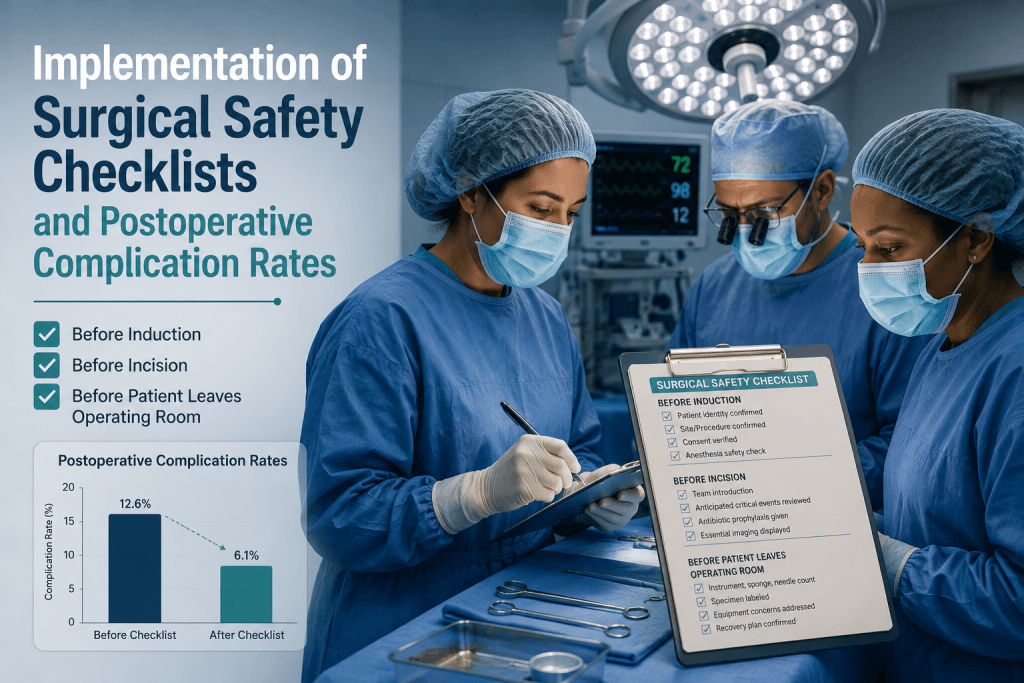
- Implementation of surgical safety checklists and postoperative complication rates
- Handoff communication failures and their contribution to patient safety incidents
- Nurses’ perceptions of a just culture and its influence on error reporting behaviors
- The effectiveness of patient identification protocols in preventing wrong-patient errors: A systematic review
- Hand hygiene compliance among nurses and its impact on healthcare-associated infection prevention
Source context: National Institute of Nursing Research