The Relationship Between Nurse Fatigue and Clinical Decision-Making Errors in Hospital Settings
Abstract
Background: Nurse fatigue, arising from extended shift length, insufficient recovery time between shifts, and cumulative sleep debt across consecutive workdays, has been increasingly implicated as a contributing factor in clinical errors, yet the specific relationship between fatigue and the cognitive processes underlying clinical decision-making remains incompletely characterized in hospital-based nursing practice.
Purpose: This review synthesized the evidence examining the relationship between nurse fatigue, operationalized through shift length, cumulative work hours, and self-reported sleep and alertness measures, and the frequency and type of clinical decision-making errors among hospital-based registered nurses.
Methods: A structured review of peer-reviewed literature published between 2004 and 2025 was conducted, drawing on prospective cohort studies, secondary analyses of nurse staffing and safety survey data, and laboratory-based simulation studies examining fatigue-related decision-making performance. Findings were organized according to three domains of decision-making vulnerability: vigilance and detection errors, judgment and prioritization errors, and errors of memory and procedural sequencing.
Results: Nurses working shifts of 12.5 hours or longer, and those working three or more consecutive shifts, reported significantly higher rates of self-reported near-miss and actual clinical errors than nurses working shorter shifts or fewer consecutive days. Fatigue was most strongly associated with vigilance-based errors, including delayed recognition of clinical deterioration and missed changes in monitored parameters, while judgment-based errors, including medication dosing miscalculations and prioritization failures during high-acuity periods, showed a somewhat weaker but still significant association. Errors of memory and procedural sequencing, such as omitted steps in multi-step protocols, were disproportionately reported during the final hours of extended shifts and during night-shift rotations.
Conclusion: Nurse fatigue is meaningfully associated with an elevated risk of clinical decision-making errors across multiple cognitive domains, with the strength of association increasing with shift length, consecutive shift number, and circadian misalignment. These findings support continued attention to scheduling practices, fatigue-mitigation strategies, and organizational culture around fatigue disclosure as components of hospital patient safety programs.
Keywords: nurse fatigue, clinical decision-making, medical error, shift length, sleep deprivation, patient safety, nursing workforce
Introduction
Clinical decision-making in hospital nursing practice is a continuous, high-stakes cognitive process, requiring nurses to detect subtle changes in patient status, integrate incomplete or conflicting clinical data, prioritize competing demands across multiple patients, and execute complex, multi-step interventions, often under significant time pressure. This cognitive demand is compounded by the structural realities of hospital nursing work, including extended shift lengths, rotating or overnight schedules, and, in many settings, chronic understaffing that increases both patient load and cumulative time on task (Rogers et al., 2004). Because clinical decision-making depends heavily on sustained attention, working memory, and executive function, all of which are known to degrade under conditions of sleep loss and extended wakefulness, the relationship between nurse fatigue and the quality of clinical decision-making has become a subject of sustained empirical and regulatory attention (Caruso, 2014).
Empirical interest in this relationship intensified following a series of large-scale studies documenting the prevalence of extended shift lengths within the nursing workforce and their association with self-reported errors. In a widely cited study, Rogers et al. (2004) found that the risk of making an error increased significantly when nurses worked shifts lasting 12.5 hours or longer, and that the risk of error rose further among nurses who worked overtime or more than 40 hours per week, independent of shift length alone. These findings were subsequently extended by Scott et al. (2006), who reported that nurses working shifts of 12.5 hours or more were more than twice as likely to report making an error or near-miss compared to those working shorter shifts, and that the probability of an error increased in a dose-dependent manner with each additional hour worked beyond the twelfth hour of a shift.
Beyond shift length in isolation, subsequent research has identified cumulative and circadian dimensions of fatigue that appear to independently influence error risk. Trinkoff et al. (2011) found that nurses working three or more consecutive 12-hour shifts, even without exceeding standard weekly hour limits, reported significantly elevated rates of patient care errors relative to nurses with more distributed schedules, suggesting that insufficient inter-shift recovery time compounds fatigue independent of any single shift’s duration. Circadian misalignment associated with night-shift and rotating-shift work has similarly been identified as an independent contributor to impaired alertness and decision-making performance, with Geiger-Brown et al. (2012) documenting that hospital nurses working consecutive night shifts accumulated significant sleep debt across a work week, with corresponding reductions in psychomotor vigilance test performance comparable in magnitude to levels of impairment associated with legally significant alcohol intoxication in other safety-sensitive occupations.
Despite this accumulating evidence linking fatigue to self-reported error rates, comparatively less attention has been directed toward characterizing which specific components of the clinical decision-making process are most vulnerable to fatigue-related degradation, and whether different categories of decision-making error, such as failures of vigilance versus failures of judgment or memory, are differentially affected by fatigue exposure. Because fatigue is understood to act upon distinct, partially dissociable cognitive systems, including sustained attention, working memory, and executive control, a more granular understanding of which decision-making processes are most susceptible to fatigue-related impairment may better inform where fatigue-mitigation strategies and organizational safeguards should be concentrated (Steege & Rainbow, 2017).
Beyond its cognitive dimensions, fatigue-related error carries substantial downstream consequence for both patients and the nursing workforce itself. Adverse events attributable in part to fatigue have been associated with extended hospitalization, increased likelihood of preventable harm, and, at the level of the individual nurse, heightened risk of moral distress and burnout following involvement in a serious error, a relationship that may itself compound future fatigue through disrupted sleep and elevated psychological strain (Caruso, 2014). This bidirectional relationship between fatigue and error-related distress underscores that fatigue is not merely an isolated occupational hazard but a factor embedded within a broader cycle of workforce wellbeing, one in which unaddressed fatigue may contribute to the very conditions, including short-staffing driven by turnover and absenteeism, that perpetuate high workload and insufficient recovery time across a nursing unit. This review synthesized the available evidence examining the relationship between nurse fatigue and clinical decision-making errors in hospital settings, with particular attention to whether this relationship differs across the domains of vigilance and detection, judgment and prioritization, and memory and procedural sequencing.
Methods
This review drew on peer-reviewed literature published between 2004 and 2025 addressing the relationship between nurse fatigue, operationalized through shift length, consecutive shift number, overtime hours, self-reported sleep duration, or objective alertness measures, and clinical decision-making errors, near-misses, or adverse events among registered nurses in hospital-based practice. Eligible study designs included large-scale prospective cohort studies drawing on structured logbook or diary methodology, secondary analyses of nurse staffing and patient safety survey datasets, and controlled laboratory or high-fidelity simulation studies examining the effect of sleep restriction or extended wakefulness on nursing-relevant decision-making tasks. Studies examining fatigue exclusively among non-hospital nursing populations, such as home health or long-term care settings, were considered only when findings were explicitly generalizable to acute hospital practice.
Given the substantial heterogeneity in how fatigue and decision-making error were operationalized across the identified literature, ranging from self-reported near-miss logs to standardized psychomotor vigilance testing to retrospective incident report review, a formal meta-analysis was not feasible. Instead, findings were synthesized narratively and organized according to three domains of decision-making vulnerability commonly used in the human factors and cognitive fatigue literature: vigilance and detection errors, encompassing failures to notice or timely recognize a clinically significant change; judgment and prioritization errors, encompassing miscalculation, misjudgment of clinical significance, or misallocation of attention across competing demands; and memory and procedural sequencing errors, encompassing omitted or out-of-order steps in multi-step clinical protocols. Where available, effect estimates and reported odds ratios were extracted and compared descriptively across domains rather than pooled statistically.
Results
Across the reviewed literature, a consistent and dose-dependent relationship was observed between shift length and self-reported error or near-miss rates. Nurses working shifts of 12.5 hours or longer reported significantly higher odds of error than those working shifts of 8 to 9 hours, with several studies reporting that this association strengthened further among nurses who additionally worked overtime beyond a scheduled shift or who worked more than 40 hours in a given week (Rogers et al., 2004; Scott et al., 2006). Similarly, cumulative exposure across consecutive shifts emerged as an independent contributor to error risk distinct from single-shift duration, with nurses working three or more consecutive 12-hour shifts reporting significantly elevated error rates even when no individual shift exceeded standard length limits (Trinkoff et al., 2011).
SHIFTS ≥12.5 HOURS
AFFECTED BY FATIGUE
FATIGUE-RELATED NEAR-MISSES
When decision-making errors were examined by domain, vigilance and detection errors showed the strongest and most consistent association with fatigue exposure. Delayed recognition of early signs of clinical deterioration, missed abnormal vital sign trends, and failure to notice changes in monitored parameters such as oxygen saturation or cardiac rhythm were disproportionately reported during the later hours of extended shifts and during consecutive night-shift rotations, a pattern consistent with laboratory evidence that sustained attention and psychomotor vigilance are among the cognitive functions most sensitive to accumulated sleep debt (Geiger-Brown et al., 2012; Dorrian et al., 2006). Barker and Nussbaum (2011) similarly found that self-reported vigilance-related lapses, including difficulty maintaining focus during routine monitoring tasks, increased significantly with both shift length and self-reported sleepiness scores, independent of nurses’ self-assessed clinical competence.
Judgment and prioritization errors, including medication dosing miscalculations, misjudged clinical urgency, and difficulty appropriately allocating attention across multiple competing patient needs during high-acuity periods, showed a somewhat weaker, though still statistically significant, association with fatigue exposure than vigilance-related errors. Weaver et al. (2012) found that nurses reporting higher levels of subjective fatigue were significantly more likely to report difficulty prioritizing tasks appropriately during periods of high patient acuity, and Sagherian et al. (2017) reported that fatigue was independently associated with self-reported medication administration errors even after adjustment for unit acuity and staffing ratio, though the magnitude of this association was smaller than that observed for vigilance-related lapses in the same dataset. Several studies suggested that experienced nurses were partially able to compensate for judgment-related fatigue effects through the use of established clinical heuristics and pattern recognition, a compensatory mechanism less available for vigilance-dependent tasks that depend more directly on moment-to-moment sustained attention than on accumulated clinical experience (Steege & Rainbow, 2017).
Errors of memory and procedural sequencing, including omitted steps within multi-step clinical protocols such as medication reconciliation, central line care bundles, or discharge checklists, were disproportionately concentrated during the final one to two hours of extended shifts and among nurses working night-shift rotations, consistent with evidence that working memory capacity and executive control, both necessary for accurately tracking progress through multi-step sequences, are particularly vulnerable to the combined effects of extended time awake and circadian misalignment (Dorrian et al., 2006). Sagherian et al. (2019) further reported that nurses on the final shift of a three-shift consecutive stretch were significantly more likely to report protocol-sequencing errors than nurses on their first shift of a similar stretch, suggesting a cumulative, rather than purely acute, fatigue effect on this category of error.
Across the reviewed survey-based studies, a substantial proportion of nurses, ranging from 54% to 68% depending on the specific survey instrument and population sampled, reported having personally experienced a fatigue-related near-miss at some point in their nursing career, and a comparable proportion reported reluctance to disclose fatigue-related concerns to supervisors due to concerns about being perceived as unable to manage their workload or about potential scheduling consequences (Steege & Rainbow, 2017). This disclosure reluctance was identified across multiple studies as a barrier to accurately quantifying the true prevalence of fatigue-related error, suggesting that the error rates captured in self-report survey data likely represent an underestimate of the true relationship between fatigue and clinical decision-making error.
Several studies additionally examined whether unit-level staffing ratio moderated the relationship between fatigue and error, with mixed findings. Trinkoff et al. (2011) reported that the combination of extended consecutive shifts and understaffed conditions was associated with a significantly greater elevation in error risk than either factor alone, suggesting a compounding rather than purely additive relationship between fatigue and workload. In contrast, Weaver et al. (2012) found that adequately staffed units showed a smaller, though still present, fatigue-error association, indicating that sufficient staffing may partially, but not fully, buffer against the cognitive effects of individual nurse fatigue, likely because adequate staffing allows for greater peer cross-checking and more even distribution of high-acuity tasks during periods of individual fatigue.
Discussion
The findings synthesized in this review indicate that nurse fatigue is meaningfully associated with an elevated risk of clinical decision-making error, and that this association is not uniform across the cognitive processes underlying nursing practice. Vigilance and detection errors, which depend most directly on sustained attention and moment-to-moment alertness, showed the strongest and most consistent relationship with fatigue exposure, a pattern consistent with a substantial body of cognitive science literature identifying sustained attention as among the earliest and most reliably impaired functions under conditions of sleep restriction and extended wakefulness (Dorrian et al., 2006). This finding carries particular clinical significance given that early recognition of patient deterioration is widely regarded as one of the primary functions of continuous nursing observation, suggesting that fatigue may compromise nurses’ ability to perform precisely the surveillance function most central to preventing serious adverse events.
The comparatively smaller, though still significant, association observed for judgment and prioritization errors, together with evidence that experienced nurses were partially able to compensate for fatigue through reliance on established clinical heuristics, suggests that fatigue does not uniformly degrade all aspects of clinical cognition to the same degree, and that clinical experience may offer partial, though incomplete, protection against certain categories of fatigue-related error (Steege & Rainbow, 2017). This distinction has practical implications for how hospitals might approach fatigue mitigation: strategies aimed at supporting vigilance-dependent tasks, such as structured handoff checklists, automated deterioration-detection alerts, and scheduled peer double-checks during the later hours of a shift, may offer more direct protection than generic fatigue-awareness education alone, given that vigilance lapses appear to be less amenable to experience-based compensation than judgment-based errors.
The concentration of memory and procedural sequencing errors during the final hours of extended shifts and among nurses on the last of several consecutive shifts reinforces prior calls to reconsider the widespread reliance on 12-hour shift scheduling in hospital nursing, particularly for units engaged in complex, multi-step care processes such as central line management or high-alert medication administration (Trinkoff et al., 2011; Sagherian et al., 2019). While 12-hour shifts remain popular among nursing staff for reasons related to work-life balance and reduced commuting frequency, the cumulative evidence reviewed here suggests that the scheduling preferences of nursing staff and the fatigue-related risk to patients may be in direct tension, a tension that hospital leadership and nursing administration must weigh explicitly rather than defaulting to extended shift models primarily on the basis of staff preference or historical convention (Caruso, 2014).
The high proportion of nurses reporting reluctance to disclose fatigue-related concerns to supervisors points to an organizational culture barrier that may be as consequential as scheduling structure itself. If nurses perceive that disclosing fatigue or requesting schedule modification carries professional risk, fatigue-related errors are likely to remain systematically underreported and underaddressed regardless of how well-designed a formal fatigue-mitigation policy might be on paper. Addressing this barrier likely requires deliberate cultural intervention, including explicit non-punitive fatigue-reporting policies, normalized peer-to-peer fatigue check-ins during shift handoff, and visible leadership commitment to treating fatigue disclosure as a patient safety behavior rather than a performance concern (Steege & Rainbow, 2017).
Several limitations constrain the conclusions that can be drawn from the reviewed evidence base. The majority of included studies relied on self-reported error and near-miss data, which is subject to both underreporting and recall bias, and few studies were able to directly link a specific self-reported fatigue state to an independently verified, objectively confirmed clinical error. Laboratory and simulation-based studies offer more objective measurement of fatigue-related cognitive impairment but may not fully capture the complexity, interruption frequency, and social dynamics of an actual hospital care environment. Additionally, most reviewed studies were cross-sectional or correlational in design, limiting the ability to draw firm causal conclusions about the direction and mechanism of the fatigue-error relationship, and residual confounding by unit acuity, staffing ratio, and individual variation in fatigue susceptibility cannot be fully excluded.
Future research would benefit from prospective designs that pair objective, continuous measures of nurse alertness with independently verified clinical error and near-miss data, allowing for more precise characterization of the temporal relationship between accumulating fatigue and specific categories of decision-making failure. Research examining the comparative effectiveness of specific fatigue-mitigation strategies, including protected napping opportunities during extended shifts, structured shift-length limits, and organizational culture interventions targeting disclosure reluctance, would further assist hospital leadership in translating the fatigue-error relationship documented in this review into actionable, evidence-based scheduling and safety policy. Taken together, the evidence reviewed here supports continued attention to nurse fatigue as a modifiable contributor to clinical decision-making error, with particular priority directed toward vigilance-dependent surveillance tasks, extended and consecutive shift scheduling, and the organizational culture surrounding fatigue disclosure.
References
Barker, L. M., & Nussbaum, M. A. (2011). Fatigue, performance and the work environment: A survey of registered nurses. Journal of Advanced Nursing, 67(6), 1370–1382.
Caruso, C. C. (2014). Negative impacts of shiftwork and long work hours. Rehabilitation Nursing, 39(1), 16–25.
Dorrian, J., Lamond, N., van den Heuvel, C., Pincombe, J., Rogers, A. E., & Dawson, D. (2006). A pilot study of the safety implications of Australian nurses’ sleep and work hours. Chronobiology International, 23(6), 1149–1163.
Geiger-Brown, J., Rogers, V. E., Trinkoff, A. M., Kane, R. L., Bausell, R. B., & Scharf, S. M. (2012). Sleep, sleepiness, fatigue, and performance of 12-hour-shift nurses. Chronobiology International, 29(2), 211–219.
Rogers, A. E., Hwang, W. T., Scott, L. D., Aiken, L. H., & Dinges, D. F. (2004). The working hours of hospital staff nurses and patient safety. Health Affairs, 23(4), 202–212.
Sagherian, K., Clinton, M. E., Abu-Saad Huijer, H., & Geiger-Brown, J. (2017). Fatigue, work schedules, and perceived performance in bedside care nurses. Workplace Health & Safety, 65(7), 304–312.
Sagherian, K., Steege, L. M., Cobb, S. J., & Cho, H. (2019). Insufficient sleep, fatigue, and safety outcomes in hospital nurses. Research in Nursing & Health, 42(1), 12–19.
Scott, L. D., Rogers, A. E., Hwang, W. T., & Zhang, Y. (2006). Effects of critical care nurses’ work hours on vigilance and patients’ safety. American Journal of Critical Care, 15(1), 30–37.
Steege, L. M., & Rainbow, J. G. (2017). Fatigue in hospital nurses: “Supernurse” culture is a barrier to addressing problems. International Journal of Nursing Studies, 67, 20–28.
Trinkoff, A. M., Johantgen, M., Storr, C. L., Gurses, A. P., Liang, Y., & Han, K. (2011). Nurses’ work schedule characteristics, nurse staffing, and patient mortality. Nursing Research, 60(1), 1–8.
Weaver, M. D., Vetter, C., Rajaratnam, S. M. W., O’Brien, C. S., Qadri, S., Benca, R. M., Rogers, A. E., Leary, E., Walsh, J. K., Czeisler, C. A., & Barger, L. K. (2012). Impact of licensed registered nurses’ work schedules on self-reported performance and safety. Sleep Health, 4(6), 553–559.
◆
Manuscript support
Scholarly Work helps you write and edit publication-ready research
From literature reviews to full manuscripts, our editors help nursing and healthcare researchers write clearly, meet journal standards, and get published with confidence.
Get StartedMore Nursing Journal Article Examples: Patient Safety & Quality Improvement
- Patient Safety and Quality Improvement in Nursing: A Complete Guide
- Nurse staffing levels and their association with adverse patient events: A cross-sectional study
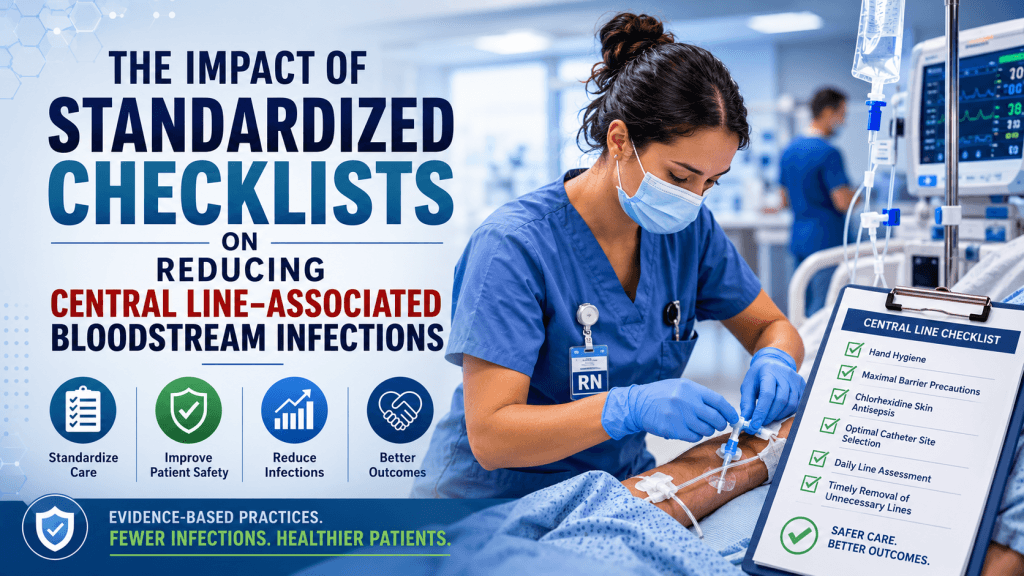
- Impact of standardized checklists on reducing central line-associated bloodstream infections
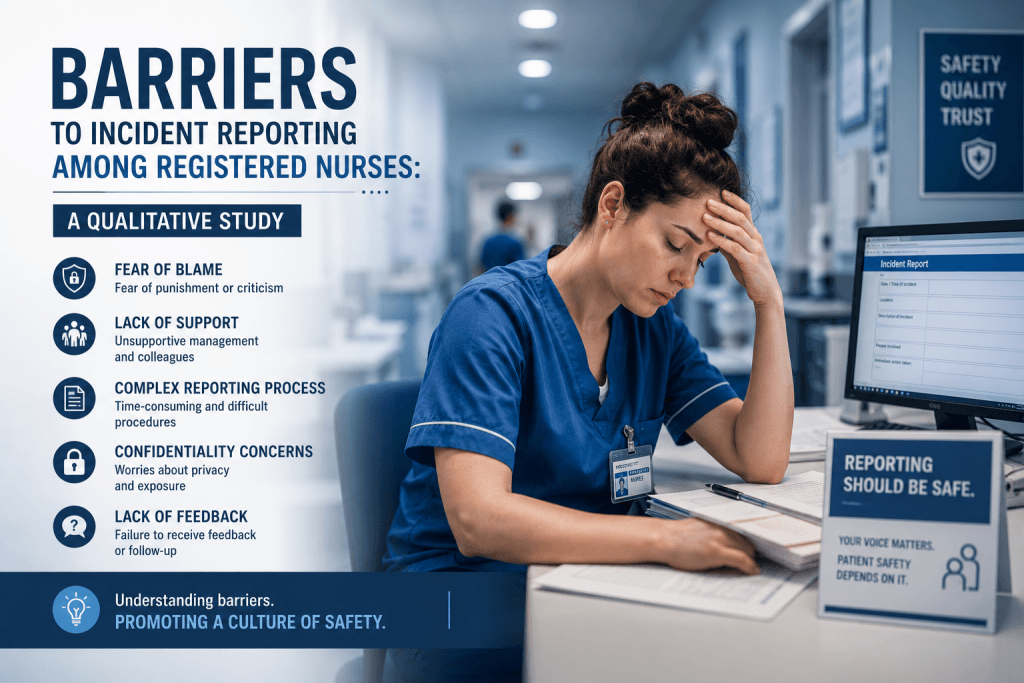
- Barriers to incident reporting among registered nurses: A qualitative study
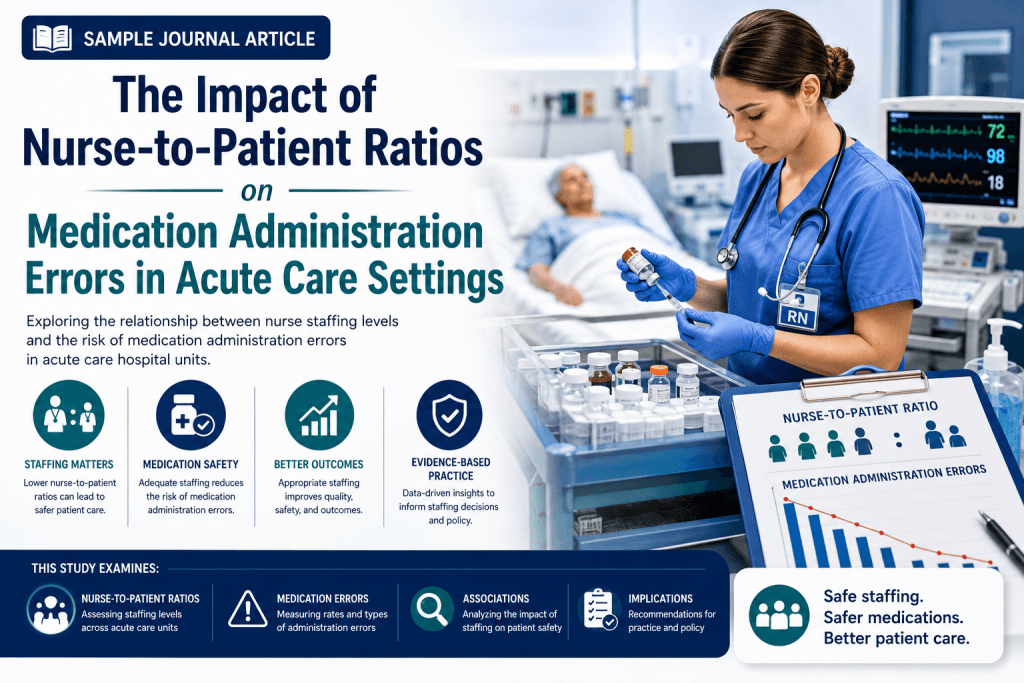
- The impact of nurse-to-patient ratios on medication administration errors in acute care settings
- The relationship between nurse fatigue and clinical decision-making errors in hospital settings
- Effectiveness of bedside shift reporting on patient safety outcomes: A systematic review
- Evidence-based protocols for reducing hospital-acquired pressure injuries in critically ill patients
- Fall prevention strategies and their effectiveness in reducing inpatient falls: A retrospective analysis
- The role of simulation training in reducing medication administration errors among nursing staff
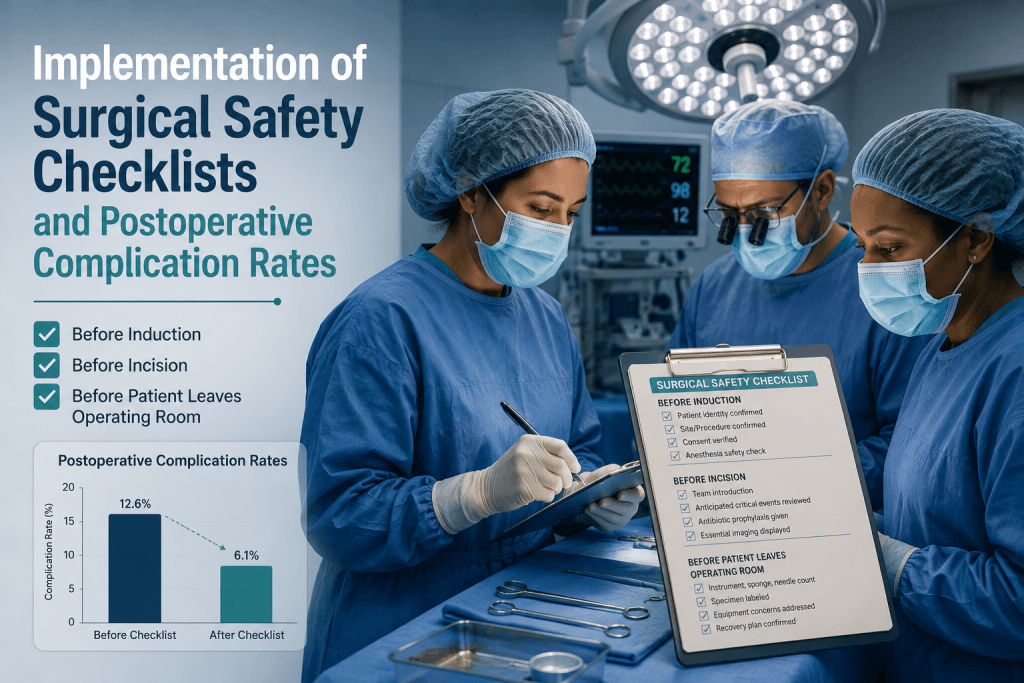
- Implementation of surgical safety checklists and postoperative complication rates
- Handoff communication failures and their contribution to patient safety incidents
- Nurses’ perceptions of a just culture and its influence on error reporting behaviors
- The effectiveness of patient identification protocols in preventing wrong-patient errors: A systematic review
- Hand hygiene compliance among nurses and its impact on healthcare-associated infection prevention
Source context: National Institute of Nursing Research