How to Find Beta Readers for Your Manuscript: A Complete Overview
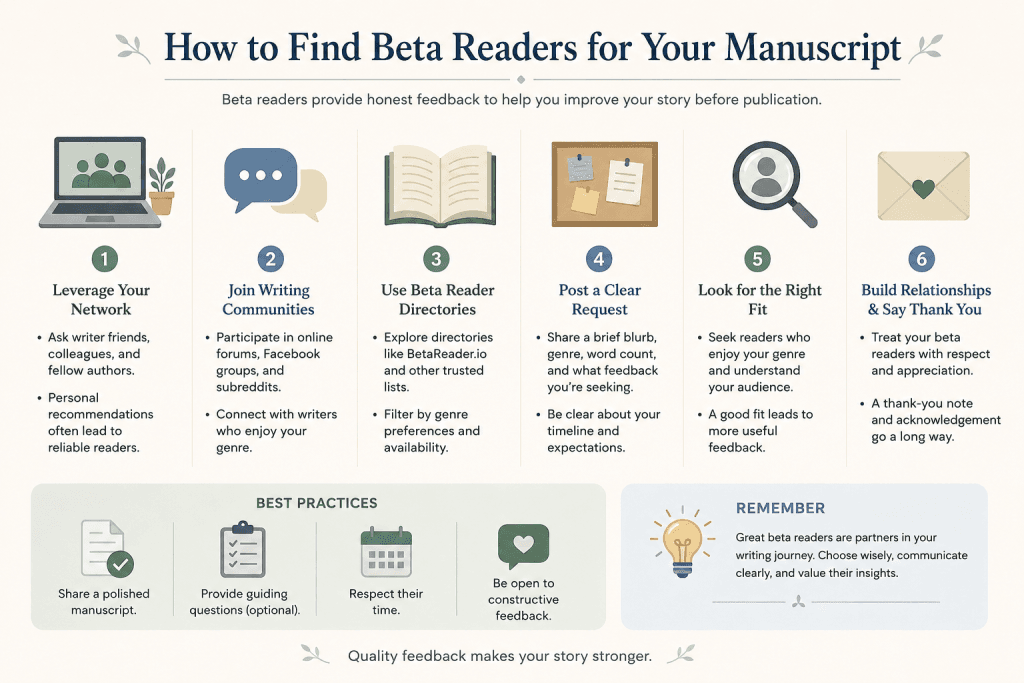
If you’ve just typed “The End” on your first draft, congratulations — but the work isn’t over yet. Before you query agents or hit publish, you need to know how to find beta readers who can tell you whether your story actually works. This guide walks you through everything you need to know about how to find beta readers, starting with what a beta reader is, moving through where to find beta readers, and ending with how to build a beta reading process that actually improves your manuscript.
What this guide on how to find beta readers covers:
- The difference between a beta reader, an alpha reader, and a critique partner
- How to find beta readers through critique groups and writing communities
- How to find beta readers online, including sites like Scribophile, Fiverr, and betareader.io
- What makes a great beta reader (and red flags to avoid)
- How to get the most useful feedback from beta readers once you’ve found them
Why learning how to find beta readers matters:
- A beta reader is someone who reads your completed manuscript before publication and gives feedback from a reader’s perspective — not an editor’s.
- Beta readers are not editors. They won’t do line edits, copy editing, or proofread your manuscript. Instead, they tell you how the story felt to read.
- Feedback from beta readers catches problems you can’t see anymore because you’ve read your own first draft or second draft a dozen times.
- Beta readers help with pacing, character arcs, plot holes, confusing sections, and emotional impact — the things that make readers keep turning pages (or put the book down).
- If you’re an indie author self-publishing your first novel, beta readers are often your only quality check before the book goes live. Published authors with a whole team behind them still rely on beta readers to catch what editors miss.
- This is exactly why so many writers search for how to find beta readers the moment their draft is finished — the right readers can make or break your revision process.
When to start looking into how to find beta readers:
- Don’t send out your WIP the moment you finish a first draft. Most experienced authors recommend doing at least one revision pass yourself first.
- Once you’ve fixed the obvious problems, you’re ready for beta readers — this is when the “looking for beta readers” search really begins.
- Some writers send an early version to an alpha reader first, then bring in beta readers once the second draft is more polished.
- If you’re already thinking “I need beta readers” while still drafting, that’s normal — start researching how to find beta readers now so you’re not scrambling later.
The basic paths for how to find beta readers:
- Personal network: friends, family, and fellow writers who read in your genre (SFF, dark fantasy, horror novel fans, romance readers — genre matters).
- Writing communities: local writing groups, critique groups, and online writing Discord servers.
- Beta reader matching platforms: Goodreads groups, Scribophile, betareader.io, and beta reader match-up services built specifically to connect authors with readers.
- Paid beta services: Fiverr and other freelance platforms where you can hire a paid beta reader if you can’t find volunteers.
- ARC teams: readers who sign up for an advance reader copy often double as beta testers if you ask before publication.
Each of these methods has tradeoffs in cost, speed, and reliability, which we’ll break down in the sections below. By the end of this guide on how to find beta readers, you’ll have a clear plan for finding readers who are trustworthy, engaged, and genuinely helpful for your manuscript.
What Is a Beta Reader vs. an Alpha Reader or Critique Partner?
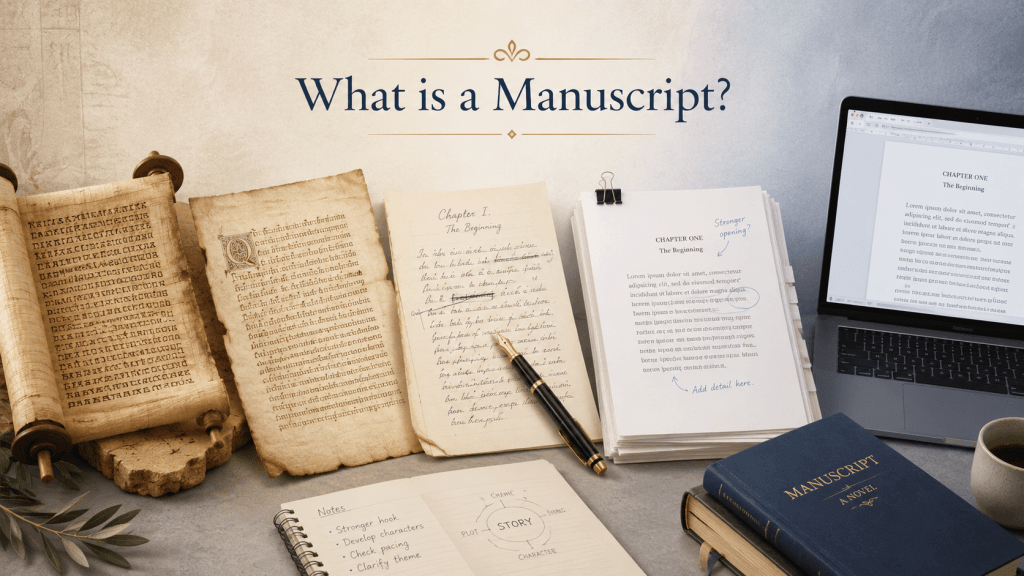
Before you start learning how to find beta readers, it helps to understand exactly who you’re looking for. These three terms get used interchangeably, but they serve different purposes in your beta reading process.
Alpha reader:
- An alpha reader is someone who reads your work while it’s still messy — sometimes chapter by chapter, sometimes as an incomplete WIP.
- Alpha readers give feedback focused on the big picture: does the concept work, are you on the right track, is the story worth finishing this way.
- Because they’re reading such an early draft, alpha readers need to be comfortable with plot holes, inconsistent character arcs, and unfinished sections.
- Not every writer uses an alpha reader — some go straight from first draft to figuring out how to find beta readers instead.
Beta reader:
- A beta reader is someone who reads a completed manuscript, typically after at least one round of self-editing.
- Beta readers give feedback from the perspective of a target reader: what worked, what confused them, where they lost interest, and how the ending landed emotionally.
- The beta reading process usually involves reading the whole book in one pass and providing comments focused on story-level issues rather than sentence-level ones.
- Beta readers are not editors — this is worth repeating because a lot of authors expect grammar corrections or copy editing from beta readers. That’s not their job.
- A good beta reader will flag things like “I didn’t understand why this character did that” or “this dragged for me” — subjective, honest reader reactions.
Academic Writing & Research Support Need Help With Research Papers, Manuscripts, Editing, or Proofreading? At Scholarly Work , we provide professional academic writing support for researchers, students, and professionals. From drafting manuscripts to refining final submissions, we ensure clarity, accuracy, and publication-ready quality. Get Manuscript Writing Help
Critique partner:
- A critique partner (or CP) is usually a fellow writer who trades manuscripts with you — you critique theirs, they critique yours.
- Critique partners often give more technical feedback than beta readers, since they understand craft elements like pacing, structure, and prose style.
- A critique group is a small, ongoing group of critique partners who regularly exchange feedback, often meeting weekly or monthly, in person or through a writing Discord.
- Unlike a one-off beta reader, a critique partner relationship tends to be long-term and reciprocal.
Sensitivity reader (a related but distinct role):
- A sensitivity reader reviews your manuscript specifically for authenticity and accuracy around an experience or identity outside your own.
- This role is separate from general beta reading, though some beta readers can also serve as sensitivity readers if they have relevant lived experience.
Why the distinction matters when you learn how to find beta readers:
- Knowing which role you need helps you set clear expectations when reaching out, so you don’t end up disappointed by feedback that doesn’t match what you asked for.
- It also helps you word your requests correctly in writing communities — asking for “beta readers” versus “critique partners” will get you different responses, which matters once you actually start looking into how to find beta readers for your specific project.
How to Find Beta Readers Through Critique Groups and Writing Communities
One of the most reliable ways to find beta readers is through writing communities where people are already there to give feedback and offer feedback in return. If you’re wondering how to find beta readers without spending money, this is usually where to start.
Local writing groups:
- Search for local writing groups in your city through library event boards, community centers, or sites like Meetup.
- Local writing groups often include a mix of critique partners and people simply looking for readers to swap manuscripts with.
- Meeting in person builds trust faster than online-only relationships, which matters when you’re handing over an unpublished manuscript.
- Ask at your first meeting whether anyone is willing to beta read your genre — many local writing groups have members happy to read outside their usual critique sessions.
Critique groups (in-person or online):
- A critique group is a smaller, more structured version of a writing group, usually meeting on a set schedule to review chapters or full manuscripts.
- Join a critique group in your specific genre if possible — dark fantasy writers benefit from beta readers who actually read dark fantasy, not general fiction fans.
- Look for critique groups through Facebook groups, NaNoWriMo regional forums, and genre-specific writer associations (SFF writer chapters, for example).
- Once you’re a known, active member of a critique group, asking “I need beta readers for my finished manuscript” tends to get a much better response than a cold request, which is one of the more overlooked tricks for how to find beta readers reliably.
Writing Discord servers:
- A writing Discord is one of the fastest-growing ways authors learn how to find beta readers today.
- Many writing Discord servers have dedicated channels for “looking for beta readers” or “beta reader match-up” posts.
- Search for genre-specific Discords — a horror novel writer will find far more relevant beta readers who read horror in a horror-focused Discord than in a general one.
- Be an active community member before posting your request. Authors who only show up to ask for favors rarely get quality feedback from beta readers who feel invested.
Goodreads groups:
- Goodreads has numerous groups built specifically around beta reading and critique exchanges, making it another solid answer to how to find beta readers without paying for a service.
- Search Goodreads groups by genre or by “beta reader” in the group name to find active communities.
- Read the group rules carefully — some require you to have read and reviewed other members’ work before you can post your own request.
How to approach writing communities effectively when you’re figuring out how to find beta readers:
- Introduce yourself and your project honestly. Include genre, word count, and where you are in your beta reading process (first beta read, second draft, ready for beta readers now).
- Be specific about the kind of feedback you want — pacing, character arcs, ending, or general reader reaction.
- Offer to reciprocate. Communities built around critique groups run on mutual exchange, and writers who only take without giving develop a bad reputation quickly.
- Be patient. Finding a trustworthy beta reader through a community takes longer than a paid service, but the relationships often become long-term critique partners.
Writing communities remain one of the best free answers to how to find beta readers, especially if you’re willing to invest time building relationships with fellow writers rather than expecting instant results.
How to Find Beta Readers Online for Your WIP
Beyond writing communities, there are dedicated platforms and services built specifically to help authors learn how to find beta readers online. Here’s how to use each one.
Scribophile:
- Scribophile is a structured critique platform where you earn credits by critiquing other members’ work, which you then spend to post your own manuscript for feedback.
- This karma-based system means everyone posting is genuinely willing to beta read, not just take feedback without giving any back.
- It’s better suited to shorter excerpts and chapters than full manuscripts, so it works well if you want feedback on your opening chapters before sending the full WIP to beta readers.
- Scribophile is a strong option if you want feedback from fellow writers who understand craft, similar to a critique partner rather than a general reader, and it’s often the first stop for authors researching how to find beta readers online.
betareader.io:
- betareader.io is a platform built specifically for beta reader match-up, connecting authors directly with readers by genre preference.
- You create a profile describing your manuscript, and readers who are interested in reading that genre can request to beta read it.
- This is one of the more efficient ways to find beta readers who read specifically in your genre, since matching is built into the platform itself.
- Some authors use it to build a rotating pool of beta readers for every new WIP they finish, rather than starting the search from scratch each time — a smart long-term strategy for how to find beta readers repeatedly.
Fiverr and paid beta reader services:
- If you need beta readers fast and don’t want to wait on community goodwill, Fiverr has freelancers offering paid beta reading services.
- A paid beta reader will typically give you a written report covering pacing, character arcs, clarity, and overall reader engagement, often within a set turnaround time.
- Vet paid beta reader freelancers carefully: check reviews, ask about their reading genre preferences, and request a sample of past feedback if possible.
- Paid beta reading isn’t cheap for a full manuscript, but it guarantees a response — unlike free community requests, which depend on volunteers actually following through. This is often the fastest answer to how to find beta readers when you’re on a tight deadline.
Goodreads and Facebook groups:
- Beyond dedicated groups, search Facebook for “beta readers wanted” or genre-specific author groups where beta reader requests are common.
- Many groups have pinned threads specifically for “looking for a beta reader” or “willing to beta” posts, making it easy to post and browse in one place.
ARC teams as a beta reading resource:
- Some authors build their ARC (advance reader copy) team early and ask a portion of that team to serve as beta readers first, before the ARC stage.
- This works well if you already have an email list or social media following of engaged readers interested in your genre.
Tips for how to find beta readers online successfully:
- Write a clear, specific pitch: genre, word count, comp titles, and what stage your manuscript is at (first draft, second draft, ready for beta readers).
- Screen for reliability. Ask potential beta readers about their reading pace and whether they’ve used beta reader commitments before and actually finished them.
- Always have a backup plan — not every reader who volunteers will follow through, so line up more beta readers than you think you need.
- Keep records of who’s read for you. A running list of trustworthy beta readers becomes invaluable for every future WIP.
Whether you use Scribophile, betareader.io, Fiverr, or Facebook groups, learning how to find beta readers online gives you access to a much wider pool of readers than your immediate personal network — and often faster turnaround than local writing groups alone.
Academic Writing & Research Support Need Help With Research Papers, Manuscripts, Editing, or Proofreading? At Scholarly Work , we provide professional academic writing support for researchers, students, and professionals. From drafting manuscripts to refining final submissions, we ensure clarity, accuracy, and publication-ready quality. Get Manuscript Writing Help
What Makes a Great Beta Reader: Qualities to Look For
Not every volunteer who says “I’m happy to read your WIP” will turn out to be a great beta reader. Knowing how to find beta readers is only useful if you also know how to recognize a good one once you’ve found them. Here’s what actually separates a good beta reader from one who wastes your time.
They read in your genre:
- The best beta readers are people who genuinely enjoy your genre already — a dark fantasy fan will catch pacing issues a contemporary romance reader won’t notice, and vice versa.
- Ask directly what genres someone typically reads before agreeing to send your manuscript. A mismatch here is the most common reason feedback ends up unhelpful, and it’s a detail many guides on how to find beta readers skip over.
They give honest feedback, not just praise:
- A great beta reader tells you what didn’t work, not just what did. Feedback that’s all compliments doesn’t help you revise.
- Look for readers willing to ask clarifying questions about confusing scenes rather than skimming past them.
- Trustworthy beta readers push back gently when something isn’t landing, even if it feels uncomfortable to say.
They understand their role:
- Good beta readers know beta readers are not editors. They won’t get distracted correcting grammar and miss the bigger story issues you actually need help with.
- They stay focused on reader experience: pacing, character arcs, emotional impact, clarity, and whether the ending satisfies.
They finish what they start:
- Reliability matters enormously. A great beta reader commits to a timeline and actually delivers feedback, rather than going silent halfway through your manuscript.
- Before sending a full manuscript, gauge commitment with a smaller ask, like the first three chapters, to see if they follow through.
They give specific, actionable feedback:
- Vague comments like “it was good” or “I liked it” don’t help you revise. Specific feedback — “I got confused about the timeline in chapter 7” — does.
- The best beta readers point to exact moments where they felt confused, bored, or delighted, which gives you a clear roadmap for revision.
They respect confidentiality:
- Your unpublished manuscript is your intellectual property. Trustworthy beta readers understand they shouldn’t share, post, or discuss your unpublished work publicly.
- This is especially important if you’re an indie author without a publishing contract protecting your rights yet.
A quick checklist for vetting a new beta reader once you’ve figured out how to find beta readers:
- Do they read your genre regularly?
- Have they beta read before, and can they describe what that process looked like?
- Are they willing to give a realistic timeline for feedback?
- Do they understand the difference between beta reading and copy editing or proofreading?
- Can they point to specific feedback they’ve given in the past, even briefly?
Finding a great beta reader once means you’ve likely found a long-term reader for future books too — treat those relationships well, since the effort of learning how to find beta readers pays off many times over.
How to Find Beta Readers and Get the Most Useful Feedback from Beta Readers
Learning how to find beta readers is only half the process. Getting genuinely useful feedback from beta readers requires a bit of structure on your end too.
Set clear expectations upfront:
- When you reach out to beta readers, be explicit about what kind of feedback you want: general reader reaction, specific plot questions, or both.
- Give a realistic deadline and confirm your beta readers can meet it before sending the full manuscript.
- Clarify that you’re not asking for a line edit or proofread — just honest, reader-level feedback focused on the story.
Provide helpful guiding questions:
- Send a short list of questions alongside your manuscript: Did the pacing drag anywhere? Which character connected with you most? Did the ending feel earned?
- Guiding questions help beta readers give feedback that’s actually useful rather than a vague overall impression.
- Avoid leading questions that hint at the answer you want — you’re looking for honest feedback, not confirmation of what you already believe.
Make it easy for them to respond:
- Use a shared document, form, or simple email format so beta readers can leave comments as they read instead of trying to remember everything at the end.
- Some authors send a short survey after the beta read to collect structured feedback from beta readers in one place.
Read feedback with some distance:
- Give yourself a day or two before responding emotionally to critical feedback — first reactions can be defensive even when the beta reader is right.
- Look for patterns across multiple beta readers rather than overreacting to a single person’s opinion. If three out of four readers flag the same scene, that’s worth taking seriously.
Say thank you and follow up:
- Beta readers are volunteering their time (even paid ones deserve genuine appreciation), so a thank-you note or acknowledgment in your finished book goes a long way.
- Let them know what you changed based on their input if you’re comfortable — it helps them feel like the feedback actually mattered.
- Ask if they’d be willing to beta read your next WIP too. This is how you build a reliable, trustworthy beta reader network over time instead of restarting the how to find beta readers process from zero with every book.
When to stop and move to editing:
- Once you’ve gathered feedback from beta readers and identified consistent patterns, it’s time to revise before moving to a professional editor or proofreader.
- Beta reader feedback comes before copy editing and line edits — trying to polish prose before the story-level issues are fixed wastes time and money.
Knowing how to find beta readers is valuable, but knowing how to use their feedback well is what actually helps you polish your manuscript into something ready for readers, agents, or publication. Master both halves of how to find beta readers and how to use their input, and every future WIP will benefit from it.
- Purdue University Online Writing Lab (OWL) – Research and Manuscript Writing Resources – https://owl.purdue.edu/owl/research_and_citation/resources.html
- University of Washington Writing Center – Academic Writing and Research Papers Guide – https://www.writingcenter.uw.edu/
- Massachusetts Institute of Technology (MIT) Writing and Communication Center – Scientific and Academic Writing Support – https://writing.mit.edu/wcc