How to Submit a Manuscript to a Publishing Company: 5 Key Steps
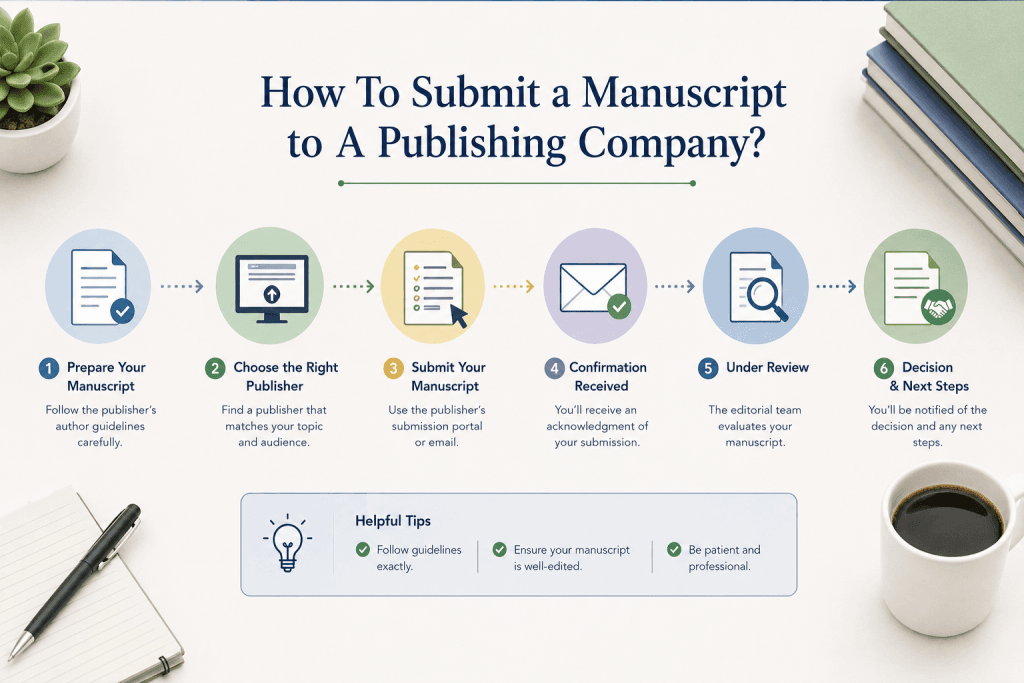
Step 1: Get Your Manuscript Ready
- Finish the entire manuscript before contacting anyone. For fiction, publishers and agents almost never consider partial work — they want to see that you can carry a story from beginning to end before they invest their time. Non-fiction is the one exception, since many non-fiction books are sold on a proposal rather than a completed draft.
- Get feedback from beta readers. These are early readers who aren’t professionally involved in publishing but can give you an honest outside perspective. Because you’ve been immersed in your own story for so long, you’re often the last person who can spot problems like plot holes, uneven pacing, or sections that confuse a first-time reader. Beta readers catch these issues before an agent does.
- Revise through multiple rounds of self-editing. A single editing pass is rarely enough. Read through your manuscript several times, ideally with some distance between each pass, tightening prose, fixing inconsistencies, and cutting anything that doesn’t serve the story.
- Consider hiring a professional editor if your budget allows. A developmental or line editor can catch structural and stylistic issues that are hard to see on your own. This isn’t required, but it can meaningfully raise the quality of your submission.
- Why this step matters: A polished, complete manuscript is the foundation everything else is built on. No amount of networking or clever query-writing can make up for a manuscript that isn’t ready, so treat this as the step worth the most time and effort.
Step 2: Decide on Your Path — Agent or Direct Submission
- Understand that most major publishers require an agent. Large publishing houses, including the big imprints under major corporate groups, generally don’t accept manuscripts sent directly by authors. Their submission process is built around agents acting as a filter, so if a major publisher is your goal, getting an agent isn’t optional — it’s essentially the entry ticket.
- Know that smaller and independent presses often work differently. Many smaller publishers, along with some magazine-affiliated presses, are open to unsolicited submissions straight from writers, with no agent required. This route can be faster and more direct, though it usually means a smaller marketing budget and reach compared to a major publisher.
- Choose your route deliberately, not by default. Think about your goals: Are you aiming for the widest possible readership and the resources of a major publisher? Or would you rather retain more direct control and possibly move faster with a smaller press? Your answer determines whether your very next task is “find an agent” or “find a publisher directly.”
Step 3: Research Agents or Publishers and Craft Your Query
- Look specifically for agents who represent your genre. Agents specialize, and querying someone who doesn’t represent your type of book wastes both your time and theirs. Genre-matching is the first filter to apply.
- Check each agent’s “wish list.” Many agents publish a list of the kinds of stories they’re actively hoping to receive. This is a direct signal from the agent about what they want right now, so it’s worth reading carefully before you query them.
- Research who has recently sold books similar to yours. Industry databases and resources can show you which agents have made recent sales in your category. Recent activity tells you an agent is actively buying in your space, not just listing your genre as a general interest.
- Check acknowledgments sections of comparable books. Authors frequently thank their agent by name in the acknowledgments. If you admire a book similar to yours, this is a simple, free way to find a real agent who successfully represented that kind of work.
- Read publisher guidelines closely if submitting directly. Independent publishers that accept direct submissions are usually explicit about what they want to see and how they want it formatted. Skipping this step and ignoring their stated preferences is one of the fastest ways to be rejected before anyone reads your writing.
- Write a strong query letter — treat it as your most important document. The query letter is your pitch: a concise piece of writing that needs to hook the reader in the opening lines, clearly summarize your manuscript or proposal, and briefly establish your credentials as a writer. Because this short document often decides whether your full manuscript ever gets read, it deserves as much revision and care as the manuscript itself.
Step 4: Submit Carefully and Track Everything
- Check the exact requirements for each agent or publisher before sending anything. Requirements vary significantly — some want only a query letter, others want sample chapters, a synopsis, or even the opening page pasted directly into the body of your email. There’s no universal format, so you have to check each one individually.
- Follow every instruction precisely. Even small deviations from stated guidelines — the wrong file format, missing a requested element, ignoring a word count — can result in an automatic rejection, regardless of how strong your writing is. Precision here is a sign of professionalism.
- Tailor each submission rather than reusing one generic package. Sending the exact same materials to every agent or publisher, without adjusting for what each one specifically asked for, signals a lack of care. Small, thoughtful adjustments to each submission show that you’ve done your research and respect their process.
- Keep a tracking system for every submission you send. A simple spreadsheet works well. Log who you contacted, the date you sent your query, and their response (or the lack of one). This keeps you organized as your list of submissions grows and helps you follow up appropriately.
- Understand multiple submissions and exclusivity. It’s generally acceptable to query several agents at the same time — this is known as a multiple submission. However, always check first whether a specific publisher or agent requires exclusivity (meaning they want to be the only one reviewing your manuscript at that time) before submitting elsewhere simultaneously.
Step 5: Wait, Handle Rejection, and Move Forward
- Expect a wait of weeks to months. Response times vary enormously across the industry, and there’s no way to speed up how quickly an agent or editor gets through their reading pile.
- Recognize that silence often functions as rejection. Many agents and publishers only respond if they’re interested; if a stated response window passes with no reply, it’s reasonable to consider that submission closed.
- Use the waiting period productively instead of letting it stall you. Start your next writing project, revise your query letter based on anything you’ve learned, or continue expanding your research into additional agents and publishers. Staying busy also softens the emotional impact of any rejections that come in.
- Expect rejection and don’t take it personally. Rejection is a normal, near-universal part of this industry — even highly successful, bestselling authors collected many rejections before finding the right match. A pass from an agent doesn’t necessarily mean your manuscript lacks merit; it may simply mean it isn’t the right fit for that agent’s current list, or it doesn’t align with what a particular publisher is looking for at that specific moment.
- Know what happens when you do get an offer. If an agent offers representation, they’ll typically take your manuscript to a curated shortlist of editors and publishers they believe are strong matches for your work. If you’re submitting without an agent, any offer will come directly from an editor at the publishing house itself.
- Understand the road ahead after acceptance. Once a publisher acquires your manuscript, you’ll move into the next phase of the process — working closely with an editor on revisions, going through cover design, and eventually moving toward publication. This final stretch is the payoff for everything that came before it.
Understanding the Book Publishing Process Before You Submit Your Manuscript
Before you dive into how to submit a manuscript to a publishing company, it helps to understand the broader book publishing process so you know what to expect at each stage.
- Traditional publishing vs. self-publishing. Traditional publishing means a publishing house buys the rights to your manuscript, pays you an advance and royalty, and handles editing, cover design, printing, and distribution. Self-publishing means you handle all of this yourself, or hire freelancers to do it, and you keep a much larger share of royalty per sale but take on all the financial risk. Understanding which path fits your goals will shape how you approach manuscript submission.
- The role of gatekeepers. In traditional publishing, literary agents and acquiring editors act as gatekeepers. They decide which manuscripts get in front of readers. This is why learning how to submit a manuscript to a publishing company effectively — through a strong query letter, a polished manuscript, and careful research — matters so much.
- The publishing process has stages. Broadly, the publishing process moves from writing and revising, to querying agents or publishers, to signing a contract, to editing, to production, and finally to publication — and understanding how to submit a manuscript to a publishing company is really just understanding where you fit into that larger sequence.
- Imprints and publishing houses. Large publishers like Penguin Random House aren’t a single entity — they’re made up of dozens of imprints, each with its own editorial identity, list, and submission guidelines. When you research where to send your manuscript to a publisher, you’re often really researching individual imprints rather than the parent company.
- Timelines are long. From the day you submit a manuscript to a publisher to the day your published book hits shelves, it’s common for one to two years to pass. Editing, cover design, marketing planning, and production all take time — patience is part of the deal once you’ve figured out how to submit a manuscript to a publishing company.
- Advances and royalty. When a publisher acquires your manuscript, you typically receive an advance against future royalty. You won’t earn additional royalty payments until your book “earns out” that advance through sales.
- Multiple rounds of edits. Once a publisher has acquired your manuscript, expect multiple rounds of editing — developmental edits, line edits, copyedits, and proofreading — before the manuscript becomes a finished, published book.
- Why this matters for submission. Understanding this full picture means that when you finally submit your manuscript, you’re doing so with realistic expectations about time, revision, and how the publishing industry actually operates behind the scenes. This is exactly why so many prospective authors research how to submit a manuscript to a publishing company thoroughly before sending a single email.
Knowing how the machine works before you submit a manuscript to a publishing company puts you in a stronger position to navigate it patiently and professionally.
Do You Need a Literary Agent to Submit a Manuscript to a Publishing Company?
One of the most common questions writers ask when researching how to submit a manuscript to a publishing company is whether they truly need an agent. The answer depends on your goals.
- Major publishers generally require one. The “Big Five” publishing houses, including imprints under Penguin Random House, almost universally do not accept unsolicited manuscripts. If you want to publish with one of these companies, finding a literary agent isn’t optional — it’s essential, and it fundamentally shapes how to submit a manuscript to a publishing company at that level.
- An agent negotiates on your behalf. A literary agent doesn’t just help you get published; they negotiate your contract, advance, and royalty terms, and they act as your advocate throughout your relationship with the publisher. This is why the author and agent relationship is often described as a long-term partnership.
- Agents know which editors to approach. A good agent has relationships with specific editors and knows each editor’s manuscript wish list, which means your manuscript lands in front of people already primed to consider it — dramatically improving your best chance of an offer.
- Some publishers do accept unsolicited manuscripts. Many smaller and independent publishing houses accept unsolicited manuscripts directly from authors. This can be a great place to start, especially if you’re testing the waters of traditional publishing before pursuing an agent or publisher relationship at the top tier, and it’s often the fastest way to learn how to submit a manuscript to a publishing company hands-on.
- Non-fiction sometimes works differently. For certain non-fiction categories, particularly niche or academic non-fiction, some publishers work directly with unagented authors more often than in fiction, which changes how to submit a manuscript to a publishing company for that category of book.
- Weigh the pros and cons. Querying agents takes time and invites more rejection before you even reach a publisher. Going unagented to smaller presses can be faster but may mean less favorable contract terms and no one negotiating royalty or rights on your behalf, so weigh both paths carefully when deciding how to submit a manuscript to a publishing company.
- Industry consensus. According to publishing professionals like Scott Pack, a well-known figure in the publishing industry, having representation generally improves outcomes for authors pursuing major publishers, even though it isn’t strictly required everywhere.
Ultimately, whether you need an agent depends on the type of book you’ve written and which publishing house you’re targeting — but for most authors hoping to work with a major publisher, an agent remains the most reliable way to submit a manuscript to a publishing company successfully.
How to Prepare Your Manuscript for Submission
Preparation is where most of your work happens before you even think about how to submit a manuscript to a publishing company. Publishers and agents can tell within a page or two whether a manuscript is ready, so this stage deserves serious attention. Below are the essential steps for getting your manuscript truly submission-ready.
- Finish the entire manuscript first. For fiction, your entire manuscript must be complete before you query. Agents and publishers want to know the finished manuscript exists and delivers on its promise from beginning to end — an unfinished manuscript is an automatic rejection in most cases. This single requirement is one of the most misunderstood parts of how to submit a manuscript to a publishing company.
- Revise extensively. Your first draft is never your submission draft. Go through multiple rounds of revision focused on structure, pacing, character arcs, and clarity before you submit your manuscript.
- Use beta readers strategically. Beta readers who read widely in your genre can flag pacing problems, confusing chapters, or plot inconsistencies. Choose readers who will give you honest, specific feedback rather than only encouragement.
- Consider professional editorial services. A developmental editor or manuscript assessment service can give you an objective, professional view of your manuscript’s strengths and weaknesses before you send your manuscript to publishers or agents.
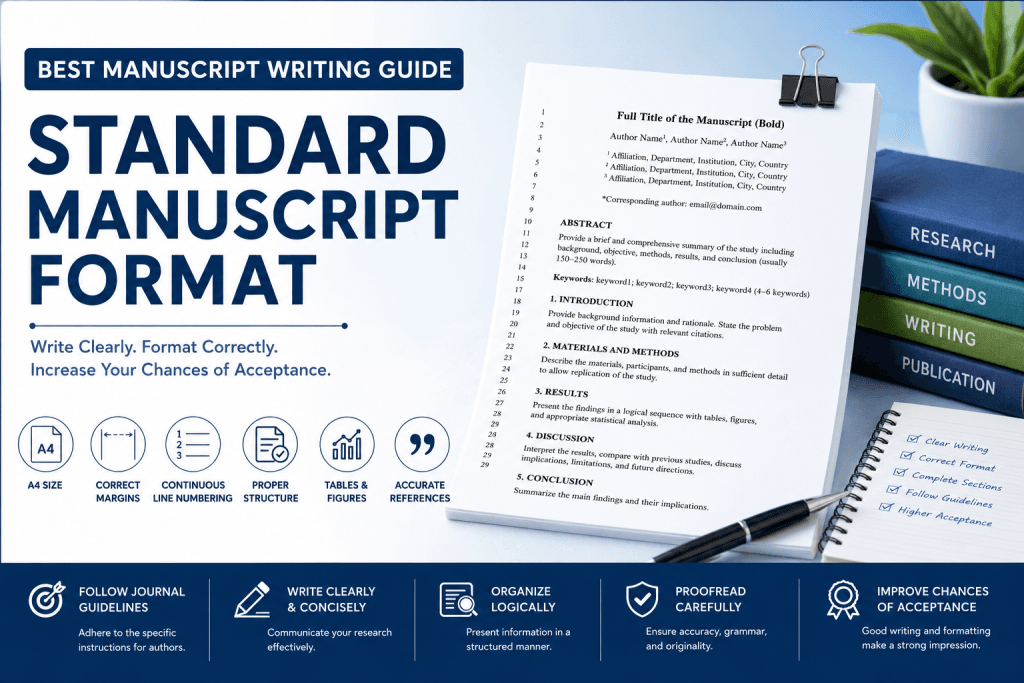
- Format your manuscript correctly. Standard manuscript format matters more than many new writers realize, and getting it right is a non-negotiable part of how to submit a manuscript to a publishing company. This typically means:
- 12-point, standard font like Times New Roman
- Double-spaced lines throughout
- One-inch margins on all sides
- Page numbers in the header or footer, along with your last name and the title
- A title page with your contact information, word count, and the book’s title
- Chapters starting on new pages
- Write a strong synopsis. Many agents and publishers request a synopsis alongside your query letter. A synopsis summarizes your entire manuscript, including the ending — this is not the place to be coy, since agents want to know how your story resolves.
- Prepare sample chapters. Some submission guidelines ask for the first page, the first chapter, or the first 50 pages rather than the entire manuscript upfront. Make sure these sample chapters represent your strongest writing, since a weak opening is one of the most common reasons for rejection.
- Proofread meticulously. Typos, grammatical errors, and formatting inconsistencies signal a lack of polish. Even a single error on the first page can influence how an agent reads the rest of your sample chapters.
- Tailor for fiction vs. non-fiction. Fiction requires a finished manuscript, while non-fiction is often sold via a detailed proposal outlining chapters, market analysis, and your platform as an author — so know which category your book falls into before preparing your materials.
- Research each specific submission’s requirements. Before you submit a manuscript to a publisher, always check their current submission guidelines, since these change and vary widely between one publisher and another — this is a step many prospective authors researching how to submit a manuscript to a publishing company skip, to their detriment.
- Prepare a professional author bio. Include relevant writing credentials, previous publications, or expertise related to your book’s subject matter, especially for non-fiction.
- Double-check word count expectations. Every genre has typical word count ranges, and manuscripts far outside these ranges are more likely to face automatic rejection regardless of quality.
Taking the time to properly prepare your manuscript before you submit a manuscript to a publishing company is one of the most important investments you can make in your path toward getting published.
Crafting a Winning Query Letter for Agent and Publisher Submissions
Your query letter is often the single most important document in the entire process of how to submit a manuscript to a publishing company. It’s your first — and sometimes only — chance to convince an agent or publisher to request your full manuscript. Getting this document right is often the difference between success and failure when you submit a manuscript to a publishing company.
- Understand the purpose of a query letter. A query letter is a one-page pitch that introduces you, your manuscript, and why you’re approaching this particular agent or publisher. It is not a synopsis, a cover letter, or a sales pitch full of hype — it should read as professional and confident, and it’s the very first thing agents see when evaluating how to submit a manuscript to a publishing company through their inbox.
- Personalize your opening. Address the agent by name, and mention why you’re querying them specifically — perhaps you noticed their manuscript wish list matches your book, or they represent authors whose work is similar in tone or genre.
- Write a compelling hook. In two to three sentences, introduce your protagonist, the central conflict, and the stakes. This is essentially the elevator pitch version of your entire manuscript.
- Include the essentials. Every query letter should state:
- The title of your manuscript
- The genre and word count
- A one-to-two paragraph summary of the plot or premise
- A brief author bio highlighting relevant writing credentials
- Comparable titles (comps) that help the agent understand where your book fits in the market
- Keep your bio relevant and brief. If you have publishing credits, mention them. If you don’t, that’s completely fine — many first-time authors successfully query agents with no prior writing credentials, so don’t apologize for it or pad the letter unnecessarily.
- Follow the specific submission guidelines. Some agents want a query letter only; others want a synopsis and sample chapters attached or pasted below the letter. Always follow these guidelines on how to submit exactly as stated, since ignoring format instructions is a fast way to get an automatic rejection.
- Avoid common mistakes, including:
- Comparing your book to massive bestsellers without nuance (avoid “the next Harry Potter”)
- Writing an overly long query letter that exceeds one page
- Being vague about your plot instead of showing the central conflict
- Forgetting to proofread — typos in a query letter suggest carelessness in your manuscript too
- Sending a generic, unpersonalized letter to every agent on your list
- End with a professional closing. Thank the agent for their time, mention that your finished manuscript is available upon request, and include your contact information.
- Research before you query agents. Before you query agents, study their manuscript wish list, recent sales, and submission guidelines. A well-targeted query letter sent to the right agent has a far better chance than a mass-blasted one, which is a big part of why research matters so much when figuring out how to submit a manuscript to a publishing company.
- Track your submissions. Keep a record of who you’ve queried, when, and their response, so you can follow up appropriately and avoid duplicate submissions to the same agency.
- Be patient but proactive. If you haven’t heard back within the timeframe stated in their submission guidelines (often several weeks or months), it’s usually acceptable to send a polite follow-up.
A strong query letter is often what separates a manuscript that gets requested from one that doesn’t — polishing this document is just as important as polishing your manuscript itself when it comes to how to submit a manuscript to a publishing company successfully.
What Happens After Manuscript Submission: Working with Your Agent and Publisher
Once you’ve sent out your submission, the process shifts from writing and querying to waiting, negotiating, and eventually collaborating. Here’s what typically happens after you submit a manuscript to a publishing company, so you know what to expect once the query stage is behind you.
- The waiting period begins. After manuscript submission, it’s normal to hear back anywhere from several weeks or months. Some agents and publishers respond only if interested, so no response after their stated timeframe often functions as a rejection.
- A request for the full manuscript. If your query letter and sample chapters impress an agent, they’ll typically request your entire manuscript. This is an exciting step, but it isn’t an offer yet — it means they want to read further before deciding, and it’s a strong sign you’re doing how to submit a manuscript to a publishing company correctly.
- Getting an offer of representation. If an agent loves your finished manuscript, they’ll offer representation. At this stage, it’s common practice to notify any other agents who have your material, giving them a chance to also respond before you make a final decision.
- The agent goes on submission. Once you sign with a literary agent, they’ll prepare a submission list of editors and publishers who are good matches for your manuscript, then formally pitch your manuscript to publishers on your behalf — essentially handling how to submit a manuscript to a publishing company for you at this stage.
- Editor and publisher review. Editors at publishing houses read submitted manuscripts and, if interested, bring them to an acquisitions meeting where other members of the publishing house weigh in before deciding whether to acquire the book.
- Receiving an offer from a publisher. If a publisher wants to move forward, they’ll extend an offer that includes an advance, royalty rates, and other contract terms. Your agent negotiates these terms on your behalf to get you the best possible deal.
- Contract and rights negotiation. This stage covers royalty percentages, subsidiary rights (like audio, translation, or film), advance payment schedule, and delivery deadlines for revisions — all part of the reward for successfully learning how to submit a manuscript to a publishing company.
- The editorial process begins. Once you’ve signed with a publisher, you’ll work closely with your assigned editor through multiple rounds of revisions — developmental edits first, followed by line edits and copyediting.
- Production and cover design. As editing wraps up, the publisher’s team handles cover design, interior formatting, and marketing planning. Authors are often consulted on cover design but don’t always have final say, depending on the contract.
- Marketing and publicity planning. Your publisher’s marketing and publicity teams begin planning how to promote your published book, which may include advance reader copies, book bloggers, and media outreach.
- Publication day and beyond. After months (often a year or more) of editing and production, your book is officially published. Royalty payments continue based on your contract terms as sales come in.
- Ongoing author-agent-publisher relationship. Many authors continue working with the same agent and publisher for future books, especially once they’ve built a relationship and shown they can deliver a great book that performs well in the market.
Understanding this full arc — from manuscript submission through to your published book on shelves — gives you a realistic picture of what’s ahead once you’ve successfully learned how to submit a manuscript to a publishing company and secured that first yes.
- Purdue University Online Writing Lab (OWL) – Research and Manuscript Writing Resources – https://owl.purdue.edu/owl/research_and_citation/resources.html
- University of Washington Writing Center – Academic Writing and Research Papers Guide – https://www.writingcenter.uw.edu/
- Massachusetts Institute of Technology (MIT) Writing and Communication Center – Scientific and Academic Writing Support – https://writing.mit.edu/wcc