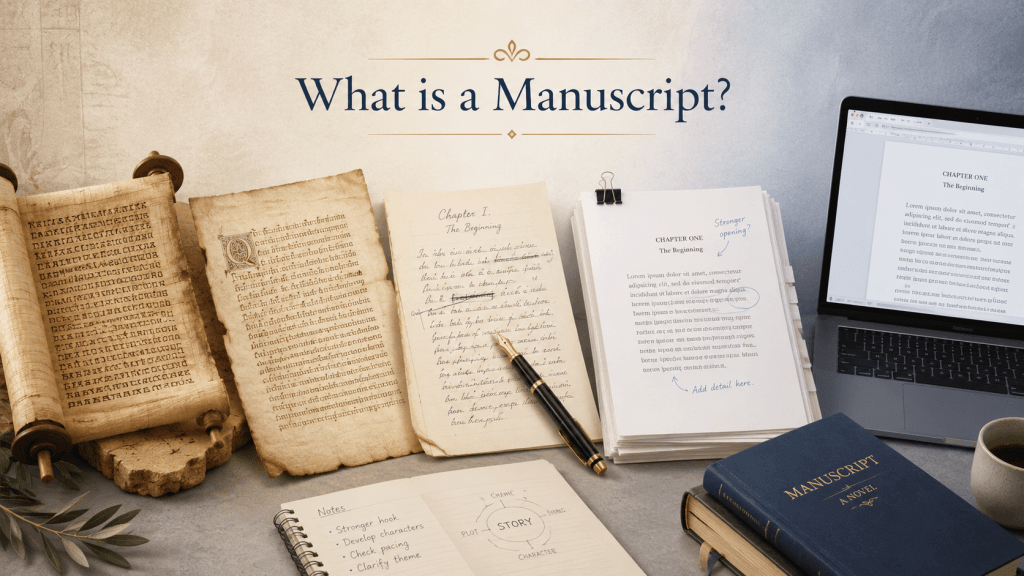
What Is Manuscript Editing and Why Your Manuscript Needs It
- Manuscript editing is the professional process of reviewing, refining, and improving a written work before it goes to a publisher, literary agent, or readers. It covers everything from big-picture story structure down to individual punctuation marks.
- At its core, manuscript editing is about transforming a raw draft into a polished, error-free piece of writing that is ready for the next stage of the publishing journey.
- Every writer, no matter how experienced, benefits from a second pass by a professional editor. Even native English speakers with strong writing skills develop blind spots after spending months (or years) with the same manuscript.
- You know your story so well that you stop noticing plot holes, repeated words, or awkward sentences.
- This is often described as being unable to “see the forest for the trees” — you’re too close to your own work to spot what needs fixing.
- Manuscript editing exists precisely to solve this problem. A manuscript editor brings a fresh, objective set of eyes to your entire manuscript, catching issues you’d never notice on your own.
- There are several reasons your manuscript needs professional editing:
- Readability — A manuscript editor improves the flow and readability of your writing, making sure readers stay engaged from the first page to the last.
- Credibility — Whether you’re pursuing traditional publishing or planning to self-publish, a polished manuscript signals professionalism to literary agents, publishers, and readers alike.
- Consistency — Editing catches inconsistencies in character names, timelines, formatting, and tone that are easy to miss during self-editing.
- Error correction — A trained editor identifies grammatical errors, typos, punctuation mistakes, and sentence-level issues that spellcheckers like Grammarly often miss.
- Structural strength — Editing isn’t only about grammar mistakes; it also addresses big-picture concerns like pacing, character development, and plot logic.
- If you’re planning to query literary agents or publishers, know that most professionals in the publishing industry expect a manuscript to have already been through some form of editing and proofreading before submission.
- If you’re planning to self-publish, manuscript editing becomes even more essential since there’s no traditional publisher’s editorial team to catch mistakes before your book reaches readers.
- In short, manuscript editing bridges the gap between a good idea and a finished, professional-quality book. It’s the difference between a manuscript that reads like a draft and one that reads like it belongs on a bookstore shelf.
- No matter your genre, your experience level, or your publishing goals, investing in manuscript editing is one of the most valuable steps you can take to improve your manuscript before it reaches its audience.
Types of Manuscript Editing: Developmental Edit, Line Edit, and Copy Edit
- When people talk about manuscript editing, they’re often referring to several distinct kinds of editing, each serving a different purpose. Understanding the differences helps you choose the right kind of editing for where your manuscript currently stands.
- Broadly, manuscript editing services fall into three main categories: developmental editing, line editing, and copy editing. Some editing services also include proofreading as a separate, final stage.
Developmental Edit
- A developmental edit is the most comprehensive kind of editing, and it’s usually the first step in the manuscript editing process.
- This type of service focuses on the big picture rather than sentence-level details:
- Story structure and pacing
- Plot holes and unresolved threads
- Character development and arcs
- Point of view and narrative voice
- Overall organization of chapters and scenes
- A developmental editor reads your entire manuscript and provides an editorial letter — a detailed document outlining strengths, weaknesses, and suggestions for revision.
- This editorial feedback often calls for extensive revisions, including:
- Restructuring chapters or sections
- Adding scenes to strengthen character motivation or fill plot gaps
- Cutting sections that don’t serve the story
- Adjusting pacing so tension builds naturally
- Because a developmental edit deals with restructuring and big-picture issues, it typically happens before any line-level polishing. There’s little point in perfecting sentences that might get cut during restructuring.
- Many manuscript editing services describe this as the deepest kind of editing, since it requires the developmental editor to understand your intent as a writer and help you achieve it more effectively.
Academic Writing & Research Support
Need Help With Research Papers, Manuscripts, Editing, or Proofreading?
At Scholarly Work, we provide professional academic writing support for researchers, students, and professionals. From drafting manuscripts to refining final submissions, we ensure clarity, accuracy, and publication-ready quality.
Get Manuscript Writing Help
Line Edit
- A line edit comes after developmental work is complete (or if your manuscript’s structure is already solid) and focuses on the craft of your writing at the paragraph and sentence level.
- A line editor looks closely at:
- Word choice and phrasing
- Sentence rhythm and flow
- Tone and voice consistency
- Clarity of ideas within each paragraph
- Repetitive language or overused words
- This is where polishing really happens. A line edit strengthens how your story is told, even if the underlying structure is already strong.
- Line editing is more granular than developmental editing but still broader than a strict grammar check. It’s often described as sitting between big-picture editing and detailed copyediting.
- Many writers find line editing especially valuable because it improves the actual reading experience — sentence by sentence, paragraph by paragraph — without changing the plot itself.
Copy Edit
- Copy editing (sometimes written as copyediting) is a more technical, detailed kind of editing that focuses on correctness rather than style or structure.
- A copyeditor checks for:
- Grammatical errors and grammar issues throughout the manuscript
- Punctuation mistakes
- Spelling and grammar consistency
- Consistency in formatting, such as chapter headings and page numbers
- Fact-checking small details (dates, names, timeline consistency)
- This stage is sometimes referred to as comprehensive editing when combined with light proofreading, since it covers nearly every technical aspect of the manuscript.
- Copyeditors typically follow a specific style guide (like Chicago Manual of Style) to ensure consistency across your entire manuscript.
- Unlike developmental or line editing, copy editing rarely touches the content or structure — it’s focused entirely on correctness and consistency.
- Many manuscript editing services offer copy editing as a standalone package, since it’s often the final structural layer before proofreading.
- Together, these three types of editing — developmental, line, and copy — form the backbone of most manuscript editing services, and understanding which kind of editing your manuscript needs is the first step toward choosing the right editorial support.
Self-Edit vs. Professional Manuscript Editing Service: Which Is Right for You?
- Every writer eventually faces this question: should you self-edit, hire a professional editor, or do both? Here’s how to decide.
The Case for Self-Editing
- Self-editing is the process of reviewing and revising your own manuscript before sending it to anyone else.
- Benefits of self-editing include:
- It’s free, which matters since editing is expensive for many independent writers.
- It forces you to engage deeply with your own work and understand its strengths and weaknesses.
- Tools like Grammarly can help catch basic grammatical errors and typos during a self-editing pass.
- Limitations of self-editing:
- It’s difficult to spot your own grammar mistakes, especially after multiple drafts.
- Writers often struggle with big-picture issues because they’re too close to the story — the classic “forest for the trees” problem.
- Self-editing rarely catches everything; even skilled writers miss plot holes, inconsistencies, and awkward phrasing in their own work.
The Case for Professional Manuscript Editing
- A professional manuscript editing service brings objectivity, expertise, and a trained eye that self-editing simply can’t replicate.
- Benefits of hiring a professional editor:
- A good editor identifies issues you didn’t know existed — from structural problems to sentence-level grammar mistakes.
- Professional editing services offer different levels of service, from a light proofread to comprehensive editing covering developmental, line, and copy edit work.
- An editor with publishing industry experience can help position your manuscript for literary agents or publishers.
- Editors provide editorial feedback that helps you grow as a writer, not just fix a single manuscript.
- Considerations before hiring:
- Editing is expensive, and costs vary significantly depending on manuscript length and the type of service you choose.
- Not every manuscript needs every kind of editing — a shorter, tighter budget might mean prioritizing a developmental edit over a full copyedit, or vice versa.
Finding the Middle Ground
- Many writers combine both approaches:
- Self-edit first to clean up obvious grammar issues, typos, and pacing problems.
- Then hire a professional manuscript editor for a deeper, more objective round of editing.
- This combination often produces the best results and can reduce the cost of professional manuscript editing services, since editors spend less time on basic corrections and more time on meaningful improvements.
- Ultimately, whether you self-edit, self-publish with light editing support, or invest in full manuscript editing services, the goal remains the same: to improve your manuscript until it’s ready for readers.
- If you’re serious about your publishing journey — whether traditional or self-publishing — professional manuscript editing is almost always worth the investment, even if it means budgeting carefully or choosing a lighter type of service to start.
Academic Writing & Research Support
Need Help With Research Papers, Manuscripts, Editing, or Proofreading?
At Scholarly Work, we provide professional academic writing support for researchers, students, and professionals. From drafting manuscripts to refining final submissions, we ensure clarity, accuracy, and publication-ready quality.
Get Manuscript Writing Help
How to Find Your Perfect Editor: Tips for Hiring an Editor
- Finding your perfect editor takes research, but knowing what to look for makes hiring an editor far less overwhelming.
Know What Kind of Editing You Need
- Before you start searching, identify what stage your manuscript is at:
- Early draft needing structural help → developmental editor
- Solid structure needing sentence-level polish → line editor
- Final draft needing correctness checks → copyeditor or proofreader
- This helps you search for the right type of service instead of a generic “editor,” saving time and money.
Where to Look for a Manuscript Editor
- Reputable manuscript editing services often list editor bios, sample edits, and client testimonials.
- Writing organizations and directories connected to the publishing industry can point you toward vetted freelance editors.
- Ask other authors, especially those who’ve worked with a literary agent or publisher, for referrals — word of mouth often leads to a genuinely good editor.
Questions to Ask Before Hiring
- What kind of editing do you specialize in — developmental, line, copy, or proofreading?
- Do you have experience with my genre or subject matter (including academic editing, if relevant)?
- Can you provide a sample edit of a few pages from my manuscript?
- What is your turnaround time for an entire manuscript?
- Do you offer English editing services if English isn’t my first language?
- What does your editorial letter or feedback process look like?
Red Flags to Watch For
- Vague answers about their editing process or the type of service they provide.
- No sample edits or references from past clients.
- Pricing that seems too good to be true — comprehensive editing takes time, and rock-bottom rates can signal rushed or incomplete work.
- Editors who guarantee representation from a literary agent or publisher — no legitimate editor can promise this.
Making Your Final Decision
- Compare a few candidates using their sample edits — this is the best way to see their editing style firsthand.
- Consider your budget realistically. Editing is expensive, so match the level of service to what your manuscript truly needs right now.
- Trust your instincts. Your perfect editor should understand your voice, respect your vision, and communicate clearly throughout the editing process.
- Once you find an editor whose feedback resonates with your goals, you’re ready to move forward into a structured, professional editing process.
The Manuscript Editing Process: From Proofread to Format
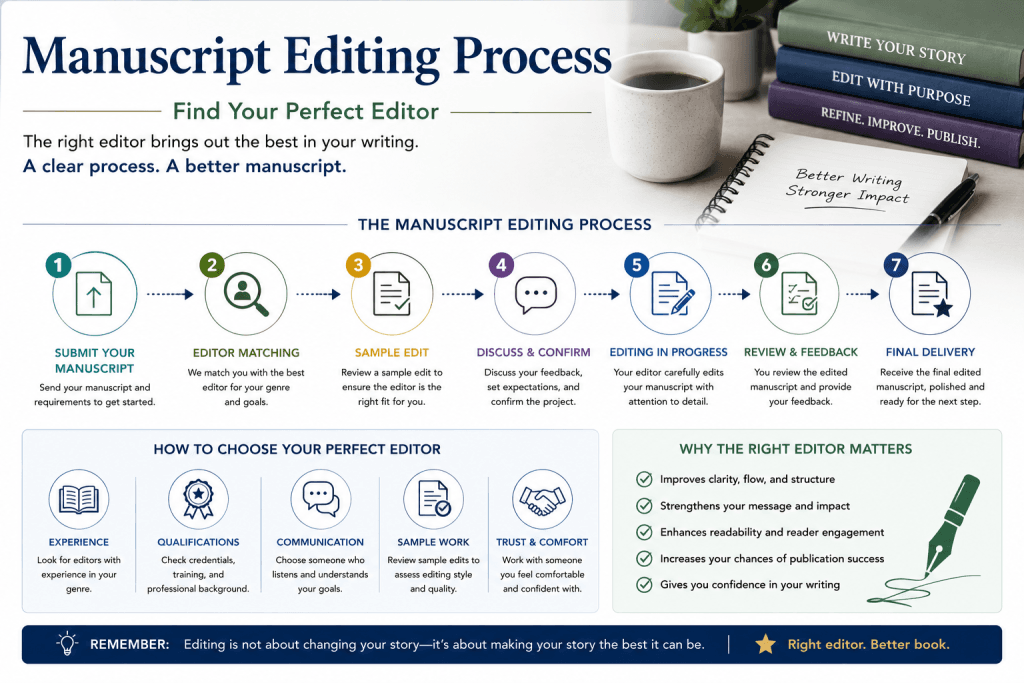
- Understanding the full manuscript editing process helps you know what to expect once you hire an editor, from the first review to the final formatted file.
Step 1: Manuscript Assessment
- Most manuscript editing services begin with an initial read-through or sample edit.
- The editor evaluates your entire manuscript to determine what kind of editing it needs — developmental, line, copy, or a combination.
- You may receive a brief editorial letter at this stage outlining the recommended type of service.
Step 2: Developmental Edit (If Needed)
- If structural issues exist, the developmental editor works through big-picture concerns first.
- This stage may involve restructuring chapters, adding scenes, or trimming sections that slow the pacing.
- You’ll typically revise your manuscript based on this feedback before moving to the next stage.
Step 3: Line Edit
- Once the structure is solid, a line editor works through your manuscript sentence by sentence.
- This step focuses on polishing prose, tightening dialogue, and improving overall readability.
- The line editor may flag repetitive phrasing, awkward transitions, or inconsistent tone.
Step 4: Copy Edit
- Next, a copyeditor reviews the manuscript for grammatical errors, punctuation mistakes, and consistency issues.
- This stage catches:
- Grammar issues missed during earlier revisions
- Inconsistent character or place names
- Formatting inconsistencies within chapters
- Copyediting is more technical and detail-focused than line editing, concentrating on correctness rather than style.
Step 5: Proofread
- The proofread is the final quality check before publication. A proofreader looks for:
- Remaining typos
- Small punctuation errors
- Spelling and grammar slips that survived earlier rounds
- Proofreading happens after formatting whenever possible, since new errors can sometimes creep in during layout changes.
- This is considered the last line of defense for an error-free manuscript.
Academic Writing & Research Support
Need Help With Research Papers, Manuscripts, Editing, or Proofreading?
At Scholarly Work, we provide professional academic writing support for researchers, students, and professionals. From drafting manuscripts to refining final submissions, we ensure clarity, accuracy, and publication-ready quality.
Get Manuscript Writing Help
Step 6: Format
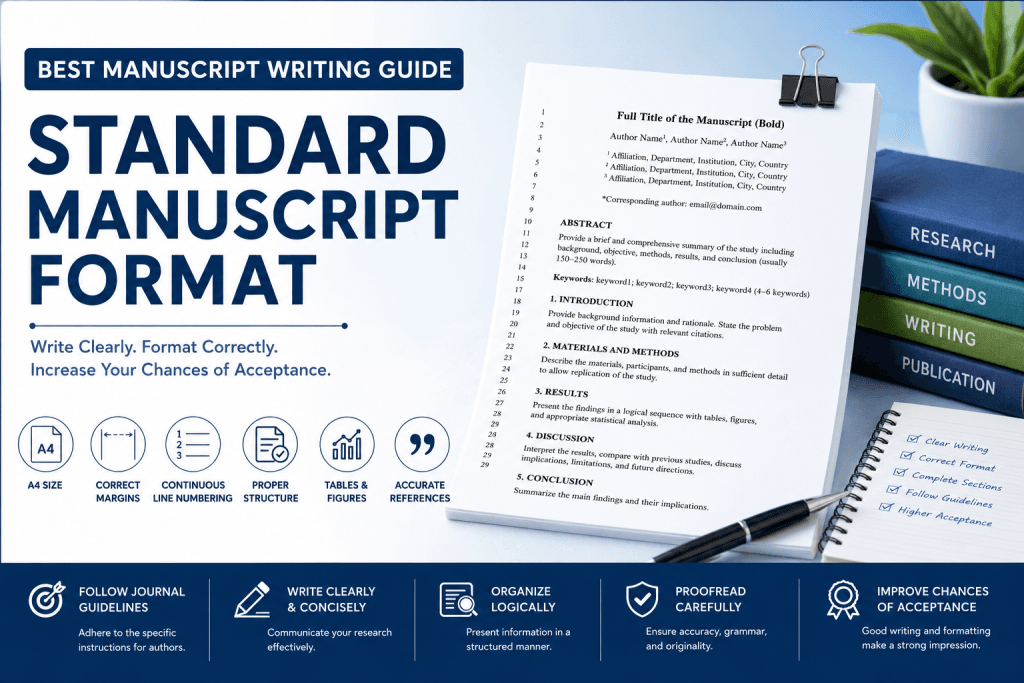
- Format refers to preparing your manuscript for its intended publishing format, whether print, e-book, or submission to a literary agent.
- Formatting typically includes:
- Consistent font, spacing, and paragraph indentation
- Correct chapter headings and page numbers
- Front matter (title page, copyright page) and back matter (acknowledgments, author bio)
- Proper formatting is essential whether you’re pursuing traditional publishing or planning to self-publish, since publishers and self-publishing platforms both have specific formatting requirements.
Why Order Matters
- Following this sequence — developmental edit, line edit, copy edit, proofread, format — prevents wasted effort.
- There’s little value in polishing sentences (line edit) or fixing typos (proofread) in sections that might be cut during developmental revisions.
- This structured manuscript editing process ensures your entire manuscript receives the right kind of attention at the right time, resulting in a genuinely comprehensive editing experience.
Beta Readers, Academic Editing, and Other Manuscript Editing Considerations
- Beyond the core editing types, there are additional layers of feedback and specialized services worth understanding as you prepare your manuscript for publication.
Beta Readers
- Beta readers (sometimes written as beta-readers) are everyday readers who read your manuscript before publication and offer feedback from a reader’s perspective rather than a professional editor’s.
- What beta readers typically provide:
- Honest reactions to pacing, characters, and plot
- Insight into whether the story is engaging and easy to follow
- Feedback on emotional impact and overall readability
- Beta readers are not a replacement for a professional manuscript editor, but they’re a valuable complementary step, often used after developmental editing and before or alongside line editing.
- Many writers use beta readers to catch big-picture issues from a reader’s point of view, since beta readers approach the manuscript differently than a paid editor would.
Academic Editing
- Academic editing is a specialized type of service for theses, dissertations, journal articles, and other scholarly manuscripts.
- Academic editing typically includes:
- Ensuring clarity and readability for an academic audience
- Checking adherence to citation styles and formatting guidelines specific to the field
- Correcting grammatical errors and punctuation mistakes while preserving technical terminology
- English editing support for non-native English speakers publishing in English-language journals
- Unlike fiction manuscript editing, academic editing places heavier emphasis on precision, structure required by academic institutions, and strict formatting rules.
Ghostwriting and Other Related Services
- Some manuscript editing services also offer ghostwriting, where a professional writer drafts content based on your ideas, notes, or outline.
- Ghostwriting is a different type of service from editing, since it involves creating original content rather than revising existing material — but many full-service editorial companies offer both.
English Editing for Non-Native Writers
- If English isn’t your first language, English editing services focus specifically on:
- Correcting grammatical errors that may be less obvious to non-native speakers
- Improving natural sentence flow and word choice
- Ensuring the final manuscript reads as if written by a native English speaker, without losing your unique voice
Choosing the Right Combination of Services
- Depending on your manuscript and goals, you might combine:
- Developmental edit + beta readers + line edit + copy edit + proofread (for a novel)
- Academic editing + English editing (for a scholarly manuscript by a non-native English writer)
- Line edit + copy edit + proofread (for a manuscript that’s already been through developmental work)
- The right kind of editing — or combination of services — depends on your manuscript’s current state, your budget, and your publishing goals, whether that’s querying a literary agent or moving forward with self-publishing.
- Whatever combination you choose, remember that thorough manuscript editing, paired with proofreading and thoughtful formatting, gives your manuscript the best possible chance of success once it reaches readers.
References
- Purdue University Online Writing Lab (OWL) – Research and Manuscript Writing Resources – https://owl.purdue.edu/owl/research_and_citation/resources.html
- University of Washington Writing Center – Academic Writing and Research Papers Guide – https://www.writingcenter.uw.edu/
- Massachusetts Institute of Technology (MIT) Writing and Communication Center – Scientific and Academic Writing Support – https://writing.mit.edu/wcc