What Is an Abstract and Why Does Length Matter?
- An abstract is a short summary that sits at the very beginning of a research paper, dissertation, or conference paper. It gives readers a quick snapshot of what the entire paper is about before they commit to reading further.
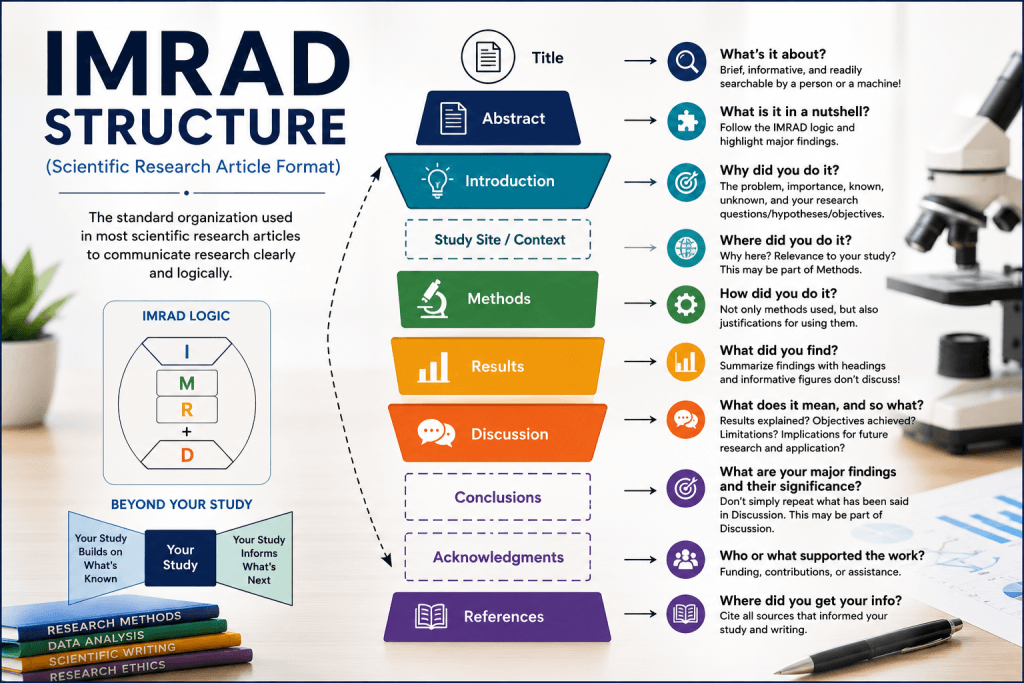
- Think of the abstract as the “trailer” for your research article. Just like a movie trailer, it needs to capture the topic, the research question, the methods, and the findings of the study in a condensed format, without giving away every single detail found in the entire paper.
- Because an abstract is a short summary, every sentence has to work hard. There’s no room for filler words or phrases that don’t add value, which is exactly why so many writers ask, “how long should an abstract be?” before they even start writing.
- Length matters for several practical reasons:
- Journal and conference requirements: Nearly every journal requires a strict word limit for abstracts, and going over that limit can get your submission rejected before a human even reads your research paper.
- Databases and search functionality: Academic databases use abstracts to index and categorize research, so a well-structured, appropriately sized abstract increases the likelihood that other researchers will find your paper when searching for related topics.
- Reader decision-making: Most readers will only read the abstract before they decide whether to read the full paper. If it’s too long, readers may lose interest; if it’s too short, it may fail to explain the significance of your work.
- Academic writing standards: Following the length of the abstract expected in your field signals that you understand academic writing conventions, which matters for graduate students, dissertation abstract writers, and published researchers alike.
- In short, the abstract is a small part of the paper in terms of word count, but it plays an outsized role in whether your research gets read, cited, or accepted at all. Understanding how long should an abstract be — and why — is the first step toward writing one that actually works.
How Long Should an Abstract Be? Word Limit Guidelines by Format
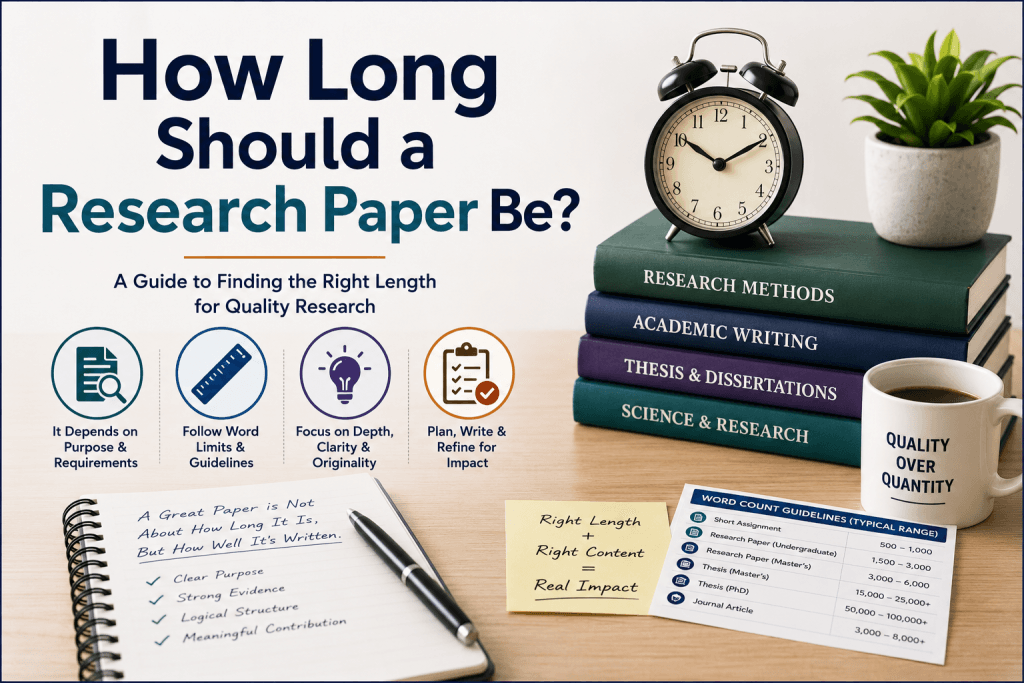
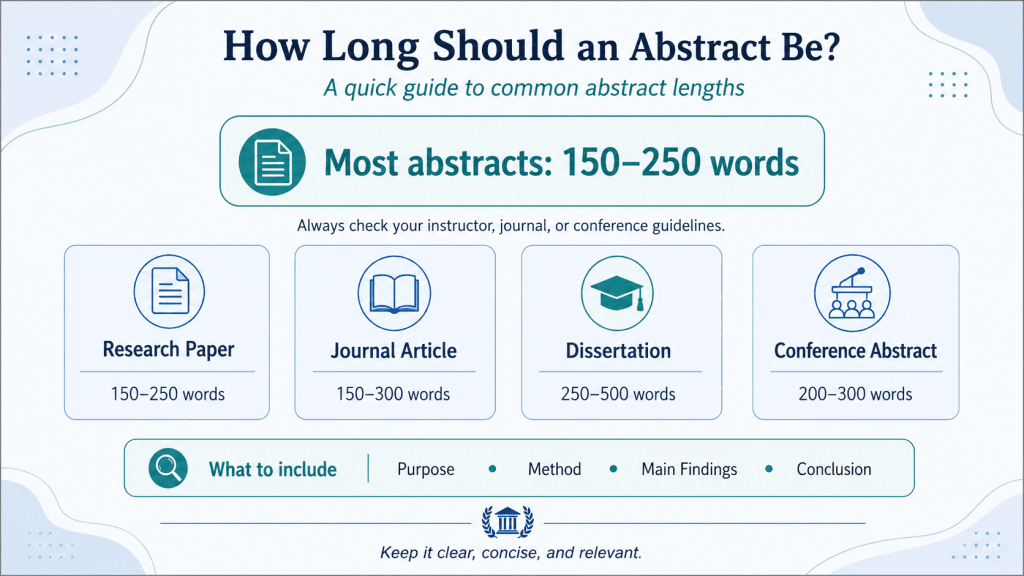
One of the most common questions students and researchers ask is simply: how long should an abstract be? The honest answer is that it depends on the format, but there are reliable general guidelines you can follow.
- General academic abstract: For most academic writing, abstracts are often expected to fall between 150-250 words. This range is widely accepted across disciplines and is often the default when no specific requirements are given.
- Journal article abstracts: Many journals request abstracts of 200–250 words, though this varies. Some journals allow up to 300 words, especially in fields like medicine or the social sciences, where methods and findings need more explanation. Always check the specific requirements listed in the journal’s author guidelines before you write your abstract.
- Conference paper abstracts: A conference abstract is usually shorter, often ranging from 150 to 300 words, since conference organizers need to review hundreds of submissions quickly. Some conferences impose a strict word limit as low as 150 words, so brevity is essential.
- Dissertation abstracts: A dissertation abstract tends to run longer than a standard research article abstract, typically 250-500 words, because it needs to summarize an entire paper that may span over one hundred pages. Many graduate schools set their own specific requirements, so check your institution’s formatting guide.
- Structured abstracts: These are common in scientific papers and medical research, and they use headings like Background, Methods, Results, and Conclusion. Structured abstracts can run slightly longer, often up to 350 words, because each heading needs its own short and concise explanation.
- Business and grant abstracts: These often stick closer to 200-300 words, prioritizing clarity and a strong statement of significance, since reviewers are scanning many proposals at once.
Key takeaways for word count:
- Always check the specific requirements before you write your abstract — never assume the standard 150-250 words applies universally.
- If no guidelines are given, 200-250 words is a safe target for most formats.
- Regardless of format, the abstract length should never exceed one page, and abstracts are often required to appear on a separate page from the rest of the paper.
- When in doubt, err on the side of being short and concise rather than padding your abstract to fill space — reviewers and readers alike appreciate an abstract that respects their time.
Understanding how long should an abstract be for your specific format prevents last-minute panic when you discover your submission portal has a hard word count cutoff.
How Long Should an Abstract Be for a Dissertation, Journal Article, or Conference Abstract?
Different academic contexts call for different abstract lengths, and knowing which rules apply to your situation is essential before you submit any research paper.
- Dissertation abstract: A dissertation abstract is typically the longest type of abstract because it has to summarize an entire paper — often 100+ pages of research — into a digestible short summary. Most graduate schools request 250-500 words, though some allow up to 350 words as a stricter cap. Since a dissertation abstract represents years of research, it’s especially important to include all essential elements: the research question, methodology, findings, and implications of the findings, without wandering into unnecessary detail. Graduate students should always confirm their specific requirements with their department, since formatting guidelines can vary significantly between institutions.
- Journal article abstract: When submitting to an academic journal, the journal requires you to follow its specific word limit exactly. Most journal article abstracts fall between 200 and 250 words, though this can stretch to 300 words in fields requiring more methodological detail, like clinical research or engineering. Many journals also request a structured abstract with labeled sections (Background, Methods, Results, Conclusion), which helps readers quickly decide whether to read the full paper. Because the journal requires exact compliance, exceeding the word limit — even by a few words — can result in an automatic desk rejection before your research article even reaches peer review.
- Conference abstract: A conference abstract usually needs to be the most concise of the three, often capped between 150 and 300 words. Conference organizers review large volumes of submissions, so a conference paper abstract needs to clearly and quickly communicate the topic, method, and key findings within a strict word limit. Because space is limited, conference abstracts benefit from being extremely short and concise — every sentence should answer your question of “why does this research matter” without extra padding.
Across all three formats, one rule stays consistent: check the specific requirements of the journal, conference, or institution before writing, since word limits directly shape how much detail you can include. Whether you’re finishing a dissertation abstract, polishing journal article abstracts, or preparing a conference paper for submission, understanding how long should an abstract be for that particular format helps you avoid wasted revisions and rejected submissions.
How to Write Your Abstract Step by Step Guide, with a Sample Abstract
Writing an abstract can feel intimidating, especially when you’re staring at a strict word limit and trying to condense months (or years) of research into a few hundred words. Here’s a step-by-step process to write your abstract efficiently, followed by a sample abstract you can model your own work after.
Step 1: Write the Rest of Your Paper First
- It might sound counterintuitive, but the abstract should almost always be the last part of the paper you write, even though it appears first.
- You cannot accurately summarize findings, methods, or implications of the findings until they actually exist on the page. Trying to write your abstract before finishing your research paper often leads to vague, inaccurate summaries that need heavy revision later.
- Graduate students in particular benefit from this approach, since dissertations often go through several rounds of edits, and the abstract needs to reflect the final version of the entire paper.
Step 2: Identify the Core Components
- Before you write a single sentence, break down the key parts your abstract must cover. A great abstract typically touches on:
- The topic and why the topic is important
- The research question or problem the paper seeks to address
- The methods used to answer that question
- The findings of the study
- The implications of the findings or significance of the results
- Jot down one to two sentences for each of these components. This turns the abstract-writing process into a fill-in-the-blank exercise rather than a blank-page struggle.
Step 3: Draft Each Part of the Abstract in Order
- Using the components from Step 2, draft your abstract in a logical sequence:
- Introduce the topic — one to two sentences describing the topic and explaining why it matters.
- State the research question — what specific question or gap does the paper examines?
- Describe the methods — briefly explain how the research was conducted (surveys, experiments, literature review, case study, etc.).
- Summarize the findings — report the main results in clear, factual language.
- Explain the significance — end the abstract with a sentence or two on why these findings matter, or what they contribute to the field.
- This structure is often called a structured abstract, and it’s the format most journal article abstracts and dissertation abstracts follow, even when there aren’t explicit headings.
Step 4: Trim to Meet the Word Limit
- Once you have a full draft, check it against the specific requirements of your target journal, conference, or institution. If your journal requires 250 words and you’ve written 400, it’s time to shorten your abstract.
- To cut words without losing meaning:
- Remove redundant words or phrases that repeat what’s already implied.
- Replace long phrases with more concise wording (e.g., “due to the fact that” becomes “because”).
- Cut background information that isn’t essential to understanding the research question or findings.
- Use active voice instead of passive voice — active voice is almost always shorter and more direct.
- This is also the stage where you revise for clarity, making sure every sentence in the abstract earns its place.
Step 5: Proofread and Compare Against Guidelines
- Read your abstract on a separate page, away from the rest of the paper, to see if it makes sense as a standalone piece of academic writing.
- Check that it aligns with formatting rules: some journals want the abstract as one paragraph, others want a structured abstract with headings, and some cap it at 150 words while others allow 250-500 words.
- Ask a colleague, advisor, or fellow graduate student to read only the abstract and tell you what they think the paper seeks to prove. If they can summarize it accurately, your abstract is doing its job.
Sample Abstract
Here’s a sample abstract that follows the five-step structure above, coming in at just under 200 words — a common target when a journal requires a stricter word count:
This study examines the impact of remote work policies on employee productivity in mid-sized technology companies. While remote work has become increasingly common, limited research has explored its long-term effects on team collaboration and output. This research paper surveyed 312 employees across 15 companies over a six-month period, using both quantitative productivity metrics and qualitative interviews to assess performance changes. Results indicate that employees working remotely three or more days per week reported a 12% increase in individual task completion, though team-based project timelines slowed by an average of 8%. These findings suggest that remote work benefits individual output but may introduce coordination challenges for collaborative tasks. Organizations adopting hybrid work models should consider structured check-in systems to offset these delays. This study contributes to a growing body of research on flexible work arrangements and offers practical recommendations for companies balancing productivity with employee autonomy.
- Notice how this sample abstract touches on the topic, research question, methods, findings, and implications of the findings — all in a short summary format, using active voice throughout.
Tips for Writing a Great Structured Abstract in Active Voice
Writing a great abstract takes practice, but these tips for writing can help you consistently produce a structured abstract that’s clear, concise, and effective — no matter your field of academic writing.
- Use active voice, not passive voice. Active voice makes your writing more direct and often shortens your sentence length, which helps when you’re working within a tight word limit. Instead of writing “the data was analyzed by the researchers,” write “the researchers analyzed the data.” Best abstracts almost always favor active voice because it’s easier for a reader to understand quickly.
- Include all essential parts of the abstract. A great abstract touches on the topic, research question, methods, findings, and significance — all within 150-250 words. Skipping any part of the paper’s core information can leave gaps that make it harder for readers to decide whether to read the full paper.
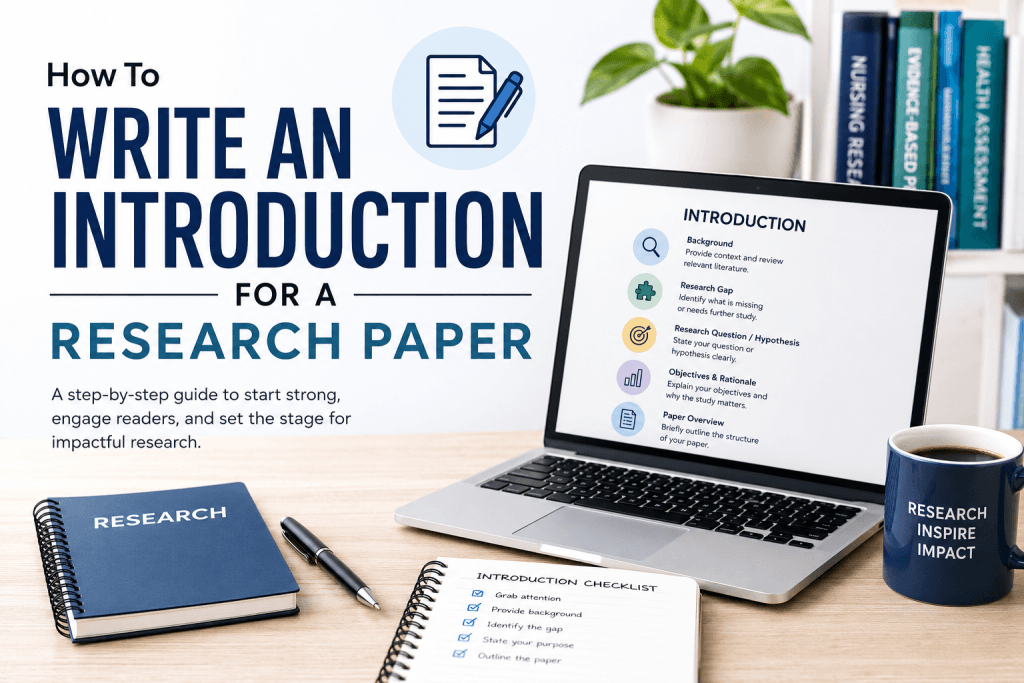
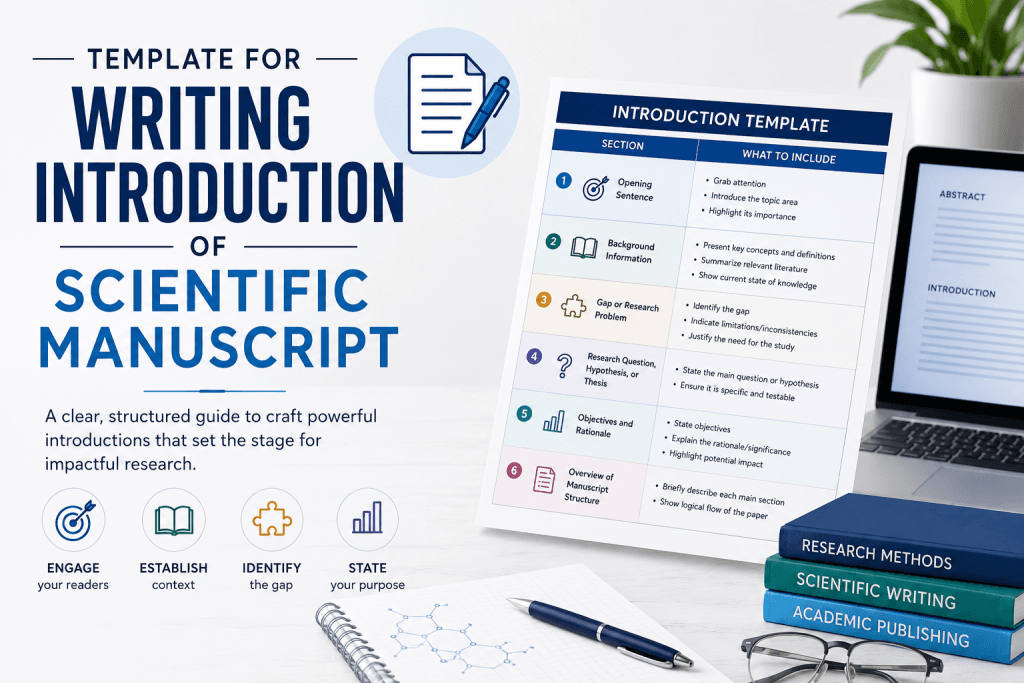
- Start with why the topic is important. The opening sentence should hook the reader and establish why the topic is important before diving into specifics. This sets context and helps the reader to understand the relevance of the entire paper before you introduce the research question.
- State your research question clearly. Somewhere in the first two to three sentences, make it obvious what question your paper seeks to answer. A vague or buried research question is one of the most common weaknesses in academic writing.
- Keep methods brief but specific. You don’t need to explain every detail of your methodology — just enough so the reader understands how you arrived at your findings of the study. One to two sentences is usually sufficient.
- Report findings factually. Avoid vague language like “results were interesting” or “the study found several things.” Instead, state the actual findings of the study using specific numbers or outcomes wherever possible.
- End with significance. The end of the abstract should explain the significance of your findings — why should anyone care? This final part of the abstract often determines whether a reader moves on to the full research article.
- Revise ruthlessly. After your first draft, revise the abstract multiple times, cutting unnecessary words or phrases. If you’re over the word count, look for places to combine two sentences into one, or remove background details that aren’t strictly necessary.
- Match the format to your target publication. If a journal requires a structured abstract with headings, follow that heading format exactly. If it requires a single paragraph, don’t use subheadings. Following the specific requirements of your target publication increases the likelihood of acceptance.
- Write the abstract last. As mentioned earlier, the abstract should summarize a finished paper, not a plan for one. This ensures accuracy and helps you avoid having to heavily revise the abstract after the rest of the paper changes.
- Read it in isolation. Since the abstract typically appears on a separate page and is often read independently of the entire paper (especially in databases), read it on its own to check that it makes complete sense without additional context.
- Check word count obsessively. Whether your abstract word count target is 150 words, 250 words, or 350 words, use a word processor’s count tool to check before submitting. A great abstract respects the format’s word limit exactly — going over, even slightly, can cause avoidable rejections.
By following these tips for writing, and by keeping the length of the abstract appropriate to your format — journal article, dissertation abstract, or conference abstract — you’ll consistently produce a structured abstract that helps readers quickly grasp your paper’s essence and decide whether to read the full paper. Mastering how long should an abstract be, alongside strong active-voice writing, is one of the simplest ways to make your academic writing more effective and more likely to be read.
- George Mason University Writing Center – Scientific (IMRaD) Research Reports: Overview – https://writingcenter.gmu.edu/writing-resources/imrad/writing-an-imrad-report
- Utah Valley University Writing Center – Scientific Writing: IMRaD – https://www.uvu.edu/writingcenter/handouts/scientific-writing.html
- Brigham Young University Research & Writing Center – Scientific Writing: IMRAD Format – https://rwc.byu.edu/00000188-e4bc-d222-a7ea-eefd769e0000/scientific-writing-imrad-format-pdf