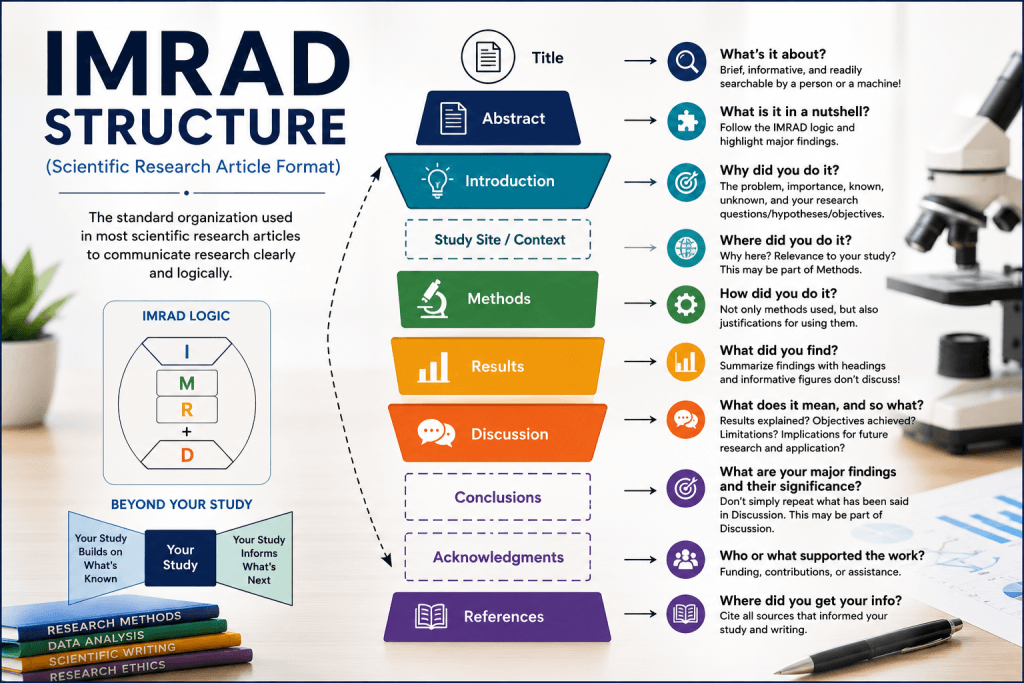
Understanding the Purpose of a Research Paper Introduction
Before you learn how to write an introduction for a research paper, it helps to understand exactly why this section exists in the first place. Every introduction section serves a specific job inside the larger structure of your paper, and knowing that job makes the entire writing process much easier.
- It sets the stage for the reader. The introduction to a research paper is the very first thing your audience encounters, so it has to convey what your research topic is about and why it matters. A good introduction gives the reader enough background information to understand the research problem without overwhelming them with detail that belongs in later sections of your paper.
- It establishes relevance within the broader field. When you write the introduction, you’re essentially explaining how your research area connects to existing research and to the current state of knowledge. This helps the reader understand why your paper is worth reading and where it fits within the broader field of study.
- It introduces the research question or hypothesis. A strong introduction doesn’t just describe a topic in general terms — it narrows down to a specific research question or hypothesis that the rest of the paper will investigate. This is a critical step in learning how to write an introduction for a research paper that actually guides the reader forward.
- It acts as a roadmap for the rest of the paper. Think of the introduction section as a preview. It should briefly touch on your research objectives and hint at the different sections of your paper, so the reader knows what to expect as they continue reading.
- It builds credibility early. Citing relevant sources and referencing a review of the literature in your introduction shows the reader that your research is grounded in existing research, not just personal opinion. This is one reason why writing a scientific paper always begins with a well-constructed introduction, and why so many students search for guidance on how to write an introduction for a research paper before they start drafting.
- It sets expectations for tone and structure. Learning how to write an introduction for a research paper also means understanding that the tone you use here — whether analytical, descriptive, or argumentative — signals to the reader what kind of paper they’re about to read.
Ultimately, understanding this purpose is the foundation for everything else. Once you know what an introduction is supposed to accomplish, the process of how to write an introduction for a research paper becomes far less intimidating and much more structured.
How to Write an Introduction for a Research Paper: Key Elements
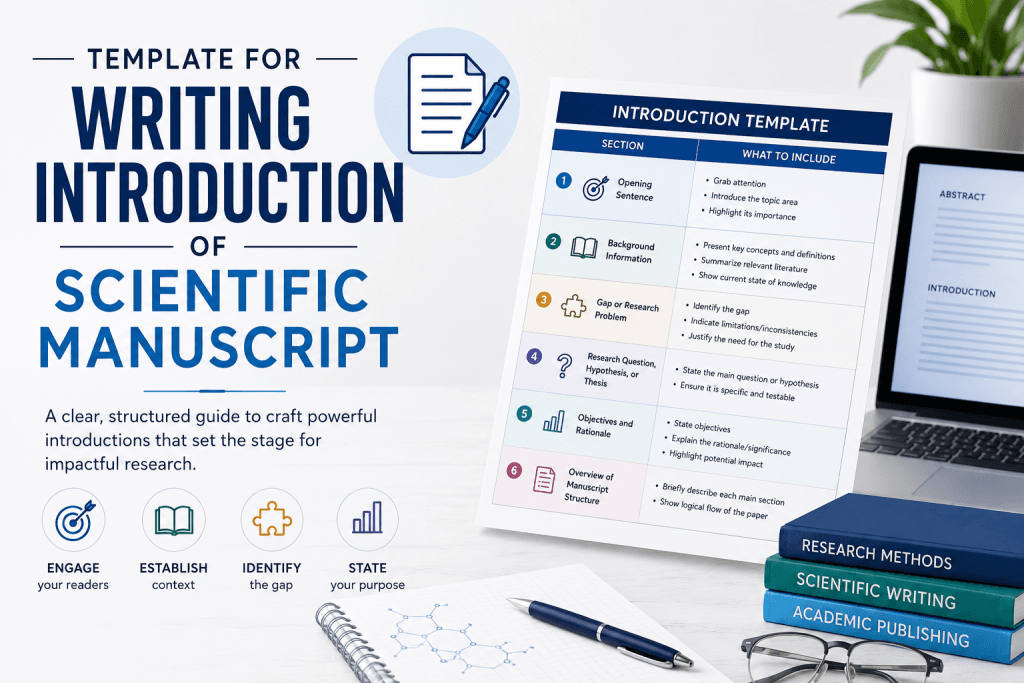
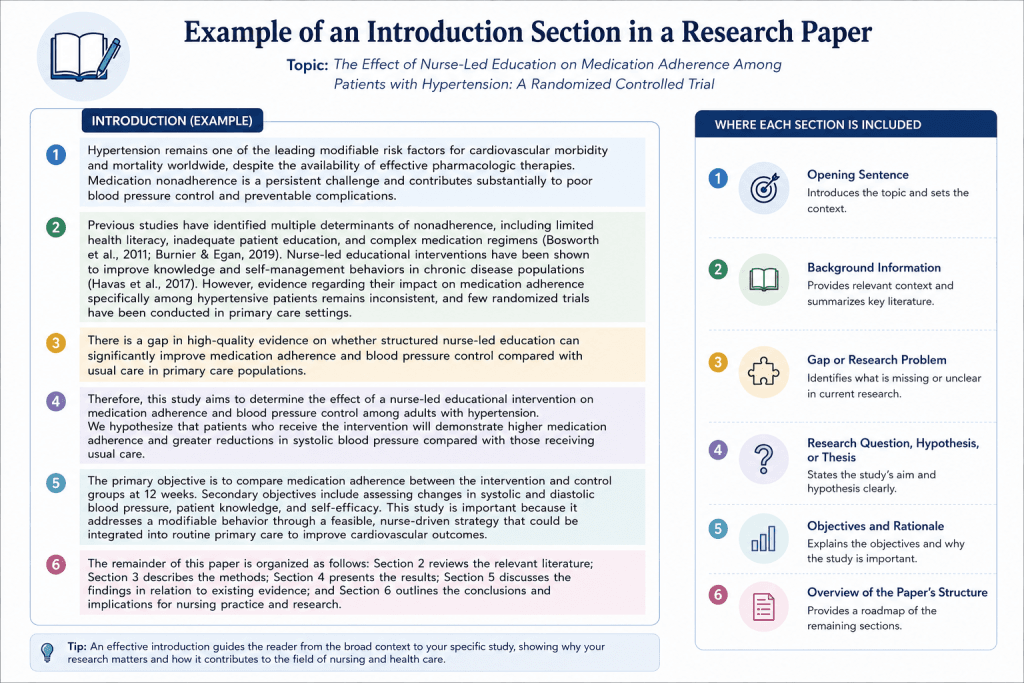
If you want to know how to write an introduction for a research paper that genuinely works, you need to understand the essential building blocks that make up an effective introduction. Each element plays a distinct role, and when combined thoughtfully, they create a paper introduction that flows naturally from broad context to specific focus.
Below is a closer look at each element you’ll need when you sit down to actually write the introduction.
1. The Opening Sentence
- The opening sentence of your introduction sets the tone for the entire paper, so it needs to be impactful. Avoid vague or overly broad statements; instead, aim for a sentence that immediately signals the research area you’re working in.
- Many writers struggle here because they try to sound overly academic. In reality, a strong introduction often starts with a clear, direct statement about the research topic or a striking piece of context that draws the reader in.
- When learning how to write an introduction for a research paper, remember that this first sentence should never introduce an abbreviation or overly technical term without explanation — save that clarity for once the reader has context.
2. Background Information
- Every introduction to a research paper needs sufficient background information so the reader can understand the research problem. This means briefly reviewing the literature relevant to your topic without turning the introduction into a full literature review.
- Background information should move from broader concepts down to the more specific issue your paper addresses. This narrowing technique helps the reader understand how your particular problem fits within the larger research area.
- Be selective. You don’t need to cite everything — just enough existing research to establish the current knowledge on the subject and show where the gaps are. This selectiveness is a skill in itself, and it’s one of the more nuanced parts of how to write an introduction for a research paper that stays concise.
3. Identifying the Gap or Research Problem
- A defining feature of how to write an introduction for a research paper is clearly articulating the gap in current research. This is the space between what is already known and what your paper aims to explore.
- Whether your paper is exploratory or highly analytical, pinpointing this gap gives your research purpose. It answers the implicit question: “Why does this study need to exist?”
- This section often includes a brief mention of any controversy or unresolved debate within the field, which further justifies the relevance of your research. Articulating this gap clearly is one of the trickiest parts of how to write an introduction for a research paper, since it requires both confidence and precision.
4. The Research Question, Hypothesis, or Thesis
- Once the gap is established, you need to phrase your research question, hypothesis, or thesis clearly. This is arguably the most important sentence in the entire introduction section.
- A hypothesis should be specific and testable, while a research question should be focused enough to guide your methodology. Both should directly connect to the research problem you just described.
- If you’re writing an argumentative paper, this is where you’d state your thesis rather than a hypothesis — either way, this sentence should be easy to identify and understand, since it’s often the single most searched detail when people look up how to write an introduction for a research paper.
5. Research Objectives and Rationale
- Explain your research objectives — what you intend to accomplish — and the rationale behind your chosen approach. This helps the reader understand the logic behind your study design before they reach your methods section.
- A brief note on why this research area matters, and what implication your findings might have, strengthens the reader’s motivation to continue reading.
6. A Brief Overview of the Paper’s Structure
- Many effective introductions end with a short overview that maps out the rest of the paper. This isn’t mandatory in every field, but it’s a helpful practice, especially in longer papers.
- This overview acts as a roadmap, briefly noting how you will present the results and organize the different sections of your paper. Including it is a small finishing touch that shows real mastery of how to write an introduction for a research paper.
Mastering these key elements is really the core of how to write an introduction for a research paper that reads as polished, purposeful, and worth reading from the very first paragraph.
Narrowing Your Topic: From Research Problem to Research Question and Hypothesis
One of the trickiest parts of learning how to write an introduction for a research paper is the process of narrowing — moving from a broad research area down to a specific, answerable research question. This funnel-shaped structure is a hallmark of effective academic writing.
Here’s how the narrowing process typically unfolds when you’re figuring out how to write an introduction for a research paper:
- Start broad, but not too broad. Begin your introduction by situating your research topic within its broader field. This gives context and helps the reader understand the general research area before you narrow further.
- Identify the research problem. After establishing the broader context, narrow in on a specific research problem — an unresolved issue, an unanswered question, or a gap you’ve noticed after reviewing the literature. This step often comes directly out of your review of the literature, where you noticed something that hadn’t been fully explored.
- Connect the problem to existing research. Show how your research problem relates to existing research. Reference relevant studies to demonstrate that you understand the current state of the field, and highlight where those studies fall short or leave questions unanswered.
- Move from problem to question. Once the research problem is clear, phrase it as a specific research question. A well-constructed research question should be focused, answerable within the scope of your paper, and clearly tied to the gap you identified.
- Develop your hypothesis (if applicable). In scientific or quantitative papers, the research question often leads directly to a hypothesis — a testable prediction about what you expect to find. Your hypothesis should be a natural extension of your research question, not a completely separate idea. Getting this transition right is central to how to write an introduction for a research paper in the sciences specifically.
- Keep the narrowing logical and smooth. Every sentence in this narrowing process should logically lead to the next. Readers should never feel a jarring jump from the broader field straight to your specific hypothesis without a clear line of reasoning connecting the two.
- Avoid narrowing too quickly. A common issue when people try to figure out how to write an introduction for a research paper is narrowing too fast, skipping the background information that makes the research question feel justified. Take the time to build the case first, since rushing this step undermines the whole point of learning how to write an introduction for a research paper properly.
This narrowing technique is essential because it mirrors how a good introduction should feel: like a funnel that gradually and naturally guides the reader from broad context to a specific, well-defined research question or hypothesis.
Step-by-Step Tips for Writing an Effective Introduction
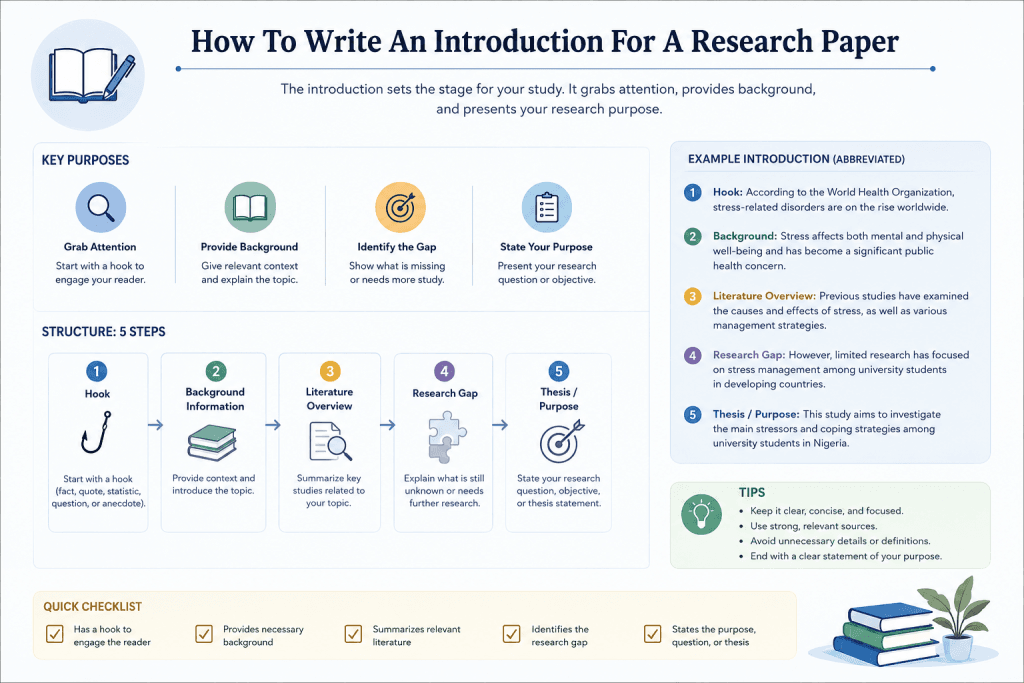
If you’re still wondering how to write an introduction for a research paper from a blank page, these five tips for writing break the process down into a manageable, repeatable system. Follow this step-by-step guide anytime you sit down to draft or revise your introduction section.
This is the practical, step-by-step version of how to write an introduction for a research paper, broken into five manageable stages.
Step 1: Start with an Outline Before You Write the Introduction
- Before you write the introduction, sketch a brief outline of what each paragraph will cover. This might include: an opening sentence, background information, the research problem, your research question or hypothesis, and a short overview.
- Outlining first prevents you from rambling and helps you analyse what information is essential versus what can be trimmed. This single habit is one of the most useful tips for writing a focused, effective introduction.
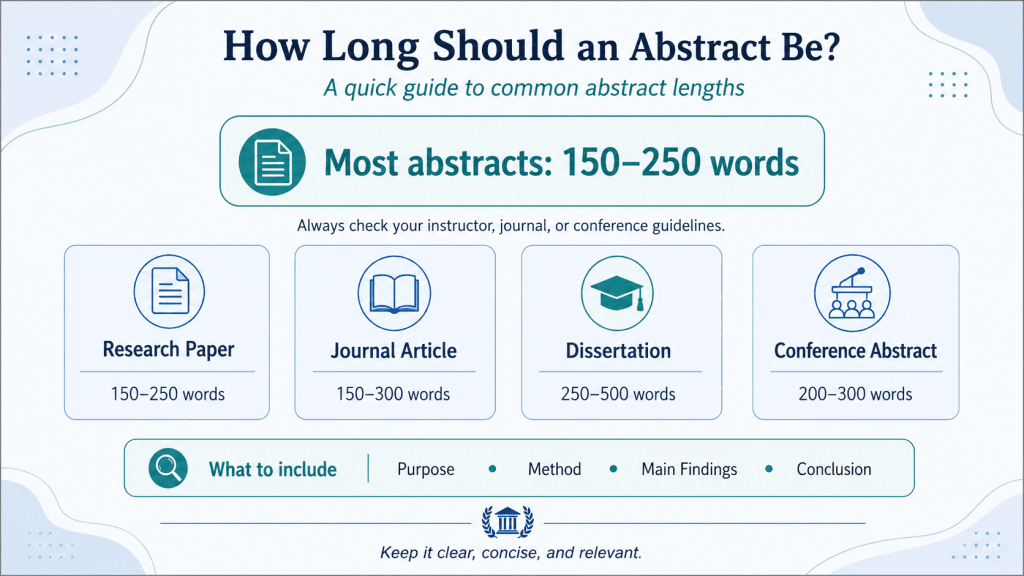
- Keep an eye on word count expectations at this stage too — knowing roughly how long your introduction should be helps you decide how much background information to include.
Step 2: Write a Strong, Focused Opening Sentence
- Draft an opening sentence that clearly signals your research topic. Avoid dictionary definitions or overly broad statements like “Throughout history, humans have…” — these rarely add value and can feel like filler.
- Instead, aim for a sentence that is specific, relevant, and immediately understandable. This is a small but important step in how to write an introduction for a research paper that captures attention early.
- Revisit this opening sentence after you’ve written the rest of the introduction — often it needs slight adjustment once you know exactly what the paper covers. Many guides on how to write an introduction for a research paper recommend drafting this sentence last, even though it appears first.
Step 3: Build Background Information Through the Literature Review
- Use your review of the literature to construct a paragraph (or two) of background information. Summarize the current knowledge on your topic, citing the most relevant sources rather than every source you found.
- Every citation should serve a purpose. Cite studies that either support the relevance of your research question or that highlight the gap your paper addresses. This is where writing a scientific paper differs from more general writing — precision in citation matters.
- Try to move from broader research area context toward the narrower research problem within this paragraph, reinforcing the narrowing structure discussed earlier.
Step 4: State Your Research Question, Hypothesis, or Thesis Clearly
- Once your background paragraph naturally leads to the gap in current research, phrase your research question or hypothesis as clearly and directly as possible. Avoid burying this sentence in the middle of a long paragraph — give it room to stand out.
- If your paper is argumentative, this is the point where you present your thesis. If it’s more exploratory or descriptive, focus on framing an open research question instead.
- This step is often considered the heart of how to write an introduction for a research paper, since everything before it builds up to this moment, and everything after it (your methods, results, and conclusion) flows from it.
Step 5: Add a Brief Overview and Revise for Flow
- Close your introduction with a short overview of how the rest of the paper is organized. This helps the reader understand what to expect and improves the overall readability of your paper introduction.
- Read through your draft and check that each paragraph transitions smoothly into the next. The best introductions read as one continuous, logical argument rather than a list of disconnected facts.
- Finally, revise for clarity and word count. Cut anything that doesn’t directly support the research question, and make sure any abbreviation you use has been properly introduced. This final polish is what separates an average draft from a genuinely effective introduction.
Following these five steps consistently is one of the most reliable ways to approach how to write an introduction for a research paper, whether you’re a student writing your first paper or a researcher refining your process for a journal submission. Practicing this writing process repeatedly is ultimately how to write an introduction for a research paper that feels effortless over time.
How to Write an Introduction for a Research Paper That Leads to a Strong Conclusion
An often-overlooked part of learning how to write an introduction for a research paper is recognizing that your introduction and conclusion should work together. A strong introduction plants the seeds that your conclusion later harvests, creating a sense of unity across the entire paper.
Here’s what that connection looks like in practice once you’ve mastered how to write an introduction for a research paper:
- Echo your research question in the conclusion. The research question or hypothesis you carefully phrase in your introduction should be directly answered in your conclusion. This creates a satisfying sense of closure and shows the reader that your research objectives were met.
- Keep the framing consistent. If you frame your research problem a certain way in the introduction — say, as filling a gap in existing research — your conclusion should return to that same framing when you present the results and discuss their implication.
- Use the introduction as a promise, and the conclusion as delivery. Your introduction essentially makes a promise to the reader about what the paper will explore. A strong conclusion delivers on that promise by summarizing key points and connecting them back to the original research question.
- Avoid introducing new information in the conclusion. Everything discussed in your conclusion should trace back to groundwork laid in the introduction section. If a new idea suddenly appears in the conclusion without being set up earlier, it can confuse the reader and weaken your paper’s overall structure.
- Reflect on broader implications. Just as your introduction situates your research topic within the broader field, your conclusion should return to that broader field, discussing the implication of your findings and what they mean for future research or existing research more generally.
- Maintain a consistent voice and tone. Whether your paper is more analytical or more argumentative in nature, the tone you establish in your introduction should carry through to your conclusion, reinforcing a cohesive writing process from start to finish. This consistency is a small but telling sign that a writer has genuinely understood how to write an introduction for a research paper, rather than treating it as a separate, disconnected task.
When you approach how to write an introduction for a research paper with the conclusion already in mind, you naturally create a paper that feels complete, purposeful, and well-constructed from the opening sentence to the very last line.
Common Mistakes When Writing a Paper Introduction
Even experienced writers make missteps when drafting a paper introduction. Recognizing these common mistakes ahead of time will make your process of how to write an introduction for a research paper much smoother and help you avoid pitfalls that weaken an otherwise solid paper. Below are the errors that most often derail an otherwise well-researched paper.
- Starting too broad without narrowing down. One of the most frequent errors is opening with sweeping, generic statements and never properly narrowing down to the specific research question. A good introduction needs that funnel structure — broad context first, then a clear narrowing toward your research problem. This mistake alone is often what separates a weak draft from a paper that clearly demonstrates how to write an introduction for a research paper correctly.
- Overloading the introduction with citations. While citing relevant sources is necessary, cramming in too many citations turns your introduction section into a mini literature review rather than a focused paper introduction. Choose only the most relevant existing research to support your points.
- Failing to state a clear research question or hypothesis. Some writers describe their research topic in general terms but never actually phrase a specific research question or hypothesis. Without this, the reader is left unsure what the paper is actually trying to answer or prove.
- Using undefined abbreviations too early. Introducing an abbreviation without first spelling it out can confuse readers unfamiliar with your research area. Always define terms the first time they appear, especially within the opening paragraphs.
- Writing an introduction that doesn’t match the conclusion. As discussed earlier, a mismatch between what the introduction promises and what the conclusion delivers is a common structural flaw. Always revisit your introduction after finishing the rest of your paper to ensure consistency.
- Ignoring word count guidelines. Depending on your field and publication, there are often expectations around how long an introduction should be. Writing one that’s excessively long, packed with unnecessary background information, can bury your research question rather than highlight it.
- Skipping the rationale. Some introductions state the research question but never explain why it matters. Including a brief rationale — why this research problem is worth exploring — makes your paper introduction far more impactful and convincing, and it’s a step many people forget when they’re first learning how to write an introduction for a research paper.
- Neglecting the overview or roadmap. Especially in longer papers, forgetting to include a brief roadmap of the different sections of your paper can leave readers unsure of what to expect, reducing overall clarity.
Avoiding these mistakes is just as important as following the right steps. When you combine solid technique with awareness of these pitfalls, you’ll have a much clearer sense of how to write an introduction for a research paper that is polished, professional, and genuinely effective.
- George Mason University Writing Center – Scientific (IMRaD) Research Reports: Overview – https://writingcenter.gmu.edu/writing-resources/imrad/writing-an-imrad-report
- Utah Valley University Writing Center – Scientific Writing: IMRaD – https://www.uvu.edu/writingcenter/handouts/scientific-writing.html
- Brigham Young University Research & Writing Center – Scientific Writing: IMRAD Format – https://rwc.byu.edu/00000188-e4bc-d222-a7ea-eefd769e0000/scientific-writing-imrad-format-pdf