What Is the IMRaD Format and Why It Matters for Research Papers
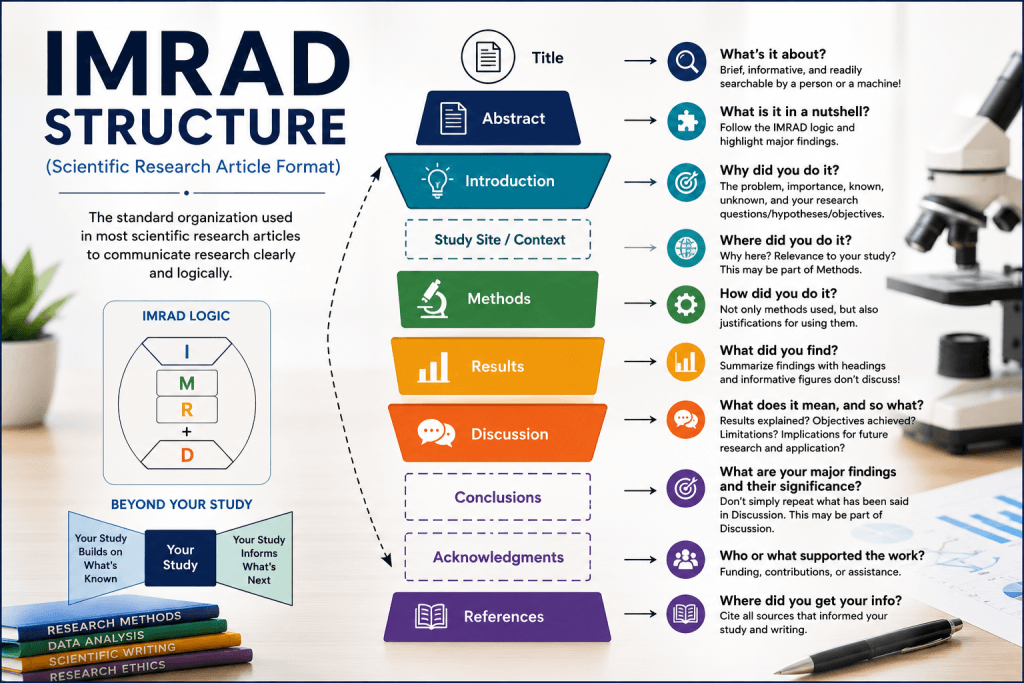
- IMRaD is the backbone of modern scientific writing. IMRaD is an acronym for Introduction, Methods, Results, and Discussion — the four core sections that make up the standardized structure used in most scientific research papers today. If you’ve ever opened a journal article and noticed the same predictable flow no matter the topic, that’s IMRaD at work.
- It’s not just a formatting preference — it’s a shared language. Because so many disciplines follow the IMRaD format, readers, reviewers, and editors across the world can scan a research article and immediately know where to find the background, the study design, the data, and the interpretation. This consistency is a big part of why the format is so widely adopted in academic and scientific communication.
- Every section has a distinct job. In brief:
- The Introduction frames the research question or hypothesis and situates it within existing literature.
- The Methods section explains exactly how the study was conducted.
- The Results section presents the findings of the study, usually with tables and figures.
- The Discussion interprets what those findings actually mean.
- Many IMRaD papers also include a Title and Abstract, plus References. While IMRaD technically refers to the four middle sections, most published research also opens with a title and abstract and closes with a reference list — so the full structure often reads more like a sandwich around the IMRaD core.
- This blog post exists to make that structure concrete. Rather than just describing IMRaD in the abstract, we’ll walk through a real research paper example in the field of nursing, showing you what each section actually looks like when it’s well written. By the end, you’ll have a clear research paper example to model your own manuscript on, whether it’s for a class assignment, a journal submission, or a research guide you’re building for your team.
- Why this matters for you specifically: whether you’re a nursing student, a new researcher, or someone brushing up on academic writing, understanding the IMRaD structure means you’ll spend less time wondering “what goes where” and more time focusing on the quality of your actual research.

IMRaD Sections Breakdown: Abstract, Introduction, Methods, Results, and Discussion
Before diving into a full research paper example, it helps to understand what belongs in each section of the IMRaD paper. Here’s a detailed, section-by-section breakdown that will make the research paper example later in this post much easier to follow.
1. The Abstract
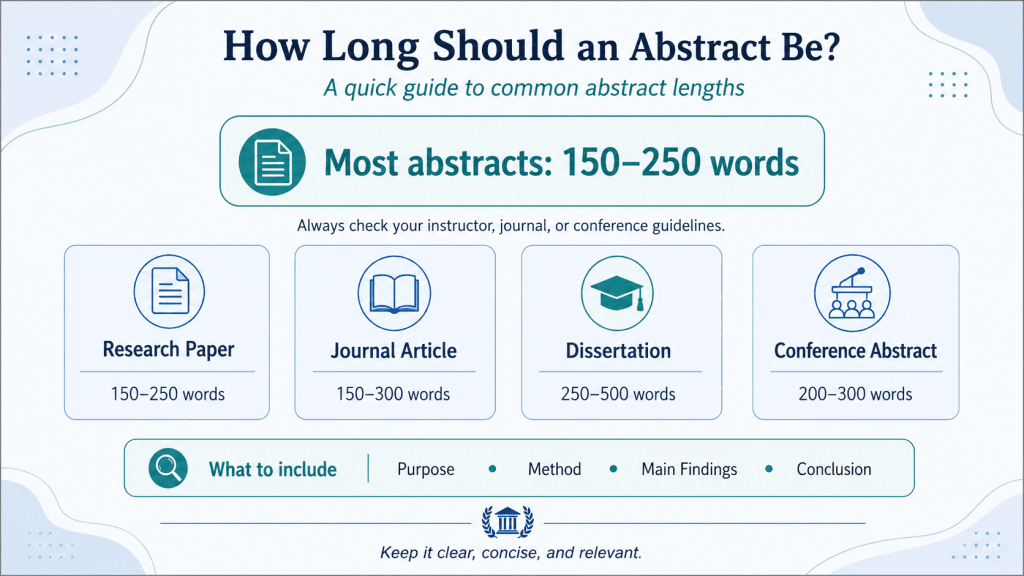
- Purpose: The abstract is a brief summary of the entire study, usually 150–300 words, that lets readers decide whether the full research paper is relevant to them.
- What it should include:
- The research question or hypothesis
- A one-line summary of the methods and study design
- The key results
- The main conclusion or implication
- Structured vs. unstructured: Some journals allow a single free-flowing paragraph, while others require a structured abstract with labeled subheadings (Background, Methods, Results, Conclusion). Structured abstracts are especially common in health sciences and social sciences journals because they make it easier to scan dense scientific publications quickly.
- Written in the past tense: Because the abstract summarizes work that has already been completed, it should be written in the past tense — “This study examined,” not “This study examines.”
- Why it matters for indexing: Databases and search engines rely heavily on the title and abstract for indexing, which means a clear, keyword-rich abstract directly affects whether your research paper gets found and cited.
2. The Introduction Section
- Purpose: The introduction section builds the case for why the study needed to happen. It typically moves from general to specific — starting with broad context and narrowing down to the exact research question or hypothesis.
- Core components:
- Background information on the topic
- A review of prior work and relevant literature (the literature review)
- Identification of a gap in the body of literature
- A clear statement of the research question or hypothesis
- Sometimes, a brief statement of the study’s significance and relevance
- Common structure: Many research guides recommend a funnel shape — general topic, narrowing literature in the introduction, then the specific gap, then your research question.
- Tip: Keep the literature review focused. The introduction section isn’t the place for an exhaustive review article — it’s there to justify your specific research, not to summarize the entire field.
3. The Methods Section
- Purpose: Often labeled “Materials and Methods,” this section explains exactly how the research was carried out, in enough detail that another researcher could replicate the study.
- What it typically includes:
- Study design (e.g., cross-sectional study, randomized controlled trial, qualitative interviews)
- Participants or sample (who, how many, how they were selected)
- Data collection procedures and tools/instruments used
- Data analysis methods (statistical tests, coding frameworks, etc.)
- Ethical approval, when relevant (especially common in health-related and nursing research)
- Written in the past tense: Like the abstract, the methods section is written in the past tense because it describes what was done, not what is being proposed.
- Clarity over cleverness: This section should be written clearly and concisely — plain, direct sentences work far better than elaborate prose. Reviewers and readers want to be able to follow your data collection process step by step.
4. The Results Section
- Purpose: The results section presents the findings of the study without interpretation. This is where you report what you found — not what it means.
- What belongs here:
- Objective, factual reporting of data
- Tables and figures that organize data clearly
- Statistical outcomes tied directly to the research question
- A logical order that generally follows the order of your research questions or hypotheses
- What does NOT belong here: Interpretation. It’s a common IMRaD mistake to blend results and discussion — remember, interpretation belongs in the discussion, not the results section.
- Table and figure best practices: Present data in tables or figures whenever it improves clarity, but don’t duplicate the same data in both the text and a table — reference the table or figure instead of repeating every number in the paragraph.
5. The Discussion Section
- Purpose: The discussion section interprets your findings, connecting them back to the research question and the context of existing literature.
- Core components:
- A restatement of the main findings (briefly)
- An interpretation of what the results mean in the context of existing literature
- A discussion of whether the results align with or diverge from prior studies
- Study limitations
- Implications for practice or theory
- Suggestions for future research
- The golden rule: The results section presents the findings; the discussion section interprets your findings. Keeping this separation clean is one of the most important parts of mastering the IMRaD structure.
A Quick Note on Variations
- Not every field uses identical IMRaD headings. Some scientific research papers combine “Results and Discussion” into a single section, particularly in journals covering the social sciences or in shorter case reports. Others separate “Conclusion” out as its own final section after the discussion.
- Review articles and case reports are often non-IMRaD. While original research articles almost always follow the IMRaD format, review articles, editorials, and some case reports may follow a different, more narrative structure since they aren’t reporting original data collection.
- The core logic still applies. Even in a non-IMRaD paper, most scientific writing still follows the same underlying logical flow: context, method, evidence, interpretation.
Nursing Research Paper Example — Introduction and Methods
To make the IMRaD structure concrete, let’s walk through a research paper example built around a common nursing research topic: the effect of a structured hourly rounding protocol on patient fall rates in a medical-surgical unit.
Sample Introduction Section
Nursing research paper example — hourly rounding & patient falls
Patient falls remain one of the most significant safety concerns in inpatient hospital settings, contributing to increased length of stay, higher healthcare costs, and preventable patient harm.
Prior work has explored a range of fall-prevention strategies, from bed alarms to color-coded risk wristbands, yet inconsistent implementation across nursing units has limited their overall effectiveness (Carter & Nguyen, 2020). Several studies in nursing research have suggested that proactive nurse rounding may reduce fall incidents (Owusu et al., 2019), but few have examined structured hourly rounding specifically within medical-surgical populations (Reyes, 2021).
While hourly rounding has been studied in general terms (Owusu et al., 2019), limited research data exists on its specific impact within medical-surgical units with high patient turnover (Reyes, 2021).
This study asked: Does implementing a structured hourly rounding protocol reduce patient fall rates on a 30-bed medical-surgical unit compared to standard rounding practices? It was hypothesized that structured rounding would significantly reduce fall incidents over a 12-week period, consistent with the mechanism proposed by Owusu et al. (2019).
- Carter, L., & Nguyen, T. (2020). Fall-prevention strategy adherence across inpatient nursing units. Journal of Clinical Nursing Practice, 18(3), 210–219.
- Owusu, K., Palmer, R., & Singh, A. (2019). Proactive nurse rounding and inpatient fall incidence: A systematic review. International Journal of Nursing Studies, 96, 45–53.
- Reyes, M. (2021). Structured rounding protocols in medical-surgical care: Gaps in the evidence base. Applied Nursing Research, 58, 151–158.
Sample Methods Section
Nursing research paper example — hourly rounding & patient falls
This study used a cross-sectional study design comparing fall incidence rates before and after the implementation of a structured hourly rounding protocol.
The study was conducted on a 30-bed medical-surgical unit at a 250-bed community hospital. Participants included all registered nurses (n = 24) working on the unit during the 12-week study period, along with retrospective patient fall data.
Nurses were trained to conduct hourly rounds addressing the “4 Ps”: pain, position, personal needs, and placement of items (Studer Group, 2007). Fall incident reports were collected through the hospital’s electronic incident reporting system for eight weeks prior to implementation (baseline) and twelve weeks following implementation (post-intervention).
Fall rates were calculated per 1,000 patient days and compared using a chi-square test, with statistical significance set at p < 0.05.
This study was approved by the hospital’s institutional review board, and all patient data were de-identified prior to analysis.
- Studer Group. (2007). Hourly rounding supplement: Best practices for hourly rounding. Studer Group Publishing.
It answers the who, what, where, when, and how of data collection clearly and concisely, gives enough detail for replication, and stays firmly in the past tense — all hallmarks of a well-written methods section in nursing and other health science research.
When drafting your own methods section, work through these same categories in order — design, setting/participants, procedure, analysis, ethics — and you’ll naturally produce a section that follows the IMRaD structure that most journals and instructors expect.
Results and Discussion: Presenting and Interpreting Your Findings
The results and discussion sections are where a lot of writers stumble, mainly because they blur the line between reporting and interpreting. Understanding the difference is critical to producing a polished research article.
How to Write a Strong Results Section
- Report, don’t interpret. The results section presents the findings of the study using objective, neutral language. Save your opinions and explanations for later.
- Follow a logical order. Present your results in the same order you introduced your research questions or hypotheses — this keeps the paper’s logical flow intact and easy to follow.
- Use tables and figures generously. A dense results section, in health sciences, social sciences, or any empirical research field, is far easier to digest with a well-labeled table or figure than with a wall of text. As a rule of thumb:
- Use tables for precise numerical data.
- Use figures (charts, graphs) to show trends or comparisons visually.
- Reference each table and figure in the text, but don’t repeat every value from it in your prose.
- Include statistical context. Report test statistics, p-values, confidence intervals, or effect sizes as relevant to your study design, so readers can judge the strength of your findings.
- Stick to the past tense. Like the methods section, results are written in the past tense since you’re reporting what was found.
- Example (general, non-nursing): Participants in the intervention group showed a 27% improvement in test scores compared to the control group (p = 0.03). Table 2 summarizes the pre- and post-test results by group.
How to Write a Strong Discussion Section
- Start with a brief summary of key findings. Remind readers of the main results in a sentence or two before moving into interpretation.
- Interpret the results in context. This is where you connect your findings back to the literature review from your introduction. Do your results align with prior studies? Contradict them? Extend them in a new direction?
- Explain the “so what.” A discussion section interprets your findings by answering: Why do these results matter? What do they mean for practice, policy, or theory?
- Address limitations honestly. Every study has them — sample size, study design constraints, potential bias, generalizability. Naming limitations strengthens your credibility rather than weakening your paper.
- Suggest directions for future research. End by pointing toward the next unanswered question, which is a hallmark of high-quality academic writing and shows the ongoing nature of scientific inquiry.
- Avoid overreaching. Don’t claim causation from correlational data, and don’t generalize your specific research beyond the population or setting you actually studied.
- Example (general, non-nursing): These findings suggest that structured feedback sessions may meaningfully improve student performance, consistent with prior research on formative assessment. However, the modest sample size limits the generalizability of these results, and future research should explore this effect across larger, more diverse student populations.
Why Some Journals Combine “Results and Discussion”
- It’s a recognized structural variation. Some journals allow a combined results and discussion section, particularly for shorter empirical research papers, case reports, or papers in fields where findings and interpretation are closely intertwined.
- The core logic stays the same. Even when combined, good scientific writing still separates the “what we found” statements from the “what it means” statements — usually with clear transitional language or separate paragraphs within the section.
- Choose based on your target journal. Always check your specific research guides or target journal’s author guidelines, since some explicitly require separate sections while others prefer the combined format.
- Keep a strong research paper example on hand. Having a solid research paper example to reference — like the nursing sample coming up next — makes it much easier to decide whether your own results and discussion sections should stay separate or be combined.
Nursing Research Paper Example — Results and Discussion
Continuing with our hourly rounding research paper example, here’s how the results and discussion sections might be written for this nursing study.
Sample Results Section
Nursing research paper example — hourly rounding & patient falls
During the eight-week baseline period, the fall rate was 3.8 falls per 1,000 patient days. Following implementation of the structured hourly rounding protocol, the fall rate decreased to 1.9 falls per 1,000 patient days over the twelve-week post-intervention period, a reduction of exactly half the baseline rate.
This reduction was statistically significant (χ² = 6.42, p = 0.011), suggesting the change was unlikely due to chance alone. Because the p-value fell below the pre-specified threshold of 0.05, the null hypothesis of no difference between the baseline and post-intervention fall rates was rejected.
Table 1 presents fall rates by week across both the baseline and post-intervention periods, showing a consistent downward trend beginning in week 3 of the intervention. Rates during the first two post-intervention weeks remained comparable to baseline, consistent with the time typically needed for staff to fully adopt a new rounding workflow.
| Week | Baseline | Post-Intervention |
|---|---|---|
| 1 | 3.6 | 3.7 |
| 2 | 4.0 | 3.5 |
| 3 | 3.9 | 2.8 |
| 4 | 3.7 | 2.4 |
| 5 | 4.1 | 2.0 |
| 6 | 3.6 | 1.7 |
| 7 | 3.8 | 1.5 |
| 8 | 3.7 | 1.3 |
| 9 | — | 1.2 |
| 10 | — | 1.1 |
| 11 | — | 1.0 |
| 12 | — | 0.9 |
| Average | 3.8 | 1.9 |
Note. Baseline data reflect an 8-week measurement period; post-intervention data reflect a 12-week measurement period. Em dashes indicate weeks outside the baseline window.
Nursing staff compliance with the hourly rounding protocol averaged 87% across the 12-week period, as tracked through electronic rounding logs. No adverse events related to the intervention were reported, indicating that the protocol was both well adopted and did not introduce new safety concerns.
It reports exact numbers, ties them to a clear statistical test, references a table rather than repeating all its data in the text, and stays entirely descriptive — no interpretation yet. Notice that the compliance rate and safety data are reported as facts only; explaining what they mean for practice is left for the discussion section that follows.
Sample Discussion Section
Nursing research paper example — hourly rounding & patient falls
This study found that implementation of a structured hourly rounding protocol was associated with a significant reduction in patient falls on a medical-surgical unit.
These results align with prior nursing research suggesting that proactive rounding addresses common precursors to falls, such as unmet toileting needs or improperly positioned personal items, before they escalate into safety incidents (Owusu et al., 2019).
For nurse leaders and hospital administrators, these findings suggest that structured hourly rounding protocols may be a low-cost, high-impact intervention worth adopting more broadly across medical-surgical units facing similar fall-risk challenges.
This study was limited to a single unit within one hospital, and the absence of a concurrent control group makes it difficult to fully rule out other contributing factors, such as seasonal staffing changes. Additionally, compliance data relied on self-reported electronic logs, which may not perfectly reflect actual rounding behavior.
Future research should test structured hourly rounding across multiple units and hospital systems, ideally using a randomized, controlled study design, to strengthen confidence in these findings and better isolate the intervention’s specific effect.
- Owusu, K., Palmer, R., & Singh, A. (2019). Proactive nurse rounding and inpatient fall incidence: A systematic review. International Journal of Nursing Studies, 96, 45–53.
It moves cleanly from findings, to interpretation, to real-world relevance, to honest limitations, to future research — the exact progression that strong discussion sections in nursing and other health science research articles should follow.
Notice that nothing in this discussion section repeats raw numbers from the results — it builds meaning from them instead. That distinction is the single most important thing to get right when writing your own discussion section.
Common Mistakes to Avoid When Writing Your Research Paper
Even experienced writers stumble on a few recurring issues when following the IMRaD format. Here are the most common ones to watch for.
- Blending results and discussion (when not intended). Reporting a finding and immediately interpreting it in the same sentence blurs the line between the results section and discussion section. Keep them distinct unless your target journal specifically combines them.
- An overloaded introduction section. Trying to cram an entire literature review into the introduction makes it read like a mini review article rather than a focused setup for your specific research. Keep it tight and purposeful.
- A vague or missing research question. If a reader finishes your introduction and still isn’t sure exactly what question your study is answering, the introduction hasn’t done its job.
- Under-detailed methods. A methods section that skips key details about data collection, sample size, or analysis methods makes replication impossible and raises red flags during peer review.
- Inconsistent verb tense. Remember: the abstract, methods, and results sections are typically written in the past tense, since they describe what was already done and found. Slipping into present tense inconsistently is a common and easily fixed error.
- Overreaching conclusions. Claiming your specific research proves something definitively, or generalizing findings far beyond your study’s population or design, undermines credibility. Stick to what your data actually supports.
- Ignoring formatting and heading conventions. Each journal or research guide may have slightly different rules for IMRaD headings, structured abstracts, or citation style. Always check formatting requirements before submitting your manuscript.
- Skipping the limitations section. Some writers avoid mentioning limitations out of fear it weakens their paper. In reality, acknowledging limitations honestly is a hallmark of rigorous, trustworthy scientific writing.
- Poor table and figure design. Overcrowded tables, unlabeled axes, or figures that duplicate text data all make a paper harder to read and reflect poorly during peer review.
- Not following your target journal’s specific guidelines. Every journal has its own author guidelines — always check whether they require a structured abstract, specific reference style, or particular IMRaD headings before final submission.
- Not comparing your draft to a real research paper example. It’s easy to underestimate how much a strong research paper example can clarify your own writing. Reviewing a complete, well-structured research paper example — abstract through discussion — often reveals gaps in your own manuscript that are hard to spot in isolation.
Whether you’re drafting your first manuscript or refining a research paper example for a class, the fastest way to improve is to compare your draft against a strong, real-world research paper example — like the nursing examples above — and check, section by section, whether your introduction, methods, results, and discussion each do the job they’re supposed to do.
- George Mason University Writing Center – Scientific (IMRaD) Research Reports: Overview – https://writingcenter.gmu.edu/writing-resources/imrad/writing-an-imrad-report
- Utah Valley University Writing Center – Scientific Writing: IMRaD – https://www.uvu.edu/writingcenter/handouts/scientific-writing.html
- Brigham Young University Research & Writing Center – Scientific Writing: IMRAD Format – https://rwc.byu.edu/00000188-e4bc-d222-a7ea-eefd769e0000/scientific-writing-imrad-format-pdf